The best time for a railyard move is now
Read this article for free:
or
Already have an account? Log in here »
To continue reading, please subscribe:

Digital Subscription
One year of digital access for only $205*
- Enjoy unlimited reading on winnipegfreepress.com
- Read the E-Edition, our digital replica newspaper
- Access News Break, our award-winning app
- Play interactive puzzles
*First annual payment billed as $205.00 + GST for one year. This annual subscription will automatically renew at $233.00 + GST every 52 weeks (10% off the regular annual price of $259.35). Offer available to new and qualified returning subscribers only. Cancel any time.
To continue reading, please subscribe:
Add Free Press access to your Brandon Sun subscription for only an additional
$1 for the first 4 weeks*
- Enjoy unlimited reading on winnipegfreepress.com
- Read the E-Edition, our digital replica newspaper
- Access News Break, our award-winning app
- Play interactive puzzles
*Your next Brandon Sun subscription payment will increase by $1.00 and you will be charged $17.95 plus GST for four weeks. After four weeks, your payment will increase to $24.95 plus GST every four weeks.
Read unlimited articles for free today:
or
Already have an account? Log in here »
Hey there, time traveller!
This article was published 18/11/2024 (648 days ago), so information in it may no longer be current.
The best time to plant a tree was 20 years ago. The second-best time is now.
The same can be said about massive infrastructure projects, like floodway expansions, Perimeter Highway upgrades, and railyard relocations.
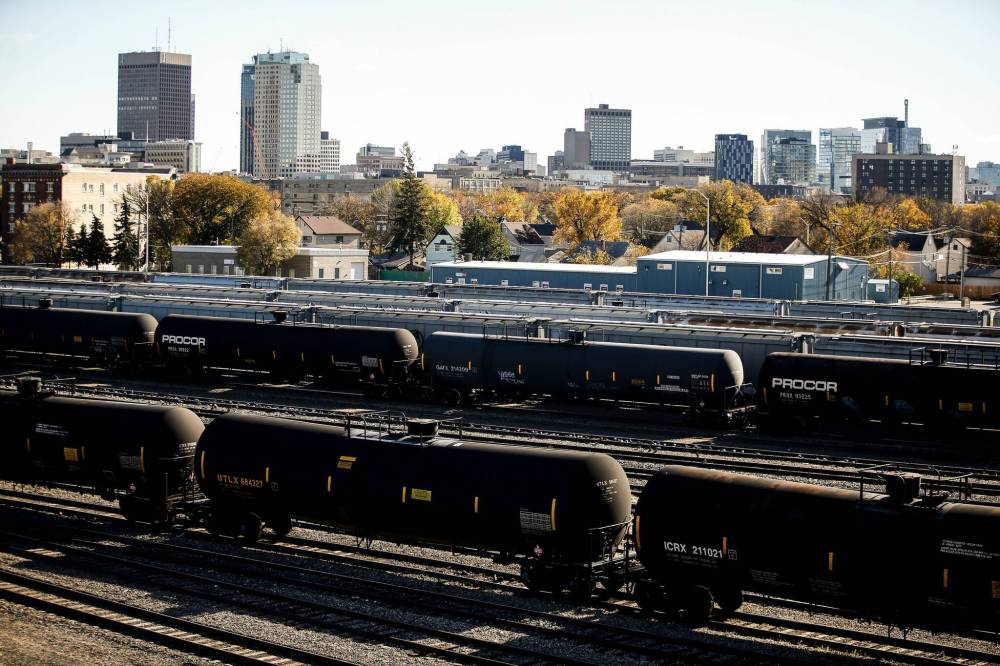
A recent survey shows that support is increasing for moving the 300-hectare CP railyard from just north of downtown to outside the Perimeter. Sixty-three per cent of Winnipeggers are now behind the relocation of these rail lines that cut the city in half between the north and the south.
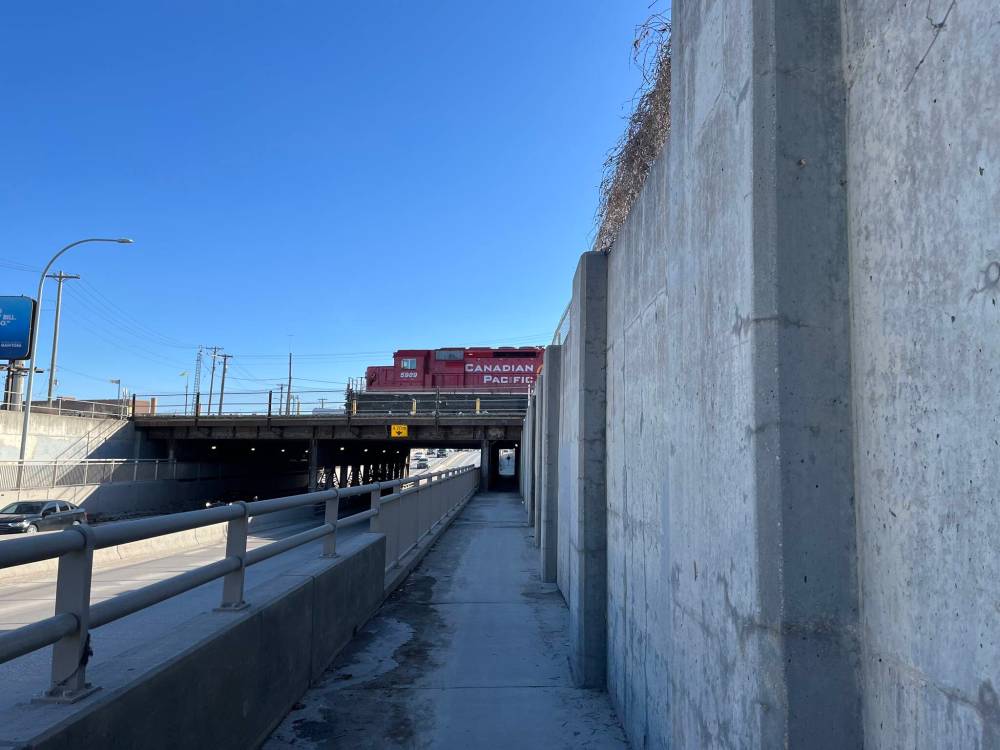
Russell Wangersky / Free Press
A train in the CP railyard crosses McPhillips Street in Winnipeg.
The main reason for increasing support of this massive undertaking is a greater awareness of the hazardous materials routinely passing through the inner city. A near catastrophe on the McPhillips Street overpass when several rail cars carrying bitumen veered off the tracks recently underscored the point about the ever-present dangers of living or commuting near an active rail line.

Proponents of relocation also support of the idea of opening up the land for housing and other development, as well as improving connection to the city’s North End. Additionally, not having to spend a minimum of $300 million to rebuild the crumbling and now closed Arlington Street bridge provide further momentum of support.
For all these reasons and more, the second-best time to take on this project is now.
Astute readers will undoubtedly remember that a railyard relocation feasibility study was nixed in the early years of the government that I was part of and calls for highway upgrades were later prioritized instead. This included the complex twinning of the Trans-Canada Highway between Falcon Lake and the Ontario border and much-needed interchanges along the south Perimeter, to name a few.
As anyone who lives close to the south Perimeter can attest, from early morning until late at night, the ubiquitous construction crews have been working nonstop to complete the $151 million, Phase-1 upgrade to the interchange at St. Mary’s Road.

Planning is also underway for a new interchange at St. Anne’s Road to upgrade it to freeway standards — meaning no stop lights for intersecting traffic or railways — and work continues on the section near McGillivray Boulevard.
Designed to enhance safety, speed up traffic flow, and ultimately boost the economy through decreased transportation costs on this key trade and commerce route, these interchanges are well received by area residents and motorists alike.
Overall, these south Perimeter upgrades are part of a $4.1-billion infrastructure strategy, launched by the previous PC government and now supported by the current NDP government.
As Chris Lorenc, president of the Manitoba Heavy Construction Association, has stated, every dollar spent brings a return of $1.30 to $1.90 in gross domestic product.
As the elected representative for the south end of Winnipeg during the launch of these major construction projects, including the St. Mary’s interchange, I heard nary a complaint from constituents on the expenditure or the scope, with the exception of a few who argued it had taken us too long.
JOHN WOODS / FREE PRESS FILES
A recent survey reveals sixty-three per cent of Winnipeggers are now behind the relocation of the 300-hectare CP railyard thats cut the city in half between the north and the south.
Looking back, upgrading the Perimeter Highway was never an “if.” The only question ever was “when.”
Now the time has come for the question of relocating the railyard to switch from an “if” to a “when.”
Opponents of railyard relocation, which includes 27 per cent of respondents to the recent survey, say the project is too costly. While the estimated cost is still unknown, old estimates ballpark the project to be in excess of $1 billion. Other opponents argue that Winnipeg is facing more urgent problems that need attention and investment.
Money aside, the project also comes with significant challenges, including garnering support from Canadian Pacific Kansas City Railway, which a company spokesperson has already said the complexity shouldn’t be understated but that they would come to the table for a discussion. Finding a new location for the railyard and significant remediation would also be required to prepare the existing land for new development.
All valid points, and ones that will undoubtedly be addressed in the feasibility study that is currently being undertaken by former Liberal transport minister, Lloyd Axworthy. He has already stated potential for a phased-in approach that is seemingly garnering much public buy-in and growing political support. All three levels of government have indicated a willingness to act, with the provincial government leading the way.
Without a doubt, if we can get behind a $4.1-billion infrastructure investment to our roads, surely this project of eliminating a major safety hazard and removing half the city from the wrong side of the tracks also deserves serious consideration and investment.
The best time is now.
Rochelle Squires is a recovering politician after 7 1/2 years in the Manitoba legislature. She is a political and social commentator whose column appears Tuesdays.
rochelle@rochellesquires.ca
Related Articles
Most Manitobans back rail relocation