

Joan of Arc’s story needed no burnishing
Advertisement
Read this article for free:
or
Already have an account? Log in here »
To continue reading, please subscribe:
Digital Subscription
One year of digital access for only $1.44 a week*
- Enjoy unlimited reading on winnipegfreepress.com
- Read the E-Edition, our digital replica newspaper
- Access News Break, our award-winning app
- Play interactive puzzles
*Billed as $5.77 plus GST every four weeks. After 52 weeks, price increases to the regular rate of $19.95 plus GST every four weeks. Offer available to new and qualified returning subscribers only. Cancel any time.
To continue reading, please subscribe:
Add Free Press access to your Brandon Sun subscription for only an additional
$1 for the first 4 weeks*
- Enjoy unlimited reading on winnipegfreepress.com
- Read the E-Edition, our digital replica newspaper
- Access News Break, our award-winning app
- Play interactive puzzles
*Your next Brandon Sun subscription payment will increase by $1.00 and you will be charged $17.95 plus GST for four weeks. After four weeks, your payment will increase to $24.95 plus GST every four weeks.
Read unlimited articles for free today:
or
Already have an account? Log in here »
Hey there, time traveller!
This article was published 10/01/2012 (5257 days ago), so information in it may no longer be current.
On Jan. 6, people around the world came together to celebrate the 600th anniversary of the birth of St. Joan of Arc, the brave peasant girl from the French countryside who in 1429 lifted the English siege of Orleans, walloped the enemy army and led her king to be crowned at Reims.
French President Nicolas Sarkozy made a special visit to the village of Domremy, her birthplace. There was a parade at 6 o’clock in Orleans, a French pilgrimage retracing the route that led to Joan’s martyrdom at the stake in Rouen, prestigious classical music concerts and ceremonial viewings of Carl Theodor Dryer’s silent-screen masterpiece, The Passion of Joan of Arc.
And how typical of the magic of Joan’s story that she should have been born on so important a Christian holiday, the Feast of the Epiphany, celebrating Christ’s baptism and the coming of the Magi. Just another wonder in the life of the transcendent young woman who heard the voices of angels and presented the dauphin of France with a secret sign only he would know, a sign that convinced him of her authenticity as a messenger from God.
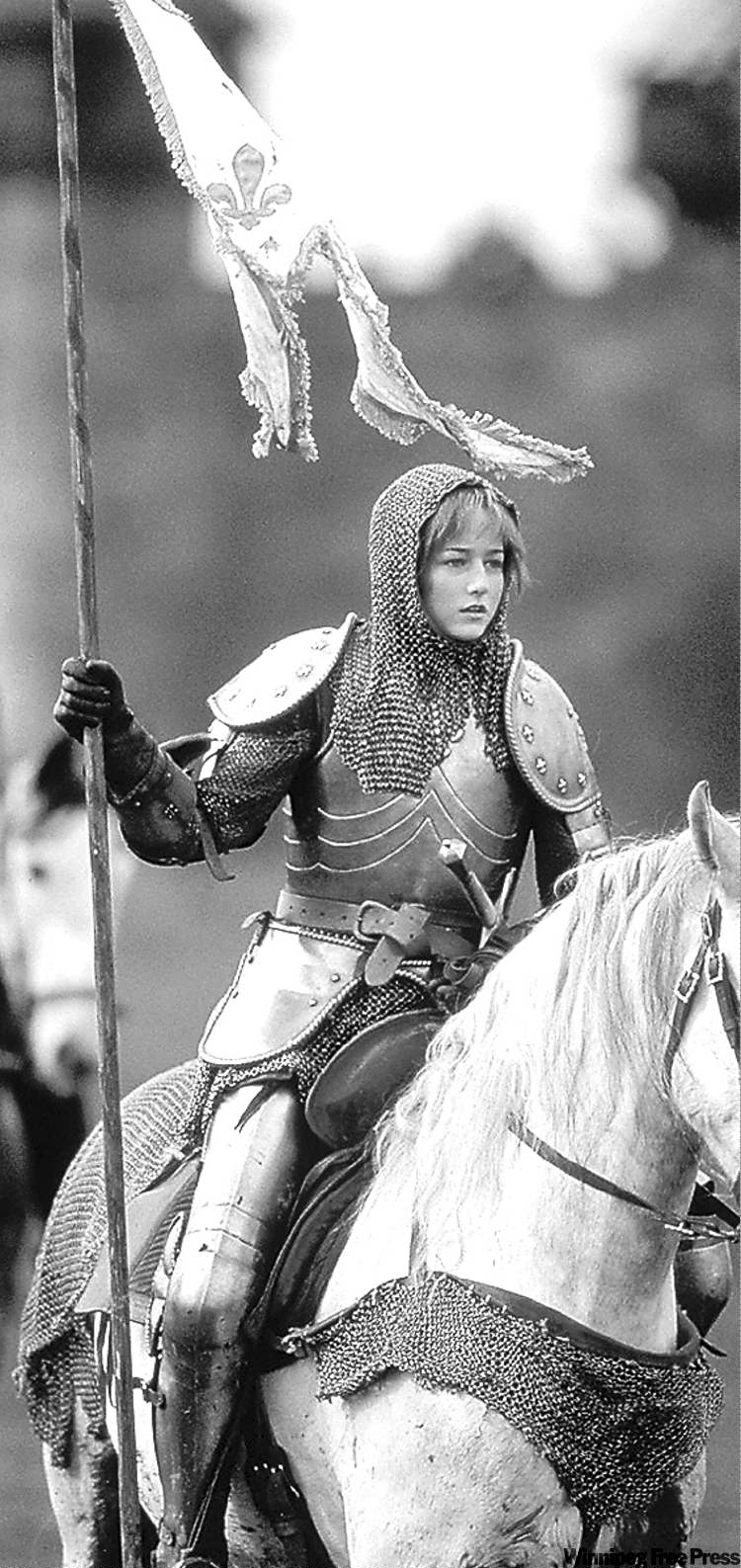
Except that, like so much of the irresistible mystery surrounding Joan, this date, accepted by so many for so long as fact, was almost certainly created six centuries ago as a deliberate fiction for political purposes.
That neither Joan’s date of birth nor her baptism were ever recorded is not in historical dispute. Indeed, Joan herself did not know when she was born. “As far as I know, (I am) about 19 years old,” she testified to her inquisitors at her Trial of Condemnation in January 1431.
There was nothing unusual in this. People in the 15th century did not celebrate individual birthdays, and there was certainly no need to record so mundane an event for a member of the lower classes, and a female to boot. Instead, the general populace celebrated saints’ days.
Ironically, if Joan had been delivered on the Feast of the Epiphany, there would have been a chance her family would have remembered the occasion and she would have grown up with this knowledge.
Nothing would have made Joan happier than to have been born on an important religious holiday. She would have jumped at the chance to fling this information in her inquisitors’ faces had it been true. As she did not do so, the Feast of the Epiphany is actually one of the few dates of the year that can be reasonably ruled out as the date of her birth.
The source for the Jan. 6 date was a French aristocrat by the name of Perceval de Boulainvilliers. Perceval was a member of the royal court who fancied himself a poet. He had not known of Joan’s existence until she showed up unannounced in Chinon and begged to see the dauphin. What he did know was that she had ended the siege of Orleans in a week and this victory, the first sign of life in years in the dauphin’s otherwise moribund campaign against the English, could be used to coax allies into the French camp.
The dauphin desperately needed troops, money, supplies and political support, so to help his sovereign, Perceval wrote a letter to the wealthy Duke of Milan that took the nature of a sales pitch. It was Perceval who, taking poetic licence, fabricated the date of Joan’s birth. He imbued not only this event but her entire childhood with picturesque details — for example, he claimed that as a girl Joan never lost a single sheep, which was probably true, as the family kept cattle — intended to surround his subject with an otherworldly aura of mysticism.
Over time, this date, like so much of the legend deliberately fashioned around Joan, was accepted as historical fact.
Which is a shame, because of all the stories in the world, Joan’s is one of the least in need of embellishment. She should not be remembered because she showed the dauphin some trinket, or was an illegitimate member of the French royal family, or revealed secrets no one else knew (all of which are, like the Jan. 6 date, almost certainly mythological). What makes Joan an iconic figure, as inspirational today as she was six centuries ago, was her faith, her unswerving dedication to her cause and, above all, her astounding bravery.
It was this bravery that was demonstrated at her very first battle when, as the wounded French soldiers, bloodied and disheartened, streamed back to the safety of the walls of Orleans, 17-year-old Joan rushed out into the crush of arrows and swords to give battle.
Those who lived through 9/11, and who remember the members of the New York City Fire Department and other rescue squads charging up the staircases of the towers as everyone else fled down, will recognize this particular brand of courage.

That is why the story of Joan of Arc resonates, why people all over the world are still drawn to her, and why her memory, if not her birthday, deserved to be celebrated on Jan. 6.
Nancy Goldstone’s latest book, The Maid and the Queen: The Secret History of Joan of Arc, will be published in April.
–The Los Angeles Times