

Sloppy lawyers tarnish justice system
Advertisement
Read this article for free:
or
Already have an account? Log in here »
To continue reading, please subscribe:
Digital Subscription
One year of digital access for only $1.44 a week*
- Enjoy unlimited reading on winnipegfreepress.com
- Read the E-Edition, our digital replica newspaper
- Access News Break, our award-winning app
- Play interactive puzzles
*Billed as $5.77 plus GST every four weeks. After 52 weeks, price increases to the regular rate of $19.95 plus GST every four weeks. Offer available to new and qualified returning subscribers only. Cancel any time.
To continue reading, please subscribe:
Add Free Press access to your Brandon Sun subscription for only an additional
$1 for the first 4 weeks*
- Enjoy unlimited reading on winnipegfreepress.com
- Read the E-Edition, our digital replica newspaper
- Access News Break, our award-winning app
- Play interactive puzzles
*Your next Brandon Sun subscription payment will increase by $1.00 and you will be charged $17.95 plus GST for four weeks. After four weeks, your payment will increase to $24.95 plus GST every four weeks.
Read unlimited articles for free today:
or
Already have an account? Log in here »
Hey there, time traveller!
This article was published 07/04/2012 (5174 days ago), so information in it may no longer be current.
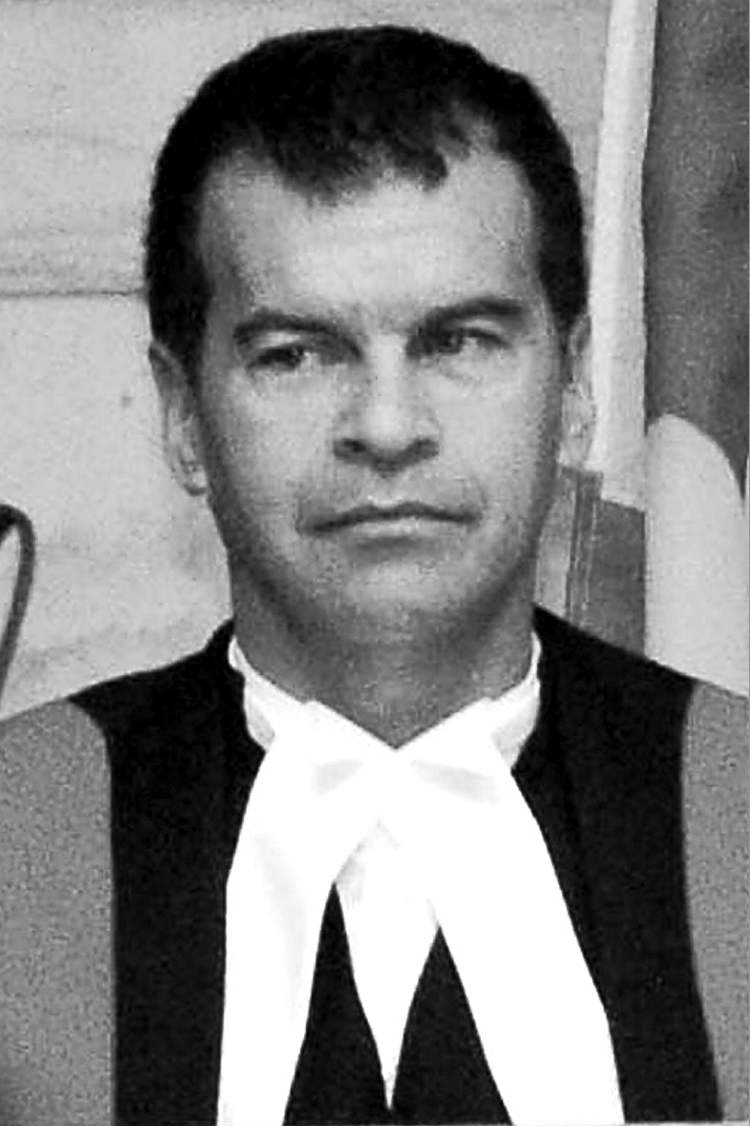
Chief provincial court Judge Ken Champagne’s unflattering memo to lawyers posted at the Law Courts complex is a sign of the times. Maybe even a sign of the distemper of our times.
The memo criticized lawyers for everything from courtroom attire and timely attendance in court to in-court chatter and smartphone use.
It follows a 2009 directive from then chief judge Ray Wyant that directed counsel stop bringing food and beverages into the courtroom.
But directives from the judiciary only work if the target audience accepts them, or at least abides by them. Fiats — judicial or otherwise — that don’t attract a broad consensus are doomed from the get-go. That’s why Prohibition was such a spectacular failure.
While you can cut lawyers some slack regarding the use of smartphones and BlackBerrys in the courtroom, simply because electronic devices are so new we’re all still trying to define the etiquette and protocol of their use, Judge Champagne shouldn’t have had to remind lawyers of much of the stuff in his memo. Lawyers have always owed the courts a duty of courtesy. It’s even codified in the profession’s new (2011) Code of Professional Conduct.
History is also on the judge’s side.
Lawyers have a special status in our justice system, a result of our inheritance of British law.
For nearly 800 years in England, and over two centuries in Canada, lawyers have been regarded as “officers of the court” — a status that makes them, in effect, partners with judges and court officials in the operations of our courts. That partnership includes a duty to assist in the court’s proper functioning and treating its processes with courtesy.
Cellphone use or snacking by lawyers while a judge is presiding over a docket court — or worse, a trial — detracts from decorum and respect for the court.
It amounts to a breach of the historic partnership. It also sets a horrendous example for clients, witnesses and the court-attending public.
Statistics published by Ontario lawyers’ governing body, The Law Society of Upper Canada, indicate that between 2004 and 2008, complaints about lawyers that included allegations of unprofessional behavior — behaviour that doesn’t amount to professional misconduct, but is simply unbecoming to the profession — rose by almost one-quarter, from 11 per cent to 35 per cent. And some of those complaints were issued from the bench.
The Law Society of Manitoba has never cited a parallel concern, or published similar stats.
But starting this year, our province’s law society has for the first time made it mandatory that all lawyers annually take continuing legal education that includes a component on ethics, professional responsibility and practice management.
Front and centre in ethics and professional responsibility is how lawyers comport themselves in public.
The Law Society has even gone so far as to stipulate the number of education hours required under this topic.
And it’s not a requirement that bears ignoring. Subject to the Law Society CEO’s discretion, failure to satisfy the requirement, or to do so within 60 days of notice of failure to comply, results in suspension of a lawyer’s right to practice law.
Beyond all this, lawyers who are discourteous to the court do themselves a disservice.
Judges are human. They notice who’s on a cellphone, or sipping a coffee or munching a granola bar off in a far corner of the courtroom while court’s in session.
Even if they don’t say anything, they notice. And they remember.
There’s nothing more counterproductive to your long-term effectiveness as counsel than to have the judge think you’re, at best, rude, at worst, a yahoo.
Winnipeg isn’t a terribly large urban centre. It’s not Toronto or Vancouver. In relative terms, we’re still a fairly small legal community.
Lawyers and judges tend to encounter each other again and again. You have to work with each other so frequently that if you’re chronically uncivil or disrespectful — to the bench or other members of the bar — it’s apt to come back to haunt you.
The workaday reality of practising law in Winnipeg, or Manitoba for that matter, is that it’s in our own best interests to get along. As a former colleague, an ex-Winnipegger now practising in Toronto, once told me: “You’re more self-policing here.”
She meant it as a compliment. And, by and large, it still holds true.

Ultimately, what’s at stake in Judge Champagne’s memo isn’t just the reputation of the legal profession.
If lawyers don’t show respect for judges, the dignity of the courtroom and each other, the public certainly won’t.
And once public confidence in the justice system erodes, we’ve got a far bigger problem on our hands than a tarnished image for lawyers.
Douglas J. Johnston is a Winnipeg lawyer.