

London calling
A great city reasserts itself as world's most international centre in time for the Olympics
Advertisement
Read this article for free:
or
Already have an account? Log in here »
To continue reading, please subscribe:
Monthly Digital Subscription
$1 per week for 24 weeks*
- Enjoy unlimited reading on winnipegfreepress.com
- Read the E-Edition, our digital replica newspaper
- Access News Break, our award-winning app
- Play interactive puzzles
*Billed as $4.00 plus GST every four weeks. After 24 weeks, price increases to the regular rate of $19.95 plus GST every four weeks. Offer available to new and qualified returning subscribers only. Cancel any time.
Monthly Digital Subscription
$4.99/week*
- Enjoy unlimited reading on winnipegfreepress.com
- Read the E-Edition, our digital replica newspaper
- Access News Break, our award-winning app
- Play interactive puzzles
*Billed as $19.95 plus GST every four weeks. Cancel any time.
To continue reading, please subscribe:
Add Free Press access to your Brandon Sun subscription for only an additional
$1 for the first 4 weeks*
- Enjoy unlimited reading on winnipegfreepress.com
- Read the E-Edition, our digital replica newspaper
- Access News Break, our award-winning app
- Play interactive puzzles
*Your next Brandon Sun subscription payment will increase by $1.00 and you will be charged $17.95 plus GST for four weeks. After four weeks, your payment will increase to $24.95 plus GST every four weeks.
Read unlimited articles for free today:
or
Already have an account? Log in here »
Hey there, time traveller!
This article was published 07/07/2012 (5059 days ago), so information in it may no longer be current.
In June, the city put on damp but impeccably organized Diamond Jubilee celebrations. This month, it will host the Olympics. Barring terrorist attacks and transportation disasters — not a small risk, given the organizers are relying on public transport — the games should reinforce the city’s sense it is on top of the world.
Yet London’s position is more precarious than it feels. The city’s success during the past quarter-century has been the consequence of historical accident and good policy. Now, history is moving on and the policy-makers are messing up. They could tip the city into a decline without even noticing it, because the ecosystem of a great city is a complex and fragile thing.
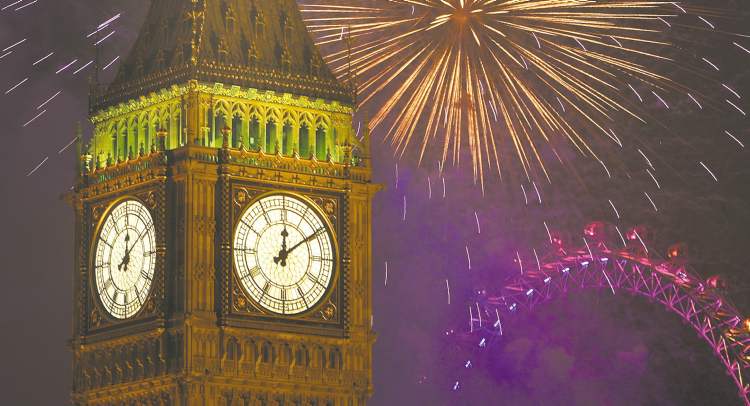
London has resisted Britain’s relative decline. While the country has slipped to seventh place in the league of world GDP, the capital is first, or second only to New York, in most of the rankings of great cities. If it were not for London, Britain would be off the map for both businessmen and tourists.
It wasn’t always thus. After a boom in Victorian times, the city went into a decline from the beginning of the Second World War. Bombing, the waning of manufacturing, the closure of the docks and governmental policies designed to reduce the city’s dominance were responsible. By the late 1980s, the city’s population had shrunk by a quarter. Then things turned around again. It was probably in part the gravitational pull of a great city reasserting itself, but it was also the replacement of foolish policies with good ones.
In the 1970s the government stopped trying to push growth elsewhere. In the 1980s the deregulatory “Big Bang” liberalized the financial-services industry and drew in workers and money from around the world. A convenient time zone and a language that imperialism had spread around the globe made it easy for foreigners to operate in the city. A trustworthy legal system and a clean political order made it a good place to do business. Excellent universities and private schools attracted young people and parents.
Thus globalization, distilled and concentrated in London, turned the place into the world’s most international city. New York has as many foreign-born people as London, a bit more than a third, but its businesses look to America, whereas London’s look out to the world. And, whereas New York’s immigrants are mostly huddled masses, London attracts the smart professionals and the super rich as well. Its elite is increasingly made up of foreigners or the children of foreigners.
For Londoners this has a downside. Per square foot, property in London is more expensive than anywhere except Monaco. While property prices in other capitals, and in the rest of Britain, have fallen during the economic crisis, demand for central-London property from emerging markets has pushed prices in the city up still further.
There is a larger upside. Partly because foreigners are better-qualified, younger and, according to surveys of employers, harder-working than the locals, and because of the flow of foreign money into the city, London’s economy has done much better than Britain’s in recent years. Value-added per head in London is now 1.75 times what it is in the country as a whole — and, as a result, London subsidizes the rest of the country to the tune of $23 billion each year.
There is a hitch, though. Although Britain lives off London and London lives off foreigners, Britain does not much like foreigners. Out of people from six rich countries recently polled, Britons were the most hostile to immigration.
And that is not because they see so many immigrants. London, which is one-third foreign-born, is far warmer toward them than the rest of the country, where only eight per cent like them. Nor is this simply because migrants favour migrants: Even British-born white Londoners are friendlier to foreigners than other Britons.
London also cannot determine its own future. Its mayor has few powers. It is ruled by the rest of the country and by a Conservative prime minister brought up in the foreigner-free Berkshire countryside. Pressure on David Cameron from his right wing, and from the rise of immigration up the list of voters’ concerns, has led him to promise to cut immigration to “tens of thousands” a year — a tough job when net migration was 252,000 last year.

Students’ right to work is being restricted, making study in Britain less affordable, acquiring business visas is becoming tougher and getting family members into the country is increasingly difficult. The Labour Party’s attitude is much the same: Its leader, Ed Miliband, said his party had “got it wrong” in allowing so much immigration.
This is a great time for London, but its moment inevitably will pass. The accumulation of capital from the empire and the Industrial Revolution made the place prosper, and now, with the rise of the emerging markets, capital is accumulating elsewhere. Europe’s traumas, however they are resolved, will shape its future, either because it is bound more tightly into the continent or, more likely, because it floats away from it.
Although the government cannot prevent the city’s relative decline, it can affect its speed. The cost of housing is not merely a problem for Londoners, but also a tax on business. Higher property taxes, which are desirable on wider economic grounds, would cut demand for property as an investment or a second home. Allowing more development, both on brownfield sites in the city and on the Green Belt encircling it, would increase supply.
Though beloved by environmentalists and nimbys, the Green Belt pushes growth further into the southeast, thus damaging a larger area of countryside. Transportation needs to be improved by investing in rail, widening congestion charging and expanding airport capacity.
Most of all, Britain needs to stop discouraging foreigners from coming. London’s prosperity is built on its ability to attract the rich, the clever and the hardworking from across the world. Anything that jeopardizes the city’s internationalism endangers its future, and anything that jeopardizes London, endangers the country.