

Votes for sale in new Ukraine
Advertisement
Read this article for free:
or
Already have an account? Log in here »
To continue reading, please subscribe:
Digital Subscription
One year of digital access for only $1.44 a week*
- Enjoy unlimited reading on winnipegfreepress.com
- Read the E-Edition, our digital replica newspaper
- Access News Break, our award-winning app
- Play interactive puzzles
*Billed as $5.77 plus GST every four weeks. After 52 weeks, price increases to the regular rate of $19.95 plus GST every four weeks. Offer available to new and qualified returning subscribers only. Cancel any time.
To continue reading, please subscribe:
Add Free Press access to your Brandon Sun subscription for only an additional
$1 for the first 4 weeks*
- Enjoy unlimited reading on winnipegfreepress.com
- Read the E-Edition, our digital replica newspaper
- Access News Break, our award-winning app
- Play interactive puzzles
*Your next Brandon Sun subscription payment will increase by $1.00 and you will be charged $17.95 plus GST for four weeks. After four weeks, your payment will increase to $24.95 plus GST every four weeks.
Read unlimited articles for free today:
or
Already have an account? Log in here »
Hey there, time traveller!
This article was published 13/10/2012 (5124 days ago), so information in it may no longer be current.
Wanna buy a vote? A polling-station official? Candidates are for sale, too. For those with deeper pockets, entire political parties are on the block as Ukrainians prepare to elect their parliament on Oct. 28.
The Europeans and Americans have expressed their concerns over the re-emergence of political prisoners in the former Soviet state — a phenomenon that was supposed to be a thing of the past.
From behind bars, politicians such as Yulia Tymoshenko cannot run for office.
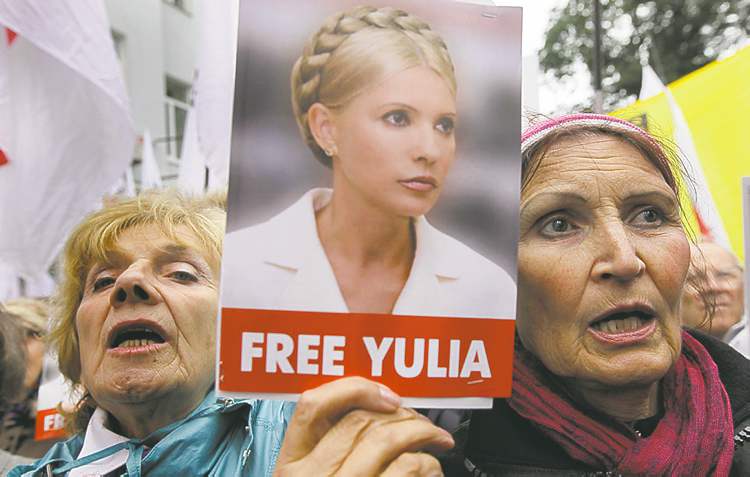
Canada hasn’t minced words and described the pre-election environment as troubling due to “procedural irregularities, widespread vote-buying, limitations on freedom of speech and a lack of effective consideration of election disputes.”
That assessment comes from the largest contingent of observers Ottawa says it has ever deployed. All in, 500 Canadians are expected in Ukraine during the campaign’s last two weeks.
What they see may shock, but it’s common in Ukrainian politics.
CONTINUED J6
A recent poll showed 11 per cent of Ukrainians are willing to sell their vote. Some parties pay cash, others hand out supermarket discount cards.
The rascals even dole out bags of buckwheat to curry electoral favour.
There are more than 200 political parties in Ukraine’s national registry; 80 took part in lotteries to staff 33,000 election commissions, but not all won, leaving two leading opposition parties shut out of the process. To add insult to injury, many of the one-horse parties replaced their people with those working for the ruling Regions party.
Candidates known as “clones” are running against politicians with the same names in a bid to confuse voters: In a riding in Lviv oblast, three candidates surnamed Kozak were registered, two of them named Taras.
And “technical parties,” whose role is to split and spoil votes, will be on one of two ballots voters will fill out.
Two ballots: one for the party voters want in parliament, the other for the person they want to represent their riding. There are 22 parties on the first ballot and more than 1,200 independents on the second.
The last time this confusing system was used was 2002, when forces in opposition to then-president Leonid Kuchma beat those loyal to him. But a pro-presidential majority was cobbled together when MPs who ran as independents threw their support to the government after elections.
Some predict a similar outcome this time. Polls give the opposition a slight edge over President Viktor Yanukovych’s Regions and the communists — a political alliance of crony capitalists and orthodox Marxists who, in most countries, would be opposed to one another.
But in Ukraine, these two groups are united by nostalgia for the Soviet past, love for access to taxpayer funds, fear of Western-style transparency and a desire to move into the Russian bear’s open embrace.
There’s a myriad of pro-Western opposition parties, but only three appear poised to cross the five per cent qualifying barrier for seats in the Rada.
They include the Fatherland party Tymoshenko led for many years. While she’s serving a seven-year sentence for making a bad gas deal with Russia, some of the ministers who formed her cabinet are leading her party’s campaign.
With Tymoshenko out of the picture, the boxing world’s heavyweight champ Vitality Klitschko and his party UDAR (acronym for “punch” or “blow”) are filling the charismatic-leader void and now polling highest among the opposition.
Desperate to curb Klitschko’s growing popularity, Yanukovych’s “political technologists” enlisted star soccer forward Andriy Shevchenko to run for one of the “technical parties.”
The Ukraine Forward party claims it’s in opposition, but dares not criticize Yanukovych. So when Shevchenko challenged Klitschko to a debate, the boxer called the ace football striker’s bluff: Sure, I’ll debate, but only if you’re pro-government. If we’re both really in opposition, what’s the point? That shut Sheva up.
The third opposition party expected to make the grade is the nationalist Svoboda. Leader Oleh Tiahnybok’s anti-everybody-who-is-not-Ukrainian rhetoric has landed him in hot water in the past, but his party appears to have a struck a chord among voters wanting radical change, especially in Western Ukraine.

Compared to previous elections, the current campaign is considered particularly nasty. Two months in, police said they were investigating three dozen criminal violations.
Even if everything goes smoothly on election day, the elections process has not been free and fair.
There’s a lot at stake for President Yanukovych, who has enjoyed more than two years of a rubber-stamping parliament. Now he’s counting on rubber-stamping election observers, who haven’t seen what came before and won’t see what comes after Oct. 28.
Stephen Bandera is a Winnipeg-born journalist who spent more than a decade in Ukraine writing about, among other things, elections.
History
Updated on Saturday, October 13, 2012 11:22 AM CDT: adds photo