

Quebec’s symbol of shame
Advertisement
Read this article for free:
or
Already have an account? Log in here »
To continue reading, please subscribe:
Monthly Digital Subscription
$1 per week for 24 weeks*
- Enjoy unlimited reading on winnipegfreepress.com
- Read the E-Edition, our digital replica newspaper
- Access News Break, our award-winning app
- Play interactive puzzles
*Billed as $4.00 plus GST every four weeks. After 24 weeks, price increases to the regular rate of $19.95 plus GST every four weeks. Offer available to new and qualified returning subscribers only. Cancel any time.
Monthly Digital Subscription
$4.99/week*
- Enjoy unlimited reading on winnipegfreepress.com
- Read the E-Edition, our digital replica newspaper
- Access News Break, our award-winning app
- Play interactive puzzles
*Billed as $19.95 plus GST every four weeks. Cancel any time.
To continue reading, please subscribe:
Add Free Press access to your Brandon Sun subscription for only an additional
$1 for the first 4 weeks*
*Your next subscription payment will increase by $1.00 and you will be charged $16.99 plus GST for four weeks. After four weeks, your payment will increase to $23.99 plus GST every four weeks.
Read unlimited articles for free today:
or
Already have an account? Log in here »
Hey there, time traveller!
This article was published 04/09/2013 (4582 days ago), so information in it may no longer be current.
The Government of Quebec has so far managed to persuade everyone that its proposed “charter of values” is all about religious symbols. That’s a bit of clever political spin that masks the real effect of the proposed law, which is to discriminate against individuals and deprive Quebecers of the best-qualified civil servants. All on the basis of some murky notion of what is and is not a “religious symbol.”
The people who label religiously mandated attire as “symbols” either don’t understand, or don’t want, their listeners to understand they are not talking about symbols at all. They are talking about basic rules of dress and appearance religious adherence mandate.
Maybe everyone in the Quebec government thinks every identifiable garment worn because of religion is worn as a “symbol.” This might well apply to the Christian crucifix, which is not a required item of attire but a voluntary symbol of one’s faith. It’s a bit like a human bumper sticker. Just the exercise of a bit of freedom of expression, now to be illegal in Quebec.

But the other so-called symbols that have been mentioned in the same breath as the crucifix are not that at all. Observant Muslim women, Hutterite women, Orthodox Jewish men and women and Sikh men wear head coverings because they consider they have to, not because they want to. In each case, the choice of attire is not to advertise their religion but to comply with it. The effect of telling them they can’t wear the required head covering at work is to tell them they can’t have the job. It is discrimination on the basis of religious observance — plain and simple.
But it gets more ridiculous than that. Who, pray tell, will decide when a particular garment is a religious “symbol”? A yarmulke is just a beanie worn by a Jewish man. A hijab is just a scarf worn by a Muslim woman. When the scarf is worn by a Jewish woman it’s a tichel. When it’s worn by anyone else it’s — well — a scarf. Turbans may be required of Sikh men but they are not at all exclusive to or designed by Sikhs. When a Jewish woman wears a wig, it’s a sheitel. For a woman with alopecia, it’s worn to mitigate the effects of her condition.
Many religious women, Jewish, Christian, Muslim — probably others — wear long skirts rather than short ones. So at what length does a skirt become a religious symbol? Just how much leg does a woman have to show before her skirt isn’t a religious symbol?
What about beards? A Sikh man grows his because he considers he has to. Some guys have beards because they are just too lazy to shave.
Who is to decide if the woman in this picture could work in the public service in Quebec?
Will the government appoint an inquisitor to determine if the scarf is being worn for religious (bad) purposes or because or it’s sexually alluring (good)?
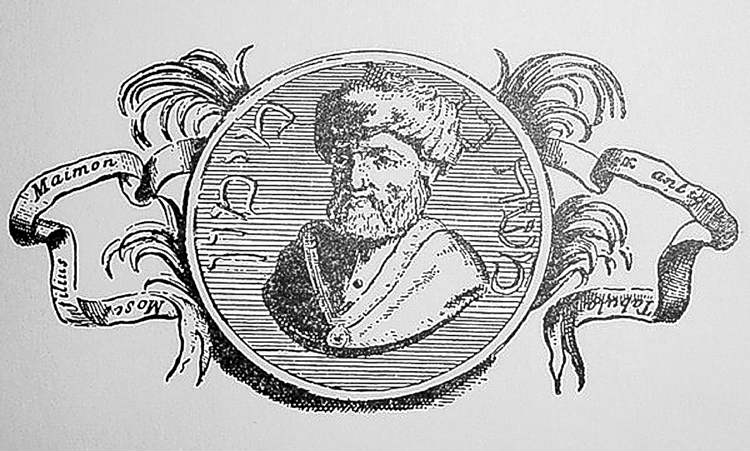
The 12th-century Egyptian-born scholar, known in Arabic as Abu Imran Musa bin Maimun bin Ubaidallah al-Qurtabi, wore a turban, three centuries before Sikhism even began. He was not a Muslim, either. He was quite a scientist and medical practitioner in his day, but among Jews, he is known for his masterful writings on Jewish religious law and philosophy. They know him as Rabbi Moshe ben Maimon (or Ramban), and in every image of him, he is wearing a turban. So what exactly does the turban symbolize again?
Under the proposed new Quebec charter denying the rights to freedom of expression and religion, could he be hired as public servant or not?
Imagine this: Five women apply for the same job working for the Government of Quebec. Each has completed the same course of training for the job. Four show up for the interview wearing scarves on their heads. One is a Jew and wears the scarf as a tichel, one is Muslim and wears hers as a hijab, one is a Catholic but wears her scarf because she is going bald and she is self-conscious about it and the fourth is an atheist who wears the scarf because she thinks it makes her look cute. The fifth is fervently Baptist but wears no head covering. Who gets the job?

Assume of the 50 people who took the training course the first two women ranked first and second and the others ranked 48th, 49th and 50th. Who gets the job? The Baptist because she wears no “religious symbol”? The atheist because she has no religion? What if her scarf has a message slogan printed on it promoting atheism? Is the Catholic woman disqualified because she wears the “religious symbol” but for non-religious purposes? Who gets the job? Clearly, once the Quebec Religious Symbols Inquisitor is done, it won’t be the most qualified applicant.
Not only is Quebec proposing to stifle freedom of speech, it is proposing to make religious discrimination in its hiring practices the rule of law. As discrimination inevitably does, this is going to move less-qualified people up the ladder over more-qualified ones rejected for reasons irrelevant to the job. This will surely deprive the people served by the government of the best-qualified workers.
Recruiters and bosses are going to have to ask some awfully irrelevant questions every time they see a beanie, turban, beard, head scarf, wig or long skirt. These proposed rules are not just shameful, pandering to the worst human instincts, they are based on ignorance and are just plain stupid. They have no place in a free and democratic society.
Rocky Kravetsky is a Winnipeg lawyer.