

Dunderdale resigns over fatal gaffe
Advertisement
Read this article for free:
or
Already have an account? Log in here »
To continue reading, please subscribe:
Monthly Digital Subscription
$1 per week for 24 weeks*
- Enjoy unlimited reading on winnipegfreepress.com
- Read the E-Edition, our digital replica newspaper
- Access News Break, our award-winning app
- Play interactive puzzles
*Billed as $4.00 plus GST every four weeks. After 24 weeks, price increases to the regular rate of $19.95 plus GST every four weeks. Offer available to new and qualified returning subscribers only. Cancel any time.
Monthly Digital Subscription
$4.99/week*
- Enjoy unlimited reading on winnipegfreepress.com
- Read the E-Edition, our digital replica newspaper
- Access News Break, our award-winning app
- Play interactive puzzles
*Billed as $19.95 plus GST every four weeks. Cancel any time.
To continue reading, please subscribe:
Add Free Press access to your Brandon Sun subscription for only an additional
$1 for the first 4 weeks*
*Your next subscription payment will increase by $1.00 and you will be charged $16.99 plus GST for four weeks. After four weeks, your payment will increase to $23.99 plus GST every four weeks.
Read unlimited articles for free today:
or
Already have an account? Log in here »
Hey there, time traveller!
This article was published 23/01/2014 (4454 days ago), so information in it may no longer be current.
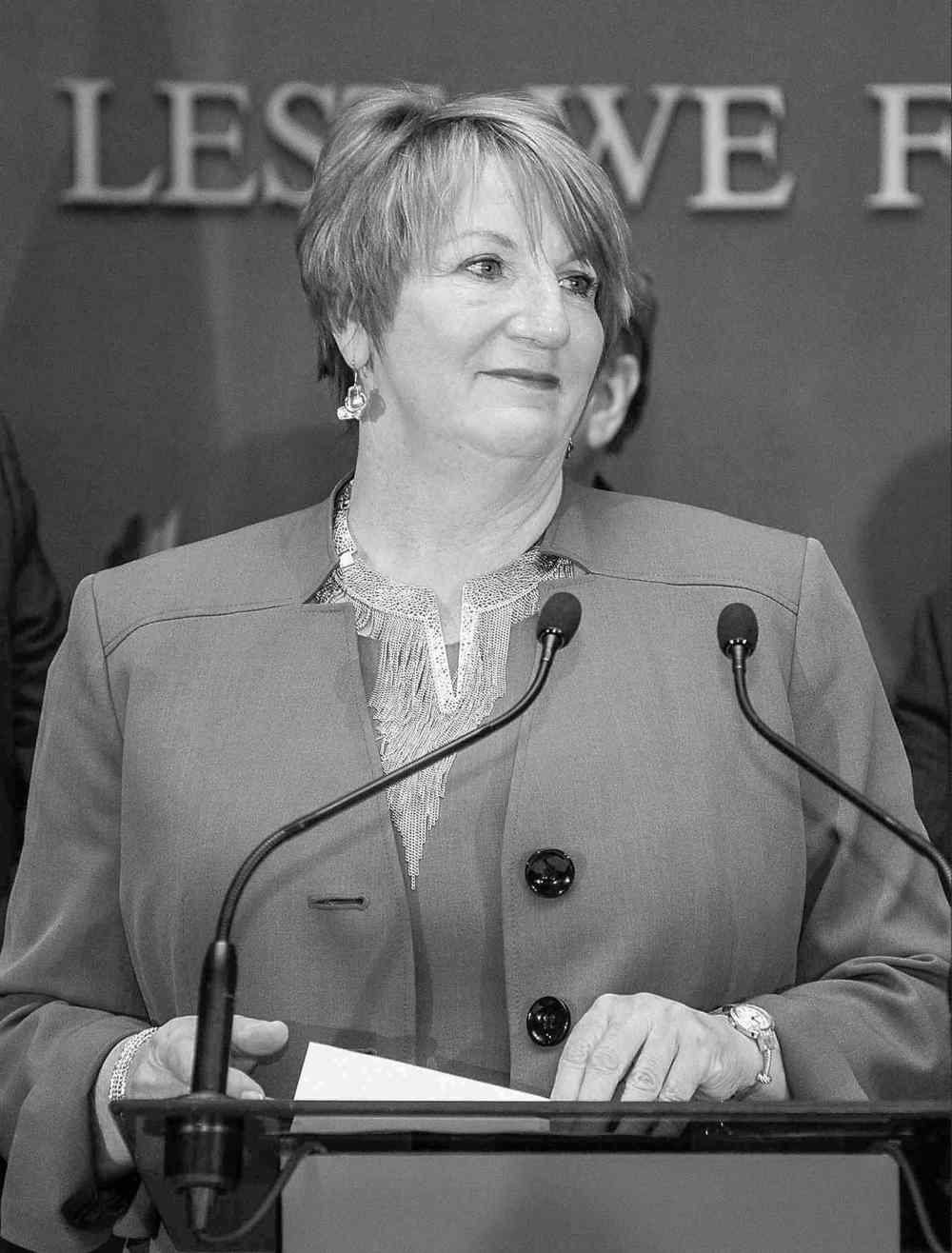
HALIFAX — Perhaps Kathy Dunderdale regretted her choice of words the moment they left her lips. But the damage was done and, within days, her three-year run as Newfoundland and Labrador’s first female premier was over.
Dunderdale announced her resignation Wednesday, clearing the way for an early election that is likely to bring the Liberals to power in St. John’s for the first time in more than a decade.
The 61-year-old, who struggled to escape the shadow of her larger-than-life predecessor, Danny Williams, used the announcement to claim her government had placed the province “on a secure footing with a proud, prosperous and sustainable future.”
She gave no reasons for her abrupt departure. She didn’t have to — her political future became unsustainable two weeks ago, when storm damage, a power-plant breakdown and rolling blackouts left tens of thousands of homes and businesses without power in freezing weather.
It was days before the premier surfaced to downplay the severity of the outages. While those without power were understandably frustrated and some people were “definitely in crisis,” she said on Jan. 6, “life is going on as normally as it possibly can for the bulk of the population.”
Her government’s much-touted, $7.7-billion project to generate hydroelectricity on the Lower Churchill River at Muskrat Falls, she noted, would bring with it a reliable source of power and the electrical-grid upgrades needed to prevent future blackouts. Today’s problems, in other words, should disappear by 2017, when Muskrat Falls is slated to come on stream.
But her be-patient message was cold comfort, to use an intentional pun, for those shivering in the dark. “She’s probably not sitting in the cold like we are,” one woman groused in the pages of the St. John’s Telegram. “She’s not eating crap food like us.”
The opposition parties jumped on her comments and portrayed the premier as out of touch. The NDP’s Lorraine Michael called for a public inquiry into why Nalcor Energy, the publicly owned utility, was struggling to meet the demand for power. “This is a crisis, there’s no doubt about that,” Liberal Leader Dwight Ball chimed in.
The posturing over what constitutes a crisis might have subsided once the lights were back on, but the blackouts were the culmination of a bad year for Dunderdale and her government.
She succeeded Williams as premier at the end of 2010 and won a solid majority — 37 of 48 seats — in an election the following October. But a tough, job-cutting budget last spring and Dunderdale’s penchant for secrecy chipped away at her popularity. In 2011, an Angus Reid survey put her approval rating at 58 per cent, second only to Saskatchewan Premier Brad Wall. As of last week, it stood at 24 per cent, making her the country’s least-popular premier, with Manitoba Premier Greg Selinger second from last.
Her party’s fortunes plummeted along with her personal numbers. A poll released in December pegged the Liberals as the choice of more than half of respondents, with the PCs at 29 per cent, 10 percentage points ahead of the NDP. It’s a dramatic reversal for the Tories, who were in first place just a year ago and well ahead of the then-third-place Liberals.
There had been speculation Dunderdale would step aside. But last month, in a pre-Christmas interview, she insisted she would stay on to fight the next election, set for October 2015.
Then came the botched response to the blackouts — “the straw that broke the camel’s back,” to quote backbencher Paul Lane who, until this week, was PC caucus chairman and one of Dunderdale’s staunchest supporters.
Lane crossed the floor of the legislature this week to join the Liberals, sealing the premier’s fate. Dunderdale rushed back from a Florida vacation, huddled with her caucus and stepped down.
Finance Minister Tom Marshall, who takes over as interim premier, has made it clear he does not plan to run again. Four cabinet ministers — Paul Davis, Keith Hutchings, Darin King and Derrick Dalley — are touted as possible candidates to take over as leader.

Dunderdale’s resignation, meanwhile, moves up the date of the next election, to some time in the spring of 2015. A leadership convention is expected to be called soon and, under Newfoundland law, a new premier must face voters within a year of being sworn in — and take on the challenge of trying to win the PCs a fourth term.
“It’s Newfoundland politics,” Marshall told reporters shortly before being named interim premier. “It can change on a dime.”
Or in the time it takes to downplay the severity of rolling blackouts.
Dean Jobb, who teaches journalism at the University of King’s College in Halifax, is the Winnipeg Free Press East Coast correspondent.
Related Articles
Growing pressure leads to resignation
Advertisement Advertise With Us
Advertisement Advertise With Us
History
Updated on Thursday, January 23, 2014 8:08 AM CST: Adds timeline