

Dim bulbs versus bright lights
Advertisement
Read this article for free:
or
Already have an account? Log in here »
To continue reading, please subscribe:
Monthly Digital Subscription
$1 per week for 24 weeks*
- Enjoy unlimited reading on winnipegfreepress.com
- Read the E-Edition, our digital replica newspaper
- Access News Break, our award-winning app
- Play interactive puzzles
*Billed as $4.00 plus GST every four weeks. After 24 weeks, price increases to the regular rate of $19.95 plus GST every four weeks. Offer available to new and qualified returning subscribers only. Cancel any time.
Monthly Digital Subscription
$4.99/week*
- Enjoy unlimited reading on winnipegfreepress.com
- Read the E-Edition, our digital replica newspaper
- Access News Break, our award-winning app
- Play interactive puzzles
*Billed as $19.95 plus GST every four weeks. Cancel any time.
To continue reading, please subscribe:
Add Free Press access to your Brandon Sun subscription for only an additional
$1 for the first 4 weeks*
*Your next subscription payment will increase by $1.00 and you will be charged $16.99 plus GST for four weeks. After four weeks, your payment will increase to $23.99 plus GST every four weeks.
Read unlimited articles for free today:
or
Already have an account? Log in here »
Hey there, time traveller!
This article was published 05/02/2014 (4460 days ago), so information in it may no longer be current.
EDMONTON — On Jan. 1, 2014 Canada started phasing out inefficient incandescent light bulbs. You’d think the world was ending. The coverage featured stories of people stockpiling the bad bulbs, people interviewed who get migraines from fluorescents and histrionic op-eds calling for a reversal of the legislation.
I can’t believe I have to say this but getting rid of incandescent light bulbs is an incredibly good thing. It’s the equivalent of phasing out leaded gas, CFCs or the Ford Pinto.
This phase-out is happening seven years after the initial announcement. At the time, then-minister of the environment, John Baird, said the change would reduce greenhouse gas emissions by six million tonnes. And we are lagging behind the industrialized world on this. The U.S. started in 2012, Australia and the European Union started in 2009 and Brazil and Venezuela started their phase-outs in 2005.
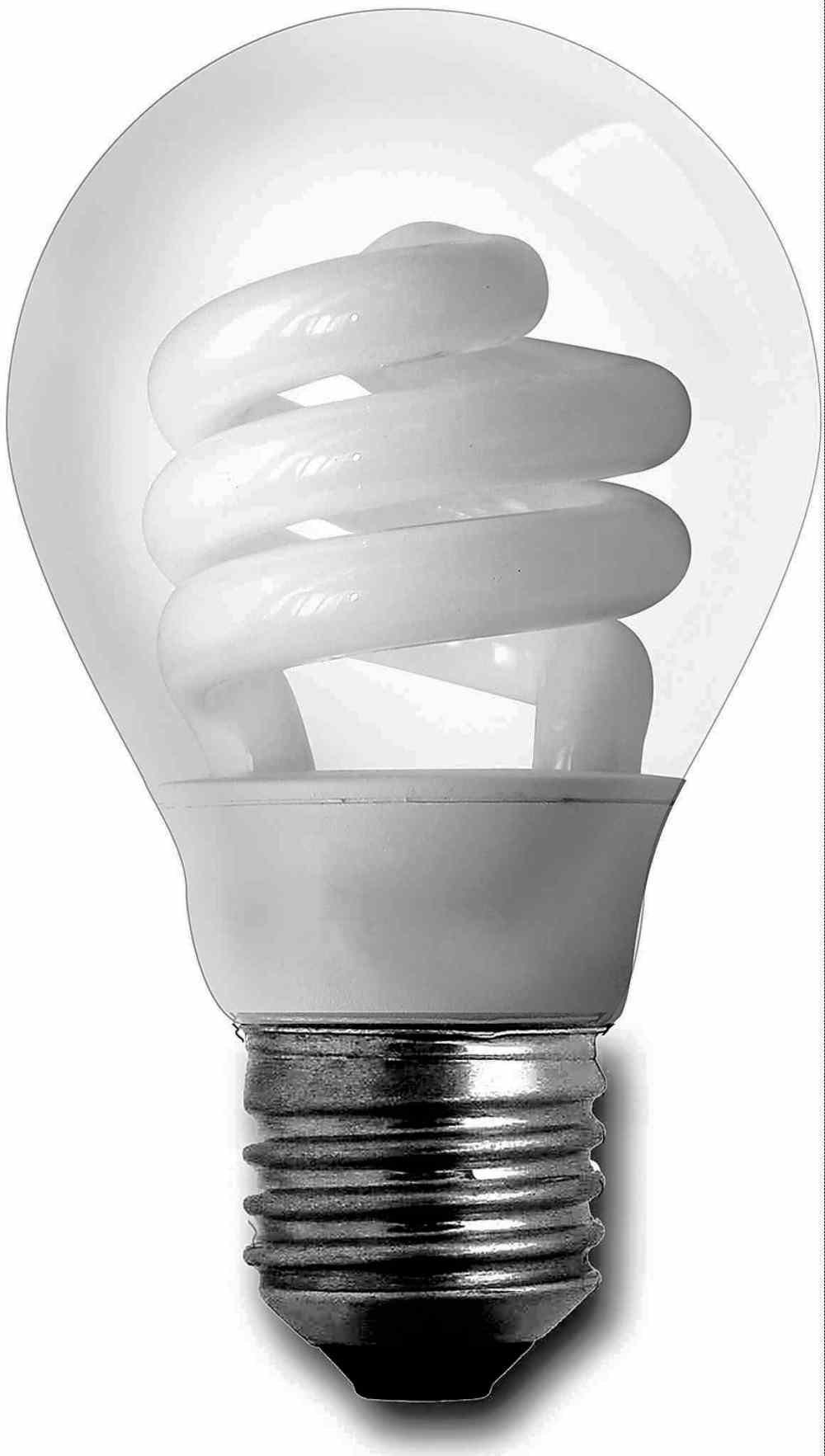
And even then we waffled. Certain halogen lights got an exception, even though they do not meet the original standard and they are only marginally more efficient than incandescent lights.
Godo Stoyke is an energy efficiency expert and the director of carbon with CReturns, an energy auditing and green retrofit company in Edmonton.
“The savings are very substantial. We are looking at a 75 per cent reduction in consumption for a typical compact fluorescent light and, depending on the application with some LEDs, you can save 10 times (the energy),” says Stoyke.
Compact fluorescent bulbs are a mature technology and have been around since 1985. Stoyke replaced all of his incandescent bulbs with compact fluorescents in his off-grid solar home in 1990. Stoyke was way ahead of the curve, but the rest of Canada has caught up. “We are doing pretty good. About 70 per cent of the residential light bulbs have been replaced with CFLs or LEDs,” says Stoyke.
One of the arguments used to slow down the phase-out was the high price of compact fluorescents and LEDs. But when you take a longer-term view, CFLs and LEDs blow incandescent bulbs away.
“A typical compact fluorescent light bulb lasts about 8,000 hours. An incandescent bulb lasts about 1,000 hours. You have to buy eight incandescent lights bulbs for a single CFL. If you pay 50 cents for the light bulb and $3 for the compact fluorescent light you are actually saving a dollar and that’s not counting the energy savings,” says Stoyke.
LEDs last 25,000 hours and their cost has dropped rapidly in just the past 12 months. You can get a 60-watt equivalent LED Cree or an equivalent Phillips bulb for $15 or less.
And there is the whole matter that 90 per cent of the energy an incandescent consumes is emitted as heat.
Both CFLs and LEDs have come a long way in the last decade. Gone are the days of the flickering, blue fluorescent lights that make your skin colour pale and pallid.
Stoyke suggests getting a warmer-coloured higher-quality bulb for around the house, in the 2,700 to 3,000 K colour temperature range. These bulbs have that familiar yellow glow and make your house look cosy and warm.
A lot of concern has centred on the mercury in CFLs and how we don’t have adequate recycling programs. While our recycling programs do need to improve, that isn’t really the whole story.
CFLs do contain mercury, about five micrograms or the equivalent of what’s in a watch battery, but coal-fired power plants emit literally tonnes of mercury every year. If you’re using coal-fired generation to power inefficient incandescent light bulbs you are emitting far more mercury from the stack than you would get from trashing a CFL bulb, says Stoyke.
On a life-cycle basis, a compact fluorescent bulb will result in 75 per cent less mercury pollution in a jurisdiction that gets electricity from coal.
Obviously, improving the recycling systems for CFLs needs to happen. Reforms were promised by the federal government back in 2007 and they are still working on it.

But regardless of the CFL/mercury non-controversy, do your research on lighting, upgrade your bulbs, save money and emit less carbon.
David Dodge is host and Duncan Kinney editor and production manager of Green Energy Futures, a multi-media series presented at www.greenenergyfutures.ca. Both are Troy Media columnists. The series is supported by Suncor Energy, TD, Shell Canada and the Pembina Institute.
— troymedia.com