

Venezuela on the brink as protests spread
Advertisement
Read this article for free:
or
Already have an account? Log in here »
To continue reading, please subscribe:
Monthly Digital Subscription
$1 per week for 24 weeks*
- Enjoy unlimited reading on winnipegfreepress.com
- Read the E-Edition, our digital replica newspaper
- Access News Break, our award-winning app
- Play interactive puzzles
*Billed as $4.00 plus GST every four weeks. After 24 weeks, price increases to the regular rate of $19.95 plus GST every four weeks. Offer available to new and qualified returning subscribers only. Cancel any time.
Monthly Digital Subscription
$4.99/week*
- Enjoy unlimited reading on winnipegfreepress.com
- Read the E-Edition, our digital replica newspaper
- Access News Break, our award-winning app
- Play interactive puzzles
*Billed as $19.95 plus GST every four weeks. Cancel any time.
To continue reading, please subscribe:
Add Free Press access to your Brandon Sun subscription for only an additional
$1 for the first 4 weeks*
*Your next subscription payment will increase by $1.00 and you will be charged $16.99 plus GST for four weeks. After four weeks, your payment will increase to $23.99 plus GST every four weeks.
Read unlimited articles for free today:
or
Already have an account? Log in here »
Hey there, time traveller!
This article was published 01/03/2014 (4429 days ago), so information in it may no longer be current.
The sound of banging pots began well before dawn. Out on the streets of Caracas on Feb. 24, the barricades were going up across the south and east of the Venezuelan capital. Tree trunks, blocks of concrete, burning tires and smouldering trash brought traffic to a halt. In some areas, demonstrators slicked the road surface with oil or spread spikes to keep away government forces.
It was the same picture in other big cities across Venezuela this week. With impressive co-ordination, opposition radicals were sending a message to President Nicol°s Maduro: Beatings, bullets and tear gas will not deter us.
“Look, this is a sacrifice,” says a barricade-builder in San Cristòbal in the southwestern border state of T°chira, where the protests began three weeks ago and tensions are highest. “It doesn’t matter if it takes a month, two months, three months. We have to get rid of this government.”
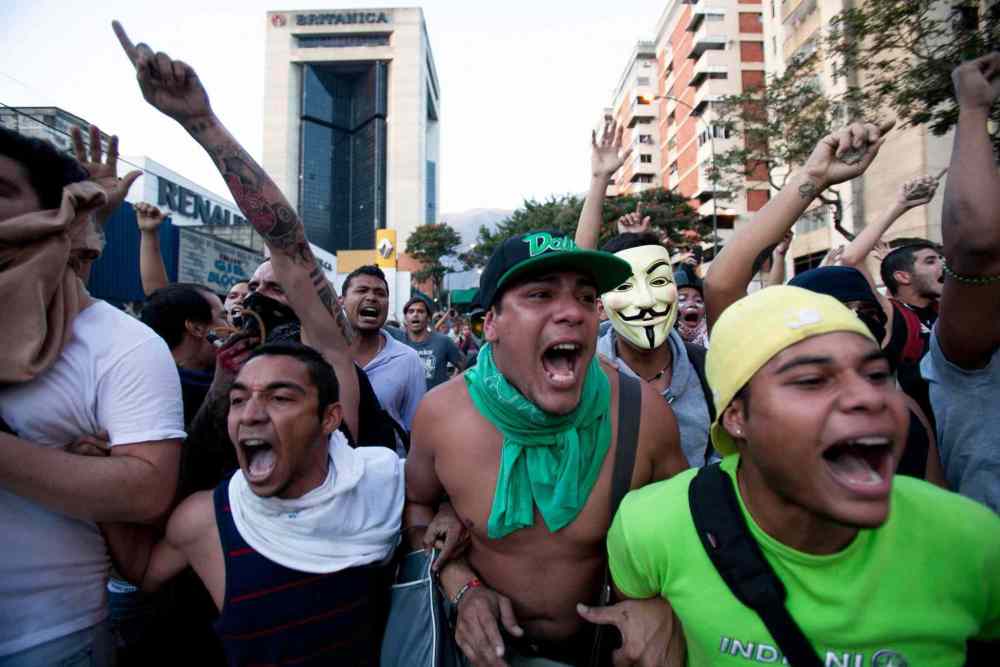
The protests started because of anger over violent crime, inflation and shortages of food, medicines and other basic goods, but the authorities’ harsh treatment of demonstrators has fuelled the rage. More than a dozen people have been killed since the regime’s response turned violent on Feb. 12, half shot in the head.
Most of the deaths have been at the hands of security forces or civilian gunmen backing the government: On Feb. 26, the authorities announced seven members of the intelligence services have been charged with murder. The Venezuelan Penal Forum, a human-rights group, says it has documented 18 cases of torture among the hundreds of detainees. More than 500 complaints about abuses remain to be investigated. Dozens of amateur videos show an excessive use of force on the streets.
Moderate leaders of the opposition Democratic Unity alliance are struggling to control the radicals, whose figurehead, Leopoldo Lòpez, has been in custody since Feb. 18.
On Feb. 22, former presidential candidate Henrique Capriles, governor of Miranda state, told a mass rally in the capital there were “millions of reasons to protest,” but for protesters to barricade themselves in their own districts played into the government’s hands. That call has fallen on deaf ears.
There are signs of fracture within government ranks, too. The official line of the ruling United Socialist Party of Venezuela is the opposition is trying to mount a “fascist coup.” A “truth commission” has been proposed to investigate “violence promoted by far-right groups.” Nonetheless, Capriles’ calls for the authorities to cease repression and to free political prisoners were echoed by José Gregorio Vielma Mora, a Socialist who is governor of T°chira state. Vielma acknowledged abuses and said the economic crisis was behind the protests.
Although Vielma later retracted these comments, presumably under pressure from the government, his words were the first public evidence of tensions within the regime. They were all the more significant because the governor, a retired military officer, took part in the 1992 coup attempt by the late Hugo Ch°vez, founder and “eternal leader” of the Socialists and is highly regarded by many former comrades.
Meanwhile, the country’s economic woes worsen. In an effort to blunt the impact of the protests, Maduro decreed this Carnival weekend — which coincides with the so-called “Caracazo” of 1989, when economic hardship led to days of looting and a massacre by the army — would start Thursday, two days earlier than scheduled. With many offices and stores already closed because of the protests, an extended holiday will exacerbate pervasive shortages.
“You can’t get anything here,” says Bettsi Carolina Quintero, an inhabitant of San Cristòbal. “No milk, no flour, no rice, no cooking oil, not even detergent.”

Shopping in the city these days involves knocking on closed store doors, such is the fear of violence and looting.
The central government has reacted to the crisis in T°chira by sending in army troops and using Russian-built Sukhoi warplanes to buzz demonstrators.
“I feel as if this were a war zone,” Quintero says.
With limited dollar reserves to buy the imported food on which Venezuela depends, and with the country more than $10 billion in debt to foreign suppliers, this week the government fiddled with its complex foreign-exchange system yet again. Firms and private individuals now will be able to buy and sell dollars through intermediaries, using either cash or government bonds. Introducing more flexibility into the exchange rate should ease the shortage of dollars, but it also is likely to drive up inflation as a falling bolvar increases the cost of imports.
Extreme economic hardship is just around the corner in Venezuela and with it the likelihood anger against the regime will spread.
Related Articles
Students expose true nature of Venezuelan regime
Advertisement Advertise With Us
Advertisement Advertise With Us