

Robertson punctured pretension
Advertisement
Read this article for free:
or
Already have an account? Log in here »
To continue reading, please subscribe:
Digital Subscription
One year of digital access for only $1.44 a week*
- Enjoy unlimited reading on winnipegfreepress.com
- Read the E-Edition, our digital replica newspaper
- Access News Break, our award-winning app
- Play interactive puzzles
*Billed as $5.77 plus GST every four weeks. After 52 weeks, price increases to the regular rate of $19.95 plus GST every four weeks. Offer available to new and qualified returning subscribers only. Cancel any time.
To continue reading, please subscribe:
Add Free Press access to your Brandon Sun subscription for only an additional
$1 for the first 4 weeks*
- Enjoy unlimited reading on winnipegfreepress.com
- Read the E-Edition, our digital replica newspaper
- Access News Break, our award-winning app
- Play interactive puzzles
*Your next Brandon Sun subscription payment will increase by $1.00 and you will be charged $17.95 plus GST for four weeks. After four weeks, your payment will increase to $24.95 plus GST every four weeks.
Read unlimited articles for free today:
or
Already have an account? Log in here »
Hey there, time traveller!
This article was published 27/03/2014 (4587 days ago), so information in it may no longer be current.
Among the things rightly claimed of a liberal education is that it enlarges one’s capacity to think critically and to challenge conventional assumptions. Heather Robertson, who died last week on her 72nd birthday, embodied both capacities, though she needed little such encouragement. She had — beyond doubt — an independent mind long before she earned degrees at the University of Manitoba and at Columbia University, which she attended on a Woodrow Wilson Fellowship.
At the University of Manitoba, she served as editor of The Manitoban, making it the liveliest, most controversial student newspaper in the country. Editorially, she broke a long-standing convention and endorsed a party in the mock-parliament elections. Uproar ensued. She questioned the prevailing orthodoxy on the need for a football team. More uproar, and denunciations by sportscasters in the daily media. As the then-president of the student union, I was urged to initiate discipline or dismissal. I did neither — not because we were friends, but because her opinions easily passed the test of fair public comment.
In her book, Writing From Life: A Guide for Writing True Stories, Heather observed that writing is a provocative act and that writing true stories, involving people with real lives and perspectives, must frequently invite disagreement and sometimes controversy. “I have been hanged and burned in effigy,” she wrote. “I have been sued for libel. I have been called a Nazi and accused of racism, hysteria and neurosis. I have made enemies and lost friends. In my first book, I unwittingly offended my mother.”
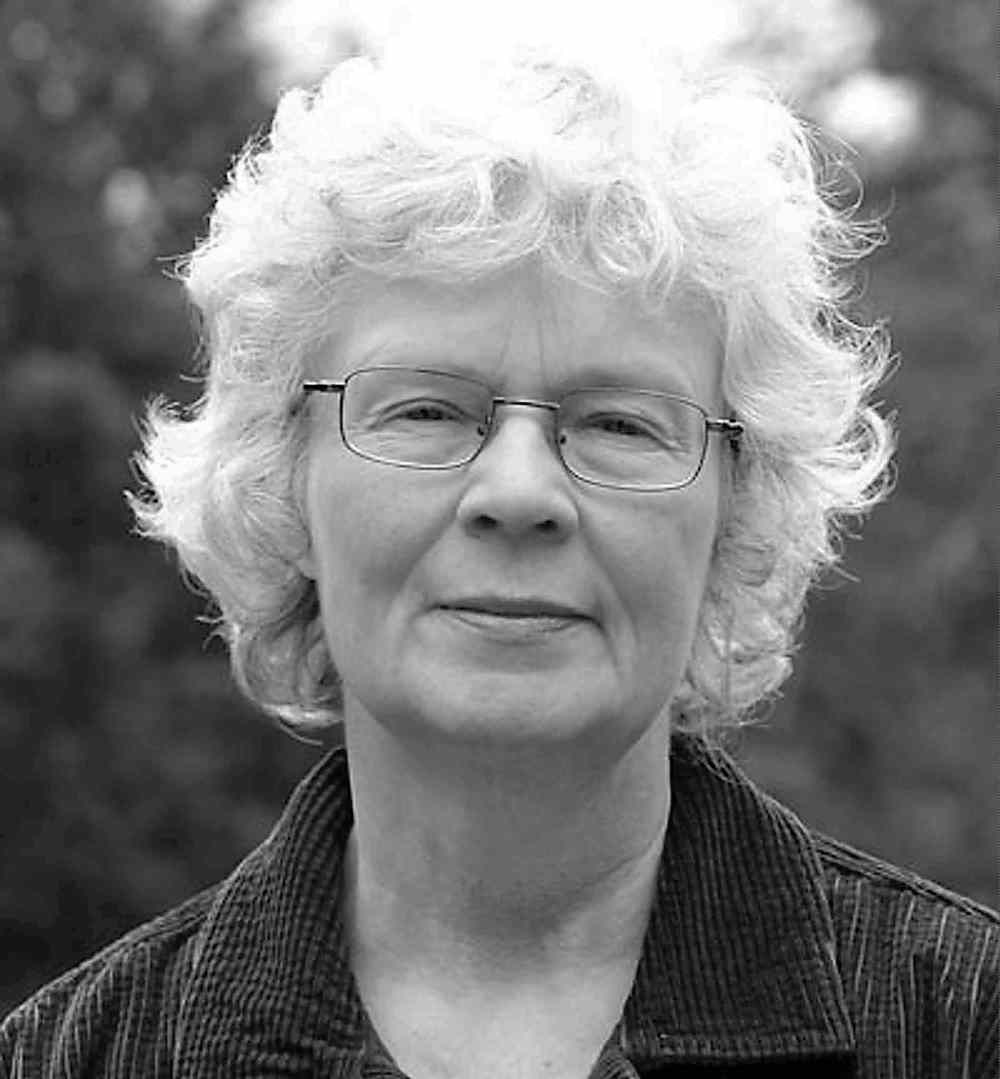
She was both stimulated and challenged by people’s reactions to strongly expressed opinions, so much so that she concluded early on that writing, not the classroom, was to be her life. She wrote in several different capacities for the Winnipeg Free Press and the Winnipeg Tribune, subsequently as a public affairs radio producer for CBC, and along the way contributed to numerous Canadian periodicals, including Saturday Night, Toronto Life, Chatelaine, Maclean’s and Canadian Forum.
Her first book — Reservations Are for Indians — was about aboriginal people by a woman who was not one. It combined audacity with insight and was controversial. This was followed by Grass Roots and Salt of the Earth, which looked, with sympathy but without sentimentality, at rural and small-town life. Their lack of sentimentality, not surprisingly, was controversial. These were followed by A Terrible Beauty: The Art of Canada at War and by a predictably unconventional book on the notorious robber, Ken Leishman, appropriately titled The Flying Bandit.
These diverse non-fiction works were followed in the 1980s by a fictional trilogy in which she discovered, embellished — or created — hitherto unknown romantic excitements in the life of William Lyon Mackenzie King who, whether prime minister or not, dominated Canadian politics for the 30 years following the First World War.
These audacious works challenged the conventional forms of novels and the conventional views of Willie King. The first volume of the trilogy won her the Books in Canada First Novel prize for 1983. This was the first of a number of writing awards she was to receive.

Later books included More Than A Rose: Prime Ministers, Wives and Other Women. This book, written before Kim Campbell’s brief premiership, was an extended examination of the wives and other women in the lives of Canada’s prime ministers. Not only did it break new ground in disclosing unknown or little-known facts about its subjects, it chronicled the transformation of the roles and expectations of prime ministerial spouses. On the Hill: A People’s Guide to Canada’s Parliament offered sometimes irreverent but accurate perspectives on all one would wish to know — and then some — of the arcane ways of Parliament.
In all, she wrote 17 books for which she was widely admired and celebrated. One particularly notable celebration of her achievements came in the form of an honorary doctorate from the University of Manitoba.
Her writings, over a 40-year span, were characterized by meticulous research, great intelligence, passion, flair, laughter — and by an irresistible urge to puncture the pretentious. And, by taking typically the road less travelled, making a singular contribution to our understanding of this country.
William Neville is a Winnipeg writer.
Related Articles
Author excelled at both fiction and true tales
Advertisement Advertise With Us
Advertisement Advertise With Us