

Reimagining Manitoba energy
Advertisement
Read this article for free:
or
Already have an account? Log in here »
To continue reading, please subscribe:
Digital Subscription
One year of digital access for only $1.44 a week*
- Enjoy unlimited reading on winnipegfreepress.com
- Read the E-Edition, our digital replica newspaper
- Access News Break, our award-winning app
- Play interactive puzzles
*Billed as $5.77 plus GST every four weeks. After 52 weeks, price increases to the regular rate of $19.95 plus GST every four weeks. Offer available to new and qualified returning subscribers only. Cancel any time.
To continue reading, please subscribe:
Add Free Press access to your Brandon Sun subscription for only an additional
$1 for the first 4 weeks*
- Enjoy unlimited reading on winnipegfreepress.com
- Read the E-Edition, our digital replica newspaper
- Access News Break, our award-winning app
- Play interactive puzzles
*Your next Brandon Sun subscription payment will increase by $1.00 and you will be charged $17.95 plus GST for four weeks. After four weeks, your payment will increase to $24.95 plus GST every four weeks.
Read unlimited articles for free today:
or
Already have an account? Log in here »
Hey there, time traveller!
This article was published 29/03/2014 (4586 days ago), so information in it may no longer be current.
North America can offset regional threats to energy supply in Europe with new investments in transportation infrastructure. Until then, states such as Russia will be able to use energy sales (prices and quantities) as levers to achieve their broader goals.
With the end of the Cold War, the Russian bear seemed to go into hibernation. With the second coming of Putin, however, using energy to blackmail neighbouring states may arise again. During Putin’s first reign as “czar,” he threatened Ukraine with cutting energy supplies. With his takeover of Crimea, he once again might use energy supply and price to leverage concessions from other EU countries dependent on Russian sources.
Russia has been steadily investing in its military. The rest of the world is tired of war as Iraq and Afghanistan dragged out for so long with little evidence of anything useful being achieved, despite great cost. The West no longer has the will to pursue war abroad.
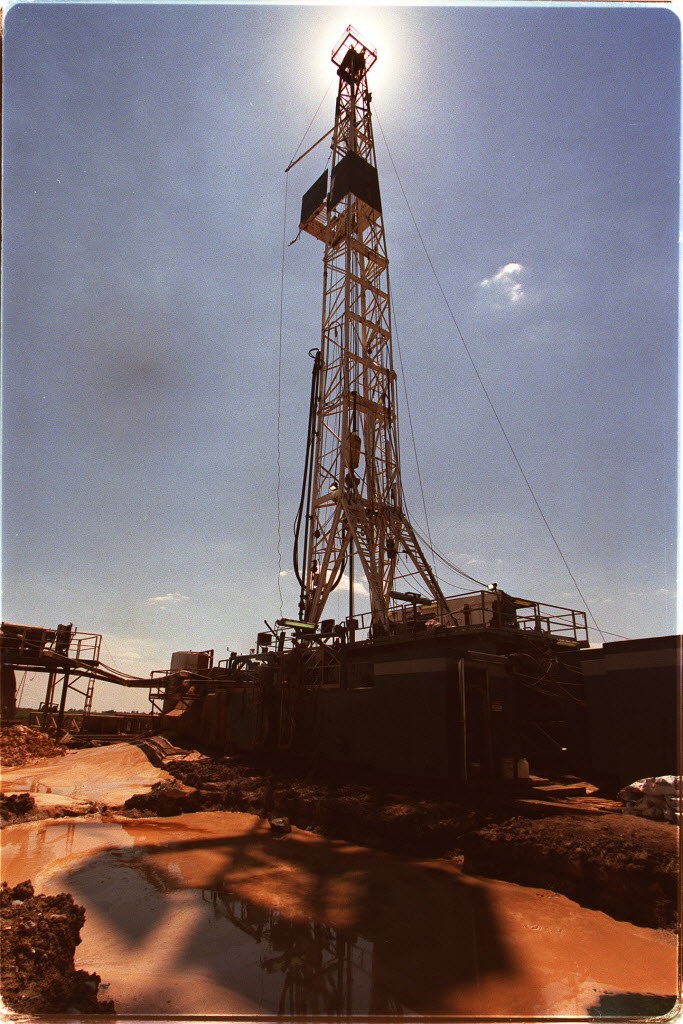
Energy sources are plentiful on a global scale, but are not equally accessible to all countries. Yet, energy underlies all economies to such an extent those countries without very secure supply sources are vulnerable to serious impacts from short-term limitations in supply and inflated prices. Alternate trade options lack infrastructure to facilitate access at this time.
If supply of Russian energy, particularly natural gas, were cut off, (or face significant price increases as is happening), parts of Europe would suffer. Russia is already increasing shipments to China and raising prices to Ukraine.
Whereas natural gas is abundant in many countries, Europe has avoided much fracking: This could now come back to haunt them as they have to import gas.
Canada and the United States have increasing and abundant natural-gas supplies they could export, but not on short notice. U.S. companies plan to set up liquid natural export capabilities, and British Columbia is in the midst of a major initiative to export liquefied natural gas (LNG). Currently their eyes are on Asian markets, where sufficient demand exists to justify the expensive capital costs. A fresh look at supplying Europe is warranted.
Europe could not justify LNG investment until now, because shipping gas by pipeline is far less expensive. Moreover, liquefying natural gas requires considerable energy. But now, for security reasons, it begins to make sense.
Some global sources of energy supply show weak points. Corruption, pirating and poor environmental practices are limiting the export capability of Nigeria. Venezuela, where a year ago I counted 12 large oil tankers (each about three kilometres apart), all leaving Lake Maracaibo for Europe (it looked like they were a train of ships), now is so badly managed their entire economy is in serious trouble.
Although China has huge reserves of shale gas, they appear not inclined to tap them. Other energy sources in the Middle East and Africa, including Iran and OPEC, are also key players in this international scene, and each will have its own strategic and security issues and priorities. They, with Canada, the U.S. and Russia are the potential global suppliers.
Canada so far has only B.C. moving into this potential market. Alberta also has gas, as do Saskatchewan and Manitoba. Liquefying natural gas using natural gas to energize the compressors, however, raises questions about the impact on climate change.
Over the past year, anyone who had qualms about anthropogenic impacts on climate must have seen the severe weather impacts on all parts of the world, including North America and Europe. Although these winter storms (and location-specific droughts) are still within the bounds of recorded weather events, it is the frequency, fluctuation and intensity that make the case.
If tensions with Russia don’t get worse, it may just create a new opportunity for Canada, including Manitoba. If Russia continues to act aggressively and use energy as a political weapon, security will be dependent on sufficient alternate sources to counter the impact of Russian threats and supply manipulation.
This implies greater export capability on the part of Canada and the United States, both for natural gas and oil. Keystone and the east-west pipeline will help, but LNG export infrastructure will be needed. The U.S. will need to modify legislation to remove its 40-year-old ban on gas exports.
Once capacity is in place to supply Europe, Russia’s threats from energy manipulation would be meaningless.
Concurrently, this situation offers new opportunities for other energy sources to be developed while still taking climate change into account. In the case of Manitoba, it may open up opportunities for further developments on the Nelson, but not for the purposes planned by Hydro. Wind and solar electricity production, even small-scale operations, is now competitive and could cover domestic demand growth. Hydro, gas or nuclear generation is needed primarily for base load domestically.
LNG could be shipped from the Bakken formation in the southwest corner of Manitoba to Europe via Churchill. The same applies to hydrogen, which is easily extracted from water by electrolysis. Hydrogen could be produced at a dam on the Nelson, and the process could be made more efficient if a nearby nuclear plant also produced electricity, because very hot water can be electrolyzed 25 per cent more efficiently than cool water. A nuclear plant produces hot water as “exhaust” and so would add efficiency to the process.
Germany has been increasing hydrogen consumption annually, and still adding more fuelling stations, so demand is there.
Nuclear plants may always have the taint of Chernobyl or Fukushima, but it is important to remember two facts: Both these plants were old technology, and the one in Japan was on earthquake- and tsunami-prone land. The new third-generation nuclear plants are much safer and can use up about 25 per cent of fuel-rod energy, compared with two to three per cent with older models. Waste could be reduced by drawing on rods withdrawn from storage and adapted for use at the new plant.

Manitoba is well-positioned to enter the global energy supply chain: There is latent capacity on the Nelson River, water is in abundant supply, the rail line exists and the Churchill port can easily be modified to accommodate LNG and hydrogen-carrying ships.
Manitoba would have a reliable market for its northern electricity and natural gas. Processing would add value, not require new transmission lines and avoid price and demand volatility in U.S. markets beyond the short term. Neither product would represent a treat to land and water ecosystems en route to Europe.
Manitoba might consider this alternative to its current plans, which become harder to explain as each day goes by.
Jim Collinson is a management consultant specializing in the complexities surrounding energy, economic and environmental issues.