

Does big-game hunting have a future?
Advertisement
Read this article for free:
or
Already have an account? Log in here »
To continue reading, please subscribe:
Monthly Digital Subscription
$0 for the first 4 weeks*
- Enjoy unlimited reading on winnipegfreepress.com
- Read the E-Edition, our digital replica newspaper
- Access News Break, our award-winning app
- Play interactive puzzles
*No charge for 4 weeks then price increases to the regular rate of $19.95 plus GST every four weeks. Offer available to new and qualified returning subscribers only. Cancel any time.
Monthly Digital Subscription
$4.99/week*
- Enjoy unlimited reading on winnipegfreepress.com
- Read the E-Edition, our digital replica newspaper
- Access News Break, our award-winning app
- Play interactive puzzles
*Billed as $19.95 plus GST every four weeks. Cancel any time.
To continue reading, please subscribe:
Add Free Press access to your Brandon Sun subscription for only an additional
$1 for the first 4 weeks*
*Your next subscription payment will increase by $1.00 and you will be charged $16.99 plus GST for four weeks. After four weeks, your payment will increase to $23.99 plus GST every four weeks.
Read unlimited articles for free today:
or
Already have an account? Log in here »
Hey there, time traveller!
This article was published 27/05/2014 (4243 days ago), so information in it may no longer be current.
Manitoba Conservation and Water Stewardship (CWS) has repeatedly stated “hunting is an important part of Manitoba’s rich natural heritage.” The department says it is committed to “providing hunting opportunities for all Manitobans, ensuring that hunting has a positive future in the province, and exploring new and expanded hunting opportunities for Manitoba hunters and the non-resident hunting industry.”
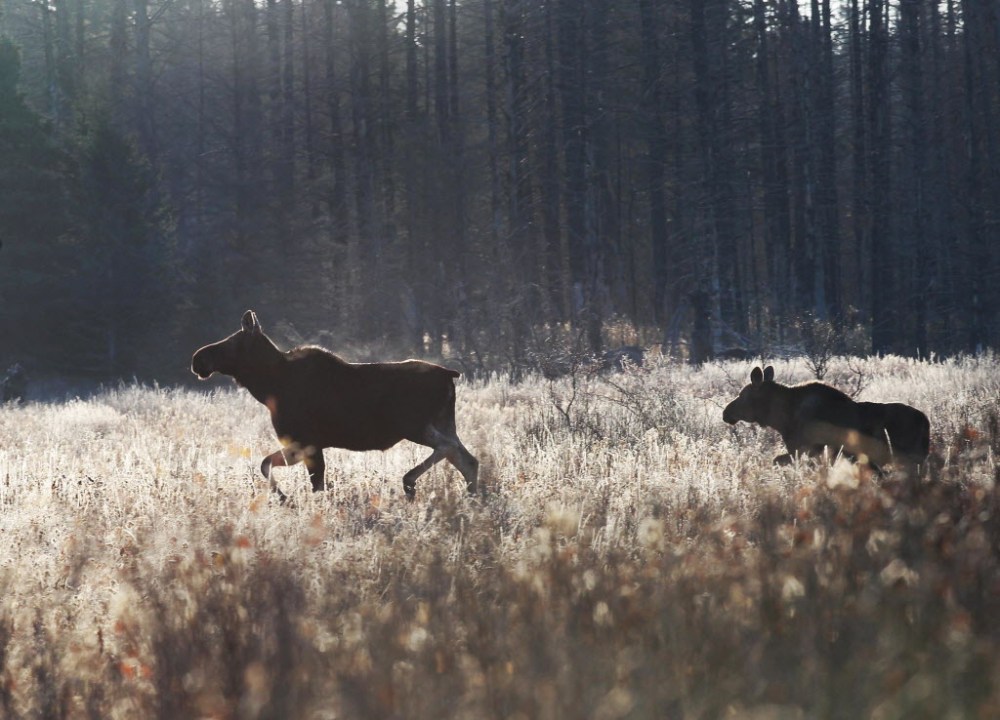
Can it keep its commitment? Does it already know it can’t be kept regarding big game? Free Press articles such as Where have all the moose gone? (Jan. 13) and Deer hunters just have to buck up: a doe is a no-go (May 15) have drawn attention to declining moose and deer populations, resulting in severe restrictions on recreational hunting of moose and deer as well as suspension of aboriginal moose-hunting rights in some areas. Is this a preview of the future?
The 2012-13 annual report states: “The (wildlife) branch manages wildlife resources to conserve biological diversity, including species and ecosystems, within the context of the principles of sustainable development.” The 2010-11 report states: “Conservation is the first priority of wildlife management, and the second priority is to protect or ensure aboriginal rights of harvest. When additional hunting opportunities are sustainable, and stakeholder consultation has occurred, seasons may be introduced as part of the department’s annual process of reviewing hunting regulations.”
Is CWS already quietly accepting that only its first priority has real meaning? The second priority is a constitutional requirement that can only be suspended in exceptional circumstances. Recreational hunting isn’t even named as a priority. There is instead acknowledgement that “seasons may be introduced,” but only if sustainable and after annual consultation with stakeholders. Herein is the key to understanding the future. What facts underlie annual hunting regulations? What stakeholders are consulted? What is their input?
The Legislative Assembly of Manitoba determined over 30 years ago that accountability was essential to effective wildlife management and passed into law Sec. 83 of The Wildlife Act requiring: “… the minister shall, within six months of the close of the fiscal year 1987 and in every fifth year thereafter, prepare and lay before the next session of the legislature following the close of the fiscal year, a report containing (a) a review of the status in the province of the animals listed in Schedule A and of such other wildlife as the minister may select for review; (b) a review of the wildlife management programs implemented by the minister and an assessment of their effectiveness; (c) an analysis of trends in, and a forecast of demands for, the use of the wildlife resource in the province; and (d) an evaluation of the capability of the wildlife resource in the province to meet anticipated demands.” Reports were tabled as required in 1987, 1992 and 1997, but not for the last three reporting periods. Had they been filed, there would now have been an accountability framework covering a span of 30 years. Why was this not done?
Of the 50-plus species in Schedule A, moose and deer would have merited detailed treatment in all reports. Subsection (b) requires that management programs not only be described, but their effectiveness assessed. Subsection (c) requires a forward look at demand, while (d) requires assessment of the likelihood of meeting anticipated demand. These last two requirements are especially significant. They are analogous to assessment requirements for proposed development projects under The Environment Act administered by CWS. Project proponents such as Manitoba Hydro must provide much more detailed information about its projects than CWS applies to its own wildlife-management responsibilities. The result is that disproportionate expense is often incurred assessing, monitoring and reporting on effects of projects compared to the dollars devoted to government efforts to actually manage wildlife. Add to this CWS’s failure to comply with statutory reporting and the public can only speculate about the future.
Conservation Minister Gord Mackintosh has a statutory responsibility to comply with Section 83 of The Wildlife Act. He should do so expeditiously and comprehensively. What the future holds for big-game hunting in Manitoba will be clearer as a result.

Brian Ransom was a wildlife biologist as well as minister of natural resources under the Progressive Conservative government of Sterling Lyon.