

Brian Sinclair’s death was a homicide
But call it whatever you want; just address the discrimination
Advertisement
Read this article for free:
or
Already have an account? Log in here »
To continue reading, please subscribe:
Monthly Digital Subscription
$1 per week for 24 weeks*
- Enjoy unlimited reading on winnipegfreepress.com
- Read the E-Edition, our digital replica newspaper
- Access News Break, our award-winning app
- Play interactive puzzles
*Billed as $4.00 plus GST every four weeks. After 24 weeks, price increases to the regular rate of $19.95 plus GST every four weeks. Offer available to new and qualified returning subscribers only. Cancel any time.
Monthly Digital Subscription
$4.99/week*
- Enjoy unlimited reading on winnipegfreepress.com
- Read the E-Edition, our digital replica newspaper
- Access News Break, our award-winning app
- Play interactive puzzles
*Billed as $19.95 plus GST every four weeks. Cancel any time.
To continue reading, please subscribe:
Add Free Press access to your Brandon Sun subscription for only an additional
$1 for the first 4 weeks*
*Your next subscription payment will increase by $1.00 and you will be charged $16.99 plus GST for four weeks. After four weeks, your payment will increase to $23.99 plus GST every four weeks.
Read unlimited articles for free today:
or
Already have an account? Log in here »
Hey there, time traveller!
This article was published 16/06/2014 (4320 days ago), so information in it may no longer be current.
What do you call it when the medical professionals in a Canadian hospital emergency department wrongly assume you are just there because you are drunk and homeless, ignore you for 34 hours while you vomit and go into shock, and leave you to die there?
That is not a natural death.
That is homicide.
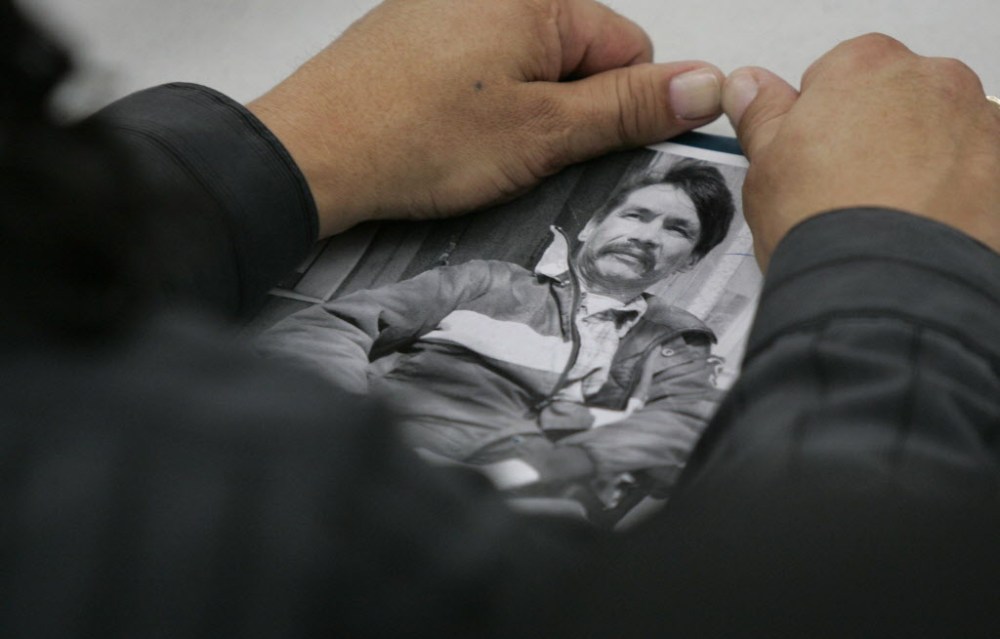
The inquest into the death of Brian Sinclair wrapped up last week in Winnipeg. Sinclair was a vulnerable aboriginal double-amputee who went to Health Sciences Centre in 2008 complaining of abdominal pain and a catheter problem. He was told to go wait in the waiting room. He was never called back. Ever. He was ignored to death.
He had a bladder infection. He just needed antibiotics and a catheter change. The chief medical examiner said: “If the treatment had been given… he would not have died on that day.”
Security video footage showed nurses and other staff walking right past Sinclair many times, but never interacting with him. Fellow patients or their companions noticed he was in distress and approached staff to try to get help for him, only to be brushed off. Sinclair threw up twice as he went into shock, and staff kicked into action by giving him a large throw-up basin, but never interacted with the man.
At the inquest, the medical professionals agreed the presumption that must be made is that every person who presents at an emergency department is in need of urgent medical care. However, nobody made that presumption about Sinclair.
Some nurses and security guards assumed he was intoxicated. He wasn’t. Some assumed he was homeless and was just there for shelter. Wrong again. Some who observed him sitting in the same spot one day to the next thought maybe he had been discharged but had come back — anything to explain away why Sinclair was there, except that he was waiting for urgent medical care.
The sole basis for their assumptions was their visual observations of Sinclair. They could see he was aboriginal. They could see he was disabled, legless, in a wheelchair. They could see he wasn’t well-dressed or clean-cut. Based solely on those visual observations, they concluded he was drunk, or homeless, or otherwise not in need of medical care. Then they just left him there until he died — and then for a few more hours more until rigor mortis set in.
When you make assumptions about someone based solely on what they look like, that is called stereotyping. When those stereotypes are based in part on the race of a person, that is called racism.
Racism is not always manifested overtly. People can, and often do, make assumptions based on a person’s race or other physical characteristics without even knowing or intending to. The problem is that in a hospital, those kinds of stereotypes can lead to critical mistakes. In Sinclair’s case, they were fatal.
No one is suggesting anyone intended to discriminate against Sinclair as he sat there in distress for 34 hours. Yet, he was discriminated against. The result matters, not the intention.
Sinclair’s death can only be understood as a colossal human failure. He should not have died. He only died on that day because the conduct of the people charged with his care substantially contributed to that outcome. In law, when the conduct of a person substantially contributes to the death of another, it is called homicide.

It is necessary to understand Sinclair’s death as a homicide in order to appreciate it wasn’t just flawed systems that led to his neglect — it was people who fatally neglected him. Unless those behavioural and attitudinal issues are appreciated and addressed, marginalized people will consider to suffer bad treatment and outcomes in the health care system. Sinclair was the proverbial canary in a coal mine. His death exposed the toxicity of the stereotyping and assumption-making that happens in the health care system. It is incumbent on us to fix that.
Denying that there is prejudice in the system is not going to make anything better. Denial is effectively the approach taken by the inquest, by focusing the second phase on issues that had nothing to do with Sinclair’s death such as “patient flow” and “access block” while marginalizing issues related to discrimination and social determinants of health. That is why the Sinclair family and all of the aboriginal parties with standing lost confidence in the inquest and withdrew from Phase II. That is why the government needs to call a public inquiry to deal with the treatment of marginalized and aboriginal people in our health care system.
Call it false-assumption-making rather than racism if that makes you more comfortable, but just address the problem.
Vilko Zbogar was co-counsel for Brian Sinclair’s family at the inquest that wrapped up last week into the man’s death.
History
Updated on Monday, June 16, 2014 7:54 AM CDT: Replaces photo