

Singular and passionate
Izzy Asper's ghost hovers over the new national museum he wanted built in the city he so loved
Advertisement
Read this article for free:
or
Already have an account? Log in here »
To continue reading, please subscribe:
Monthly Digital Subscription
$1 per week for 24 weeks*
- Enjoy unlimited reading on winnipegfreepress.com
- Read the E-Edition, our digital replica newspaper
- Access News Break, our award-winning app
- Play interactive puzzles
*Billed as $4.00 plus GST every four weeks. After 24 weeks, price increases to the regular rate of $19.95 plus GST every four weeks. Offer available to new and qualified returning subscribers only. Cancel any time.
Monthly Digital Subscription
$4.99/week*
- Enjoy unlimited reading on winnipegfreepress.com
- Read the E-Edition, our digital replica newspaper
- Access News Break, our award-winning app
- Play interactive puzzles
*Billed as $19.95 plus GST every four weeks. Cancel any time.
To continue reading, please subscribe:
Add Free Press access to your Brandon Sun subscription for only an additional
$1 for the first 4 weeks*
*Your next subscription payment will increase by $1.00 and you will be charged $16.99 plus GST for four weeks. After four weeks, your payment will increase to $23.99 plus GST every four weeks.
Read unlimited articles for free today:
or
Already have an account? Log in here »
Hey there, time traveller!
This article was published 18/09/2014 (4237 days ago), so information in it may no longer be current.
The miracle at The Forks unveiled for us this week owes its existence most directly to the rocket-driven activist whose stubbornness would have shamed a large herd of mules.
Izzy Asper, the man who first imagined the spectacular new Canadian Museum for Human Rights, was the ultimate contrarian, a lone wolf, howling at the purple moon of his imagination. He was both loved and hated, since he was his own worst enemy and his own best friend. The bale fire in his eyes told his story better than anyone ever could.
Named after a country that defined the limits of determination, Israel Asper, who died 11 years ago, felt most at ease reaching for the stars, as he so accurately described it. He never shied away from superlatives, even those beyond his reach, and confided he so seldom speculated in public where he intended his corporate hocus-pocus to end up — because if he had, “people would have put me in a straitjacket.”
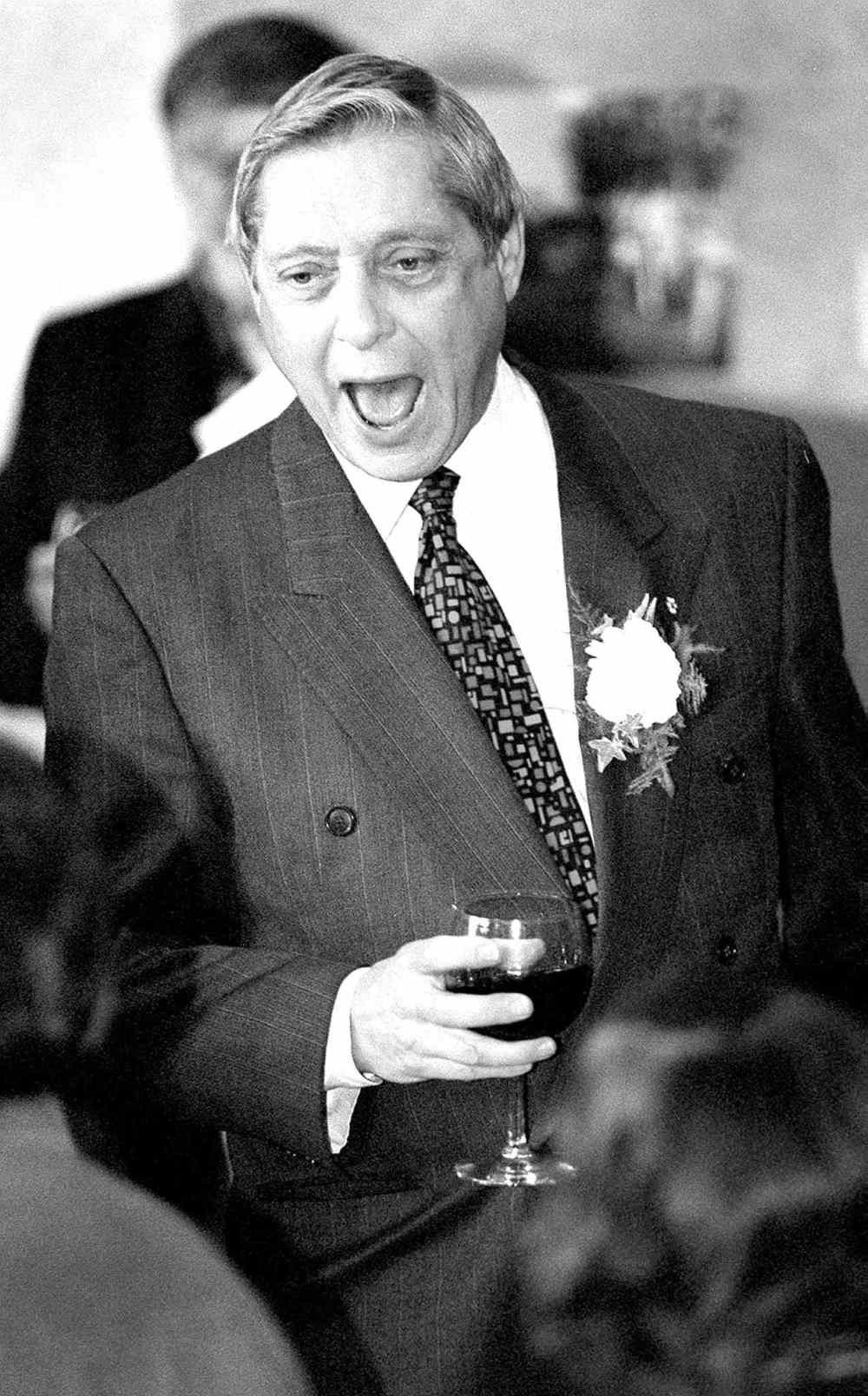
These days, Izzy’s lively ghost hovers over the museum’s Tower of Hope, which symbolically and architecturally dominates Winnipeg’s skyline and feeds the local gossip mills.
Asper was a singular man who had it all, having self-created a $4-billion media empire, then Canada’s largest and richest, in its diversity and profits.
He never rested. In the midst of his most ambitious corporate expansion, he showed me a confidential list of his unfinished, high-priority projects that he fully intended to execute. They included writing the score for a Broadway musical; launching new chartered banks in Israel and Calgary; publishing a novel; and developing the Caribbean Island of St. Lucia.
His sudden death, at 71, left his corporate empire in limbo. Ultimately, it was Izzy’s purchase of Conrad Black’s newspaper chain, which no one else wanted and had to be financed at retail-bank lending rates, that sealed the Asper empire’s doom. Shares in the once-mighty communications colossus plummeted to 19 cents — from a 2000 high of $26 — with no bidders. Arguably, it was the most tragic and least necessary bankruptcy in Prairie history, not having been caused by either of the usual scapegoats — gopher infestations or rash decisions by CP Rail.
When Conrad Black wangled a British lordship, Izzy’s sons tried to even the score by buying a real, if spectacularly minor, British title for their dad. Izzy was piped aboard the Lake of the Woods excursion ship Grace Anne, accompanied by a troupe of actors done up in appropriate costumes, who after a string of chanted “Here ‘Yees,” anointed him Lord of the Manor of Polington in the Parish of Charminster in the County of Dorset. The title was real, but Izzy used it only once, that sunny afternoon, cruising his favourite lake.
For most of his run, he had a fun life, beating the odds and having his way — maintaining his Winnipeg loyalties as his top priority.
It is the ultimate irony that nothing remains of the once-mighty Asper empire, except its loose historic connection to the new museum. At this point, the family neither owns nor operates the museum, even if daughter, Gail, and Asper Foundation guru Moe Levy raised most of the required private capital, with a generous boost by Prime Minister Stephen Harper, who took care of the operating budget.
That effort ranked as one of the most remarkable feats of fundraising in the country’s philanthropic history. Any national drive to beautify Winnipeg seemed to have been largely exempted from consideration by most of Canada’s moneyed classes, since they haughtily — and stupidly — dismissed Winnipeg as “the capital of flyover country.”
The beguiling new museum and its focus on human rights exemplified the chief founder’s imaginative spirit, but it does not bear his name. That was a deliberate and significant exception by Izzy, whose foundation contributed $20 million to the project. He had previously sponsored a dozen of Winnipeg’s most useful educational facilities that prominently boasted the Asper trademark.
That included the Humane Society’s Tuffy Asper Boardroom for lost dogs and the corridor water fountain for thirsty gymnasium students at the Asper Jewish Community Campus. (It was doubly blessed; its plaque declares it was donated by Gail Asper to honour Izzy’s wife, Babs.)
It was in the eerie, pre-burial room of the St. Boniface Hospital on the day of his passing in 2003 where Izzy’s inert body rested, that family members vowed to complete his quest. His heartbroken daughter Gail spoke out first, right there, in the hospital’s death room, looking tearfully at her dad’s corpse for the last time: “We must get this thing done… the real harm would be in not trying. Izzy left us a wake of inspiration.”
That fateful morning, her father had been due to visit Vancouver where he was to address 400 aboriginal chiefs as part of launching the international architectural competition for the museum’s design.
At the funeral that followed, family members were milling about, not certain how to properly mark their sorrow. It was his niece, Dr. Judi Lofchy, who came up with the most appropriate ceremony. Izzy had been an avid chain-smoker all his adult life. When his kids got together and collected the funds for him to attend non-smoking seminars given by a local hypnotist, he faithfully attended all the lectures. One evening he returned home to announce the sessions were all done, and promptly lit up his favourite Craven A cigarette. When his son, David, reminded him that he was still smoking, Izzy waved him away, with the triumphant retort: “Yeah, but so is the hypnotist!”
On the evening of his funeral the family gathered in a downtown courtyard where they all lit up the Craven As Izzy had left behind. “That was our way of saying goodbye. It was the only cigarette I ever smoked, and I was choking to death,” Lofchy recalled.
When I received Izzy’s final email from his New York penthouse, shortly before his passing, the tone defined its purpose. It was a cry from the heart that was still beating but barely. “Suddenly,” he wrote in part, “sitting in my apt. in NY ready to face tomorrow’s corporate onslaught, I feel lonely. Utterly alone.” He signed off, “OLD IZZ.”
That sad note was not vintage Asper, but it reminded me of his gallows humour. As his health deteriorated, I heard he had been fitted with a complicated pacemaker to help his failing heart and sent him a sympathizing note. In reply, I received this cheerful reminder: “Not to worry. That pacemaker also opens my garage door!”
Reading that bit of bravado, his life story suddenly came together. I finally realized this one-off character of endless contradictions but a will of iron, had not lived as much as life had lived through him. His final grace note that would have pleased him to no end was the procession to his grave attracted more pickup trucks than limousines.

Now he was gone, most Winnipeggers felt reduced and vaguely abandoned. They were not only lamenting the death of a valued and unique presence — they were grieving for themselves.
The Canadian Museum for Human Rights is not officially — or even unofficially — a memorial to “Old Izz.”
But try telling that to the Winnipeg gentry.
The author of 26 books, Peter C. Newman’s unofficial biography of Israel Asper, Izzy: The Passionate Life and Turbulent Times of Canada’s Media Mogul was published by Harper Collins in 2008.