

Justice gone wrong
Advertisement
Read this article for free:
or
Already have an account? Log in here »
To continue reading, please subscribe:
Monthly Digital Subscription
$1 per week for 24 weeks*
- Enjoy unlimited reading on winnipegfreepress.com
- Read the E-Edition, our digital replica newspaper
- Access News Break, our award-winning app
- Play interactive puzzles
*Billed as $4.00 plus GST every four weeks. After 24 weeks, price increases to the regular rate of $19.95 plus GST every four weeks. Offer available to new and qualified returning subscribers only. Cancel any time.
Monthly Digital Subscription
$4.99/week*
- Enjoy unlimited reading on winnipegfreepress.com
- Read the E-Edition, our digital replica newspaper
- Access News Break, our award-winning app
- Play interactive puzzles
*Billed as $19.95 plus GST every four weeks. Cancel any time.
To continue reading, please subscribe:
Add Free Press access to your Brandon Sun subscription for only an additional
$1 for the first 4 weeks*
*Your next subscription payment will increase by $1.00 and you will be charged $16.99 plus GST for four weeks. After four weeks, your payment will increase to $23.99 plus GST every four weeks.
Read unlimited articles for free today:
or
Already have an account? Log in here »
Hey there, time traveller!
This article was published 25/09/2014 (4136 days ago), so information in it may no longer be current.
When police charge someone with unlawfully killing another, it’s an essential part of the process that there is evidence to prove beyond a reasonable doubt the accused did something that caused the death, coupled with an unlawful state of mind.
At trial, if the Crown can’t meet this burden of proof then the accused must be acquitted.
In the vast majority of cases, the system works. Through a system of checks and balances, starting from the original investigation through to the assessment of the case by the Crown, most accused persons are properly before the court regardless of the verdict.
Some get acquitted, but statistics show most are convicted, and this is a testament to the integrity of our system.
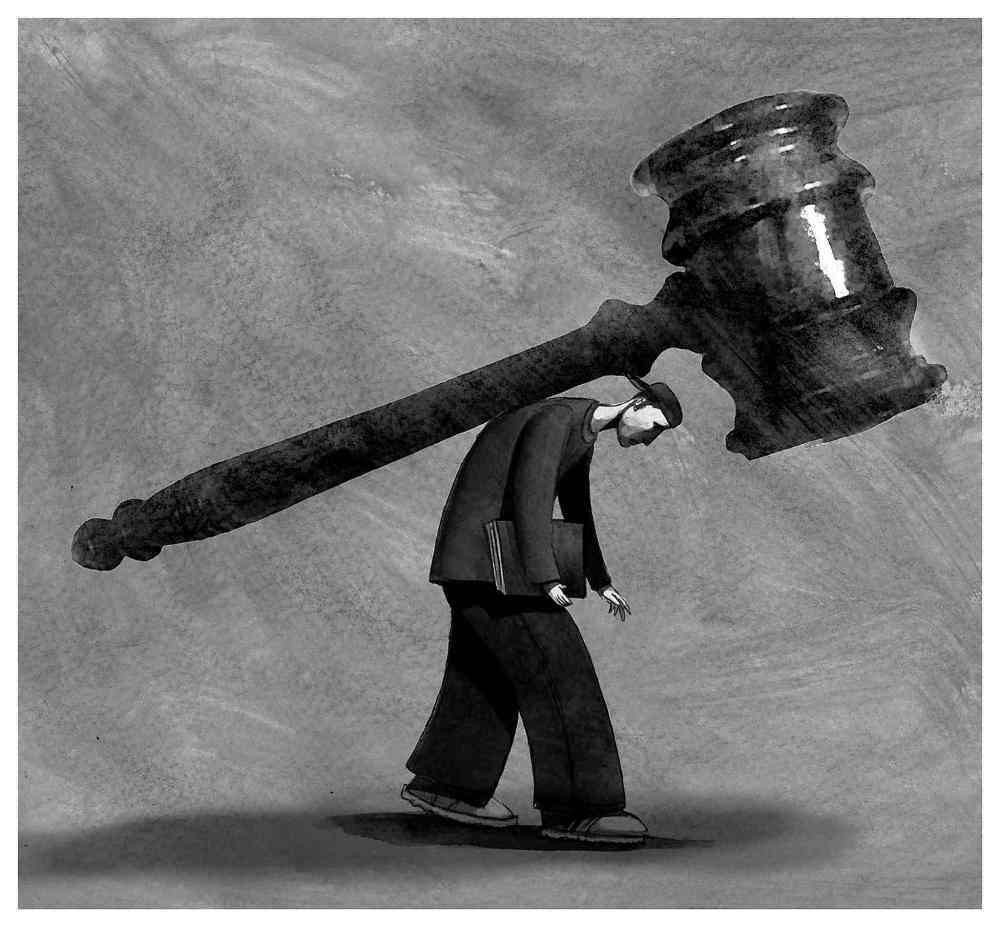
However, a recent decision in the Court of Queen’s Bench illustrates a problem I think needs some reconsideration by our courts if we are to maintain public confidence and respect for the process.
There is a publication ban in the case, so I’ll refer to the accused as “RB” as it is reported in the case digests.
RB was charged in 2008 with second-degree murder involving the death of his 13-month-old foster son.
The Crown’s theory going into the case appears to have been RB should be found guilty because he was alone with the child when he stopped breathing and, therefore, no one else could have committed the crime.
At trial, of three experts the Crown called as witnesses, two testified they couldn’t say whatever caused the child to stop breathing happened within this period of exclusive opportunity.
Moreover, it came to light Child and Family Services had prepared a report containing information suggesting someone else had harmed the child before RB was alone with him, and the death might be attributable to the earlier trauma.
It became clear to the trial judge the case was very problematic, and she even told the Crown attorney explicitly she was concerned about the lack of evidence against the accused. But the Crown insisted on proceeding.
When the Crown rested its case, the defence made a motion for acquittal, and it was granted. RB’s lawyer then asked Justice Deborah McCawley to award costs to the man.
It is this aspect of the case that’s in need of some commentary.
RB waited for five years to get to trial. He spent his entire life savings on legal fees, then after that money was gone, he had to rely on legal aid. The question is whether the Crown should have to pay him back because it didn’t really have a case against him.
Justice McCawley applied the law as it stands in Canada and held RB was not entitled to costs. Her decision is sound insofar as it respects precedent established by Canada’s Supreme Court.
The bias in Canadian law is to protect something known as Crown discretion and to limit consequences to the Crown to only those cases in which it can be shown there is an abuse of process or “flagrant impropriety.” This sets a high standard when courts are reviewing Crown conduct, and I have no issue with the concept that Crown attorneys should be given wide latitude in making their decisions.
The question is whether the law is fair and sets a bar that is too high for cases such as the one against RB.
Justice McCawley noted in her decision “… one would have expected the Crown to be continuously mindful of its responsibility to assess its strategy against a reasonable prospect of conviction.” I think the court was saying it was clear to everyone but the Crown it had no case.
The Crown has an ethical and professional obligation to proceed only in those cases where it believes there is a reasonable likelihood of conviction. When the Crown is blind to this fact, surely it has to bear some responsibility as part of the actual and perceived fairness of the trial process.
The consequences to the individual of being charged and embroiled in the criminal justice system are huge and, as noted, in this case, it left an innocent accused drained of all his hard-earned savings.

We must be protected from this, and one way to do it is with financial incentives. The prosecution service will be much more careful about proceeding with dubious cases if the standard for awarding costs is made more accessible to accused persons.
It might be time for the courts to create some separation between the concepts of abuse of process, which implies a higher level of egregious conduct, and the awarding of costs in cases where the exercise of Crown discretion may be done in good faith but is nevertheless erroneous.
It’s a fair way for the system to accept it isn’t perfect all the time. In turn, it will promote respect by the public.
David Asper is a Winnipeg lawyer and businessman. He helped win freedom in 1992 for David Milgaard, who spent 21 years in jail for a murder he did not commit.