

Ukraine begins restoring ancient Jewish culture
Advertisement
Read this article for free:
or
Already have an account? Log in here »
To continue reading, please subscribe:
Digital Subscription
One year of digital access for only $1.44 a week*
- Enjoy unlimited reading on winnipegfreepress.com
- Read the E-Edition, our digital replica newspaper
- Access News Break, our award-winning app
- Play interactive puzzles
*Billed as $5.77 plus GST every four weeks. After 52 weeks, price increases to the regular rate of $19.95 plus GST every four weeks. Offer available to new and qualified returning subscribers only. Cancel any time.
To continue reading, please subscribe:
Add Free Press access to your Brandon Sun subscription for only an additional
$1 for the first 4 weeks*
- Enjoy unlimited reading on winnipegfreepress.com
- Read the E-Edition, our digital replica newspaper
- Access News Break, our award-winning app
- Play interactive puzzles
*Your next Brandon Sun subscription payment will increase by $1.00 and you will be charged $17.95 plus GST for four weeks. After four weeks, your payment will increase to $24.95 plus GST every four weeks.
Read unlimited articles for free today:
or
Already have an account? Log in here »
Hey there, time traveller!
This article was published 05/08/2015 (3954 days ago), so information in it may no longer be current.
“Every person born into this world represents something new, something that never existed before, something original and unique” — Martin Buber.
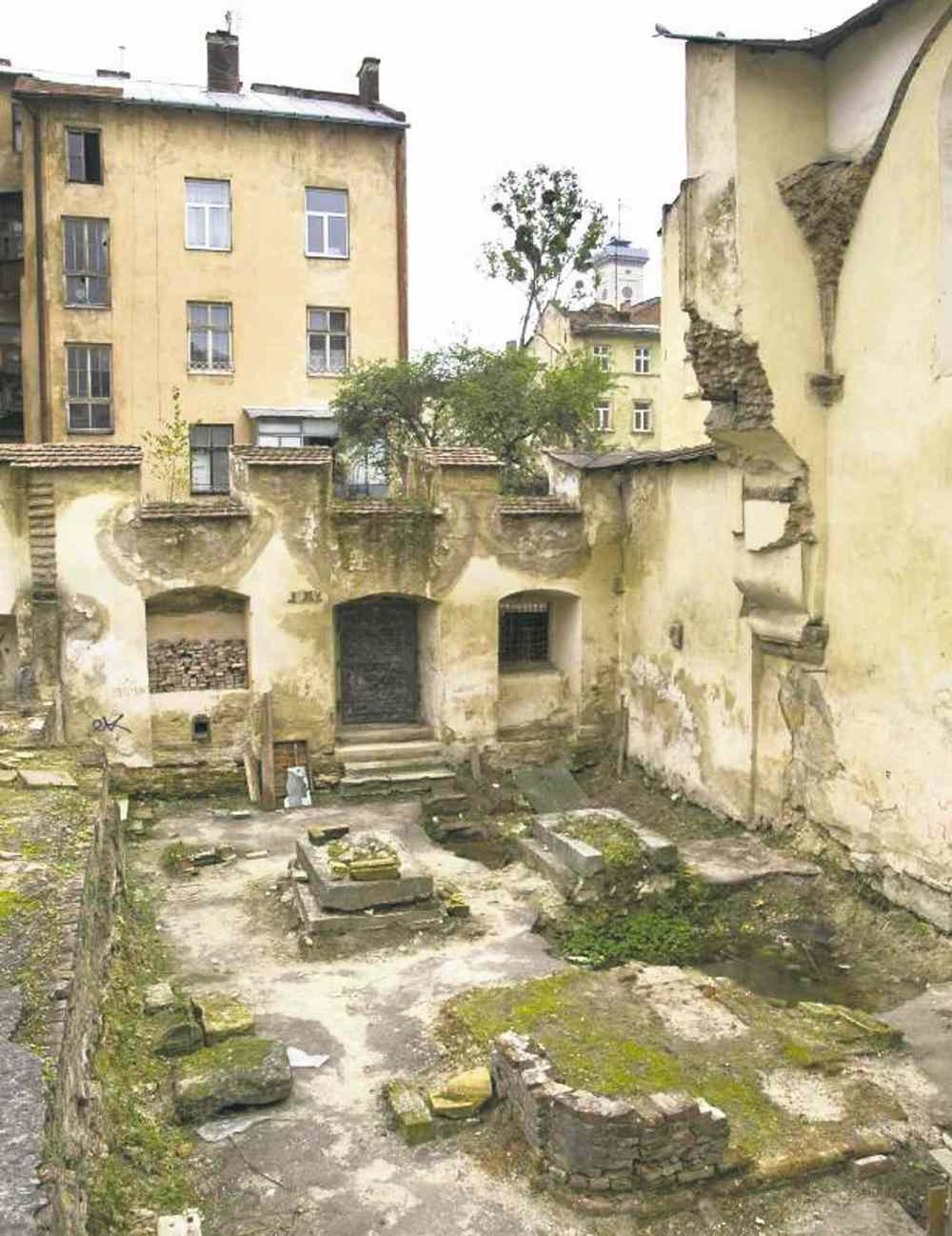
This is one of over 20 quotations that will be located on stone plaques in Synagogue Square in Lviv, Ukraine. The planned renovation of the square, alongside two other places of Jewish heritage in Lviv, have led to a discussion about how the multicultural past and ethnic diversity should be preserved in contemporary Ukraine.
Ukrainian history is in many ways intermingled with the history of Jews. Jews for centuries lived on the territories of contemporary Ukraine.
In the early 20th century, some three million Jews, about a third of all world Jewry, lived on the territory of today’s Ukraine.
Pogroms, the Holocaust, forced displacements and emigration reduced the Jewish population in Ukraine to an estimated 150,000 to 350,000 today.
Jewish heritage sites for years remained abandoned and ruined. Only in recent years has a discussion taken place around the preservation of Jewish cultural and religious sites as an important part of shared Ukrainian-Jewish history.
Lviv, in particular, plays an important role in these discussions.
A city with more than 800 years of recorded history, it witnessed different ethnic and cultural communities living together for centuries. Lviv, or Lemberg in German and Yiddish, was a significant Jewish hub.
At the beginning of the 20th century, the Jewish community was the second-largest in the city. It constituted 30 per cent of the population. The Polish population was larger and the Ukrainian was 18 per cent. After the Nazi occupation during the Second World War and following almost 50 years of Soviet rule, the memory of Jews and their contribution to the city’s development were almost eliminated. Today, Jews are only 0.3 per cent of the city’s population, and the sites of Jewish presence in the urban landscape have become difficult to identify.
In 2008, an initiative to restore Jewish sites was established by the German government’s Deutsche Gesellschaft fºr Internationale Zusammenarbeit (GIZ) GmbH, the Lviv City Council, and the Centre for Urban History. The project’s aim was to identify the most important sites of Jewish heritage in Lviv, to commemorate places of mass killings and to celebrate the vibrancy of Jewish cultural history.
Three places were selected. The first was Synagogue Square in the heart of the medieval Jewish quarter, where the famous Golden Rose synagogue was located. The second was one of the most renowned Jewish cemeteries in Europe, known from 1414 and destroyed in 1941 by the Nazis. And the third was the former Yaniv forced labour camp — in essence a death camp and the place where 100,000 to 120,000 Jews were killed during the Second World War.

An international architectural competition was announced in 2010 and was accompanied by a number of public hearings and discussions. More than 130 designers and architects from 34 countries participated. Expertise, openness, transparency, participation and equal opportunities for architects and designers from all over the world were among the main priorities of the competition. The winning projects for all three sites were announced on Dec. 22, 2010.
The first prize for a design project of Synagogue Square was awarded to a group of architects from Germany: Franz Reschke, Paul Reschke and Frederick Springer. First prize for the Besojlem Memorial Park was awarded to Ronit Lombrozo of Israel, and first prize for the Yaniv (Janòw in Polish) Concentration Camp was given to a group of U.S. architects: Ming-Yu Ho, Ceanatha La Grange and Wei Huang. All winners subscribed to the general idea that Jewish sites should be integrated into the landscape of the contemporary city.
Renovation of Jewish sites in Lviv is still a process in the making. The competition in Lviv is significant as one of the first examples in Ukraine of a public discussion devoted to celebrating the multi-ethnic and multinational culture and history of Ukraine.
Prof. Oksana Dudko is a research fellow in the Centre for Urban History, Lviv.