

Tragedy makes compassion central issue in campaign
Advertisement
Read this article for free:
or
Already have an account? Log in here »
To continue reading, please subscribe:

Digital Subscription
One year of digital access for only $205*
- Enjoy unlimited reading on winnipegfreepress.com
- Read the E-Edition, our digital replica newspaper
- Access News Break, our award-winning app
- Play interactive puzzles
*First annual payment billed as $205.00 + GST for one year. This annual subscription will automatically renew at $233.00 + GST every 52 weeks (10% off the regular annual price of $259.35). Offer available to new and qualified returning subscribers only. Cancel any time.
To continue reading, please subscribe:
Add Free Press access to your Brandon Sun subscription for only an additional
$1 for the first 4 weeks*
- Enjoy unlimited reading on winnipegfreepress.com
- Read the E-Edition, our digital replica newspaper
- Access News Break, our award-winning app
- Play interactive puzzles
*Your next Brandon Sun subscription payment will increase by $1.00 and you will be charged $17.95 plus GST for four weeks. After four weeks, your payment will increase to $24.95 plus GST every four weeks.
Read unlimited articles for free today:
or
Already have an account? Log in here »
Hey there, time traveller!
This article was published 04/09/2015 (4044 days ago), so information in it may no longer be current.
BRANDON — Just when it appeared the state of the Canadian economy was becoming the focus of the federal election campaign, the photograph of a drowned child has suddenly made compassion a central issue.
The image, published in newspapers all over the world and widely distributed through social media, is heartbreaking. A lifeless three-year-old boy lying face-down on a Mediterranean beach, the victim of yet another failed attempt to escape the horrors being experienced by millions of Syrians.
Reports indicate Alan Kurdi, the child in the photo, was one of 11 refugees who drowned when their flimsy boat capsized while trying to cross a five-kilometre strip of water from Bodrum, Turkey, to the island of Kos, Greece. Alan’s father, Abdullah, survived but his mother and five-year-old brother were also among the victims.
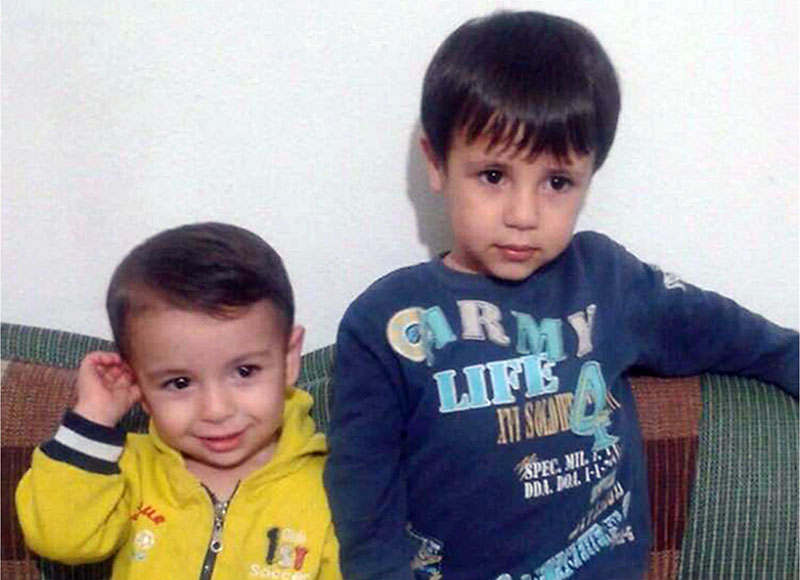
Initial reports indicated the family had tried to immigrate to Canada, but their application was rejected by the federal Citizenship and Immigration department in June. Information released Thursday, however, indicates an application was submitted for the family of the brother of Abdullah Kurdi, but was rejected because it was incomplete.
The death of Alan, his mother and brother, and Canada’s alleged connection to the situation, has put a harsh spotlight on the manner in which the Harper government has responded to the Syrian refugee crisis.
More than four million Syrians have fled their nation in the past four years. Another seven million are displaced within the country and could soon follow those who left before them. It is a massive humanitarian crisis that is causing a huge strain for European nations, but where is Canada?
On Wednesday, Immigration Minister Chris Alexander said Canada has taken in “approximately 2,500” Syrian refugees so far, and added “the numbers grow quickly through private sponsorship and government assistance. We also have brought over 20,000 Iraqi refugees.” That is far, far less than European nations are accepting. Germany alone is prepared to accept 800,000.
The particulars of the Kurdi family’s case have been somewhat clarified, but the fact remains a mother and her two young sons, and thousands more like them, have died attempting to flee the events unfolding in Syria. Alexander can argue more refugees would be admitted to Canada if not for administrative impediments in Turkey and the United Nations, but other nations aren’t letting those issues prevent them from saving thousands of lives.
That fact alone gives rise to a number of questions: how many Syrian refugee applications have been rejected by Alexander’s department for administrative reasons? How many of those refugees have suffered the same fate as the Kurdis? Why is Canada sitting on the sidelines compared to many other nations?
A decade after U2 lead singer and activist Bono claimed “the world needs more Canada,” do those words still ring true? Does the world need more of a country that, in the opinion of many, has become indifferent to the struggles of those, particularly Muslims, who are desperate to escape war and famine?
Those are tough questions, but they must be asked during this campaign. They speak to how we as Canadians perceive ourselves and how we want to be perceived by those beyond our borders.
Prime Minister Stephen Harper argues “refugee resettlement alone cannot, in any part of the world, solve this problem.” That is always true in these cases, but it is no excuse for inaction, nor for Canada failing to shoulder the existing refugee burden with its European allies. More specifically, it is no justification for Canada turning its back on families whose bodies eventually wash up on Turkish and Italian beaches.
While Harper appears to favour the status quo, NDP Leader Tom Mulcair and Liberal Leader Justin Trudeau each insist Canada must do more to assist refugees. It sets the table for a discussion about Canada’s role and obligations in the world and provides voters with a clear choice.

The deaths of Alan, his brother Galib and his mother Rehan were as foreseeable as they were preventable. Many more will die in the coming months if this nation’s approach to refugees does not change.
Is that the Canada the world needs more of?
Deveryn Ross is a political commentator living in Brandon.
deverynrossletters@gmail.com Twitter: @deverynross
Related Articles
Liberals win 4th mandate as NDP vote collapses and Singh announces he will resign






Advertisement Advertise With Us
Advertisement Advertise With Us
History
Updated on Friday, September 4, 2015 9:42 AM CDT: Adds byline