

Manitoba Liberals: past and present
The Liberals haven't always been marginalized in Manitoba and could possibly improve their standing on April 19.
Advertisement
Read this article for free:
or
Already have an account? Log in here »
To continue reading, please subscribe:

Digital Subscription
One year of digital access for only $205*
- Enjoy unlimited reading on winnipegfreepress.com
- Read the E-Edition, our digital replica newspaper
- Access News Break, our award-winning app
- Play interactive puzzles
*First annual payment billed as $205.00 + GST for one year. This annual subscription will automatically renew at $233.00 + GST every 52 weeks (10% off the regular annual price of $259.35). Offer available to new and qualified returning subscribers only. Cancel any time.
To continue reading, please subscribe:
Add Free Press access to your Brandon Sun subscription for only an additional
$1 for the first 4 weeks*
- Enjoy unlimited reading on winnipegfreepress.com
- Read the E-Edition, our digital replica newspaper
- Access News Break, our award-winning app
- Play interactive puzzles
*Your next Brandon Sun subscription payment will increase by $1.00 and you will be charged $17.95 plus GST for four weeks. After four weeks, your payment will increase to $24.95 plus GST every four weeks.
Read unlimited articles for free today:
or
Already have an account? Log in here »
Hey there, time traveller!
This article was published 05/03/2016 (3856 days ago), so information in it may no longer be current.
With only one sitting member in the provincial legislative assembly, it’s tough to imagine the Manitoba Liberals were once a dominating force in our province’s history. They formed governments from 1888 to 1899, from 1915 to 1922, and as Liberal-Progressives from 1932 to 1958.
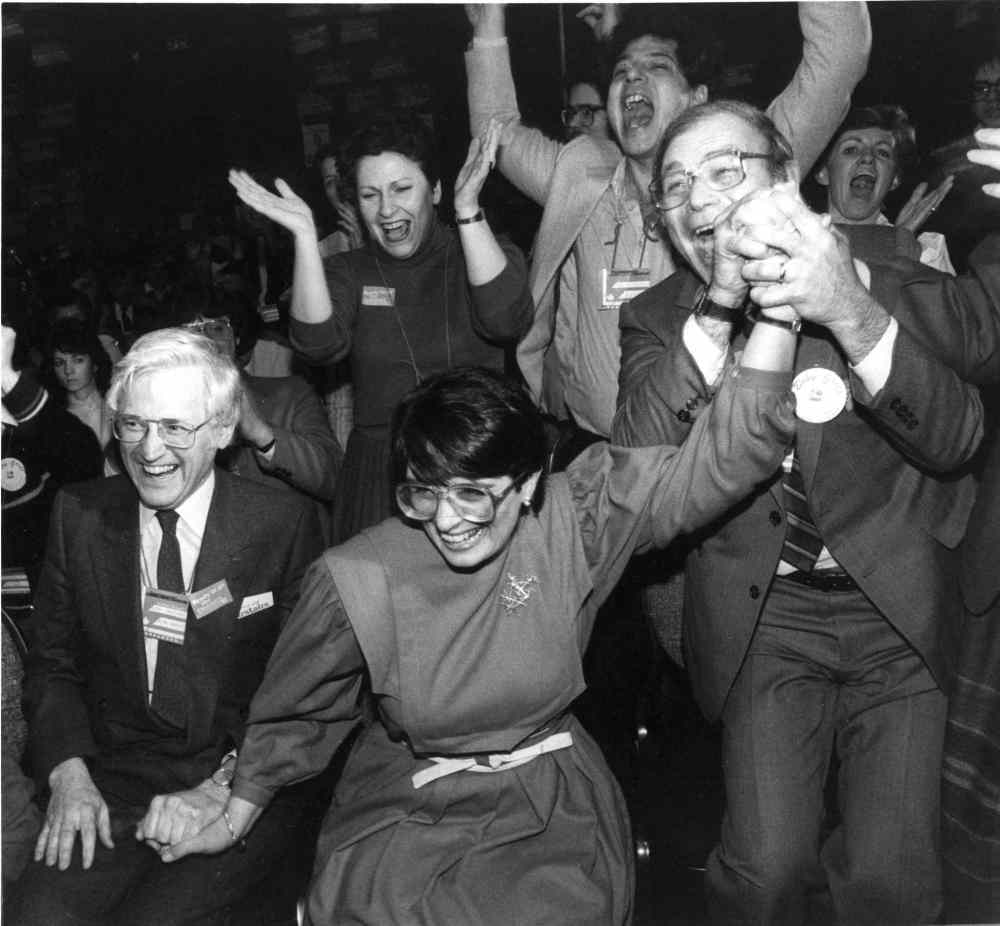
The 1969 election in which Ed Schreyer and his NDP unexpectedly jumped from third place to government triggered a new era of Liberal marginalization. An exception was 1988 to 1990 when Sharon Carstairs and her Liberals formed the official Opposition, thereby knocking the NDP into third place for seven years.
There are similarities between 1988 and 2016. Back then, Premier Howard Pawley and his NDP were a tired bunch, there was open dissent within the caucus and there was a budget deficit. The Liberals jumped at the opportunity, stole NDP votes in many ridings and increased their caucus size from one to a whopping 20 seats.
In the 1995 election, the party was reduced to a mere three seats, and resumed its third-place position behind the Progressive Conservatives and the NDP. Since then, they have failed to exceed 24 per cent of the vote. Polling data over the past 20 years shows a recurring pattern: the Liberals tend to enjoy upswings between elections with many Manitobans “parking” their vote, and then lose support when voters strategically choose which of the two front-running parties they think is best to form the government.
Can Rana Bokhari and her Liberals repeat the breakthrough of 1988? Many believe she can, especially when one considers the NDP’s current troubles. Last month, an Angus Reid national poll revealed that less than one in five Manitobans approves of Premier Greg Selinger’s performance, and a Mainstreet Research poll revealed the PCs at 50 per cent, the Liberals at 23 per cent and the NDP at 21 per cent. Last December, Probe Research had a poll showing the Liberals in second place ahead of the NDP.
There are now many positive forces working for the provincial Liberals, including last year’s federal election that caused seven of eight Winnipeg ridings to be coloured red. Polls show Canadians continue to enjoy their honeymoon with Justin Trudeau and his party.
Let’s be realistic about the 1988 breakthrough compared to what might happen in 2016. In her first provincial campaign, Carstairs took 35 per cent of the vote to win 20 seats, followed by 28 per cent of the vote in 1990, which produced seven seats. Based on recent polls, it is more likely the Liberals will replicate what happened in 1990 rather than 1988, which would be a modest but significant improvement for the party. And with many Liberal votes coming from past NDP supporters, the PCs would be the main beneficiary in many constituencies from a Liberal surge.
Some concerns have been raised about whether or not the federal party will collaborate with their provincial counterparts, yet it is reasonable to expect that in the end, federal Liberal supporter lists will be used to sort out potential Liberal supporters this April. This will be especially important for those running in Winnipeg, where more than half of the 57 seats are located.

One concern should be the extent to which the party has sufficient resources to run credible campaigns within winnable constituencies. Will there be sufficient donor support to pay for campaign offices, telephones, lawn signs, radio and television advertising and voter-ID activities? Do they have the organization and volunteers to knock on doors and get voters to the advance voting and election day voting stations? The recent debacle over sexist social-media tweets by the newly nominated Southdale Liberal candidate is an indication the party lacks sufficient resources to properly vet potential candidates.
Furthermore, of the three major party leaders, Bokhari is the only untested politician. And to win her own seat in Fort Rouge, she has to defeat Wab Kinew, a so-called star candidate in the NDP’s arsenal. It was a shrewd move by her NDP opponents to help deflect the impact of a surging Liberal party. Bokhari now needs to fight the April election on two fronts, as a candidate in her own constituency and elsewhere as the party leader.
So, in what way can the Liberals move beyond their current numbers in the polls and make a positive breakthrough, especially among urban voters where they have the most chance of knocking off NDP candidates? They need to emulate Justin Trudeau by encouraging voters to believe the provincial Liberals are a slightly left-of-centre party that will protect social services, bolster infrastructure initiatives and support education and health care. Unfortunately, their stance on privatizing major components of the province’s liquor retail system undercuts this strategy.
With the PCs dominating rural southern Manitoba, and the NDP’s strong historical hold on the north, it is clear the Liberals need to focus on winning over middle-class Winnipeg voters. If they avoid making serious mistakes as they move through the coming campaign, they should win at least a half-dozen seats. If they run a very effective operation, they might emulate the federal Liberals by winning in the historical working-class strongholds of the city’s core area and North End. Next month, we will have to watch the extent to which Liberal support in Winnipeg will damage the NDP’s fortunes and help create a majority victory for the PCs, or even produce a minority victory with the Liberals invited into government.
Christopher Adams is a political scientist and author of Politics in Manitoba. He is based at St. Paul’s College.

Advertisement Advertise With Us
Advertisement Advertise With Us
History
Updated on Saturday, March 5, 2016 12:53 PM CST: Corrects Liberals time in opposition.