

Honouring a quiet warrior
Advertisement
Read this article for free:
or
Already have an account? Log in here »
To continue reading, please subscribe:
Digital Subscription
One year of digital access for only $75*
- Enjoy unlimited reading on winnipegfreepress.com
- Read the E-Edition, our digital replica newspaper
- Access News Break, our award-winning app
- Play interactive puzzles
*Billed as $5.77 plus GST every four weeks. After 52 weeks, price increases to the regular rate of $19.95 plus GST every four weeks. Offer available to new and qualified returning subscribers only. Cancel any time.
Monthly Digital Subscription
$4.99/week*
- Enjoy unlimited reading on winnipegfreepress.com
- Read the E-Edition, our digital replica newspaper
- Access News Break, our award-winning app
- Play interactive puzzles
*Billed as $19.95 plus GST every four weeks. Cancel any time.
To continue reading, please subscribe:
Add Free Press access to your Brandon Sun subscription for only an additional
$1 for the first 4 weeks*
- Enjoy unlimited reading on winnipegfreepress.com
- Read the E-Edition, our digital replica newspaper
- Access News Break, our award-winning app
- Play interactive puzzles
*Your next Brandon Sun subscription payment will increase by $1.00 and you will be charged $17.95 plus GST for four weeks. After four weeks, your payment will increase to $24.95 plus GST every four weeks.
Read unlimited articles for free today:
or
Already have an account? Log in here »
Hey there, time traveller!
This article was published 28/09/2016 (3524 days ago), so information in it may no longer be current.
The recent death of Larry Morrissette is a major loss, not only to his family and friends but also to the many people he had worked closely with in recent decades in efforts to rebuild Winnipeg’s inner city and revitalize indigenous cultures.
Larry was the founder and executive director of Ogijiita Pimatiswin Kinamatwin, a grassroots organization that works closely with indigenous people in trouble with or at risk of being in trouble with the law. Larry was loved by the many whose lives he changed.
He was a co-founder — as part of the Thunder Eagle Society — of the highly successful Children of the Earth High School. He was a founder of the original Bear Clan Patrol and played a key role in its recent revitalization. He was a skilled researcher, involved in a wide range of inner-city studies, perhaps most significantly as co-author of the award-winning book, Indians Wear Red: Colonialism, Resistance and Aboriginal Street Gangs (Fernwood Publishing, 2013).
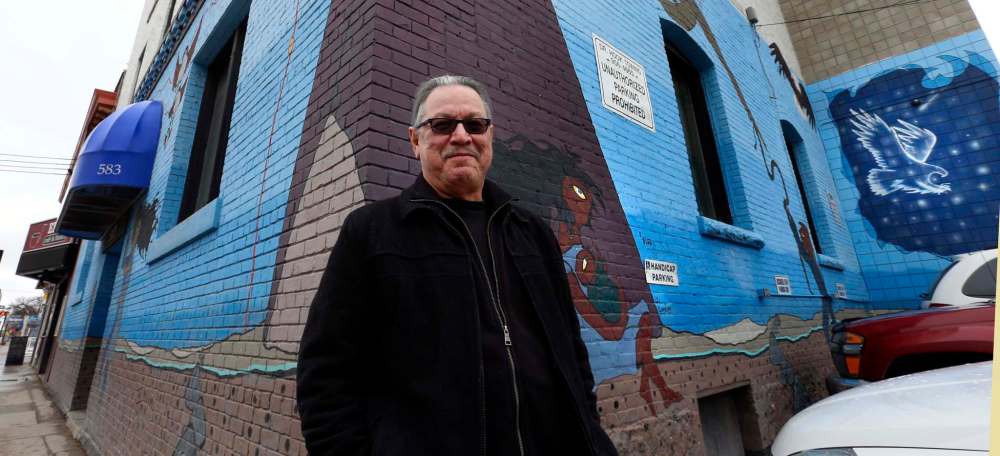
And he was, for many years, a university teacher, bringing a rare combination of street-level experience and academic training to the classroom. Students loved the authenticity and quiet passion he brought to their learning experience.
It was adult education that turned Larry’s life around after a difficult youth. As he wrote in a chapter in a recent book about aboriginal adult education: “Like most aboriginal children, my experience in the educational system was not positive… I left school after one week of Grade 8, and spent the next 10 years trying to find meaningful employment.”
In the early 1980s, on his second try, he was accepted into and later graduated from the University of Manitoba’s inner-city social work program. “It transformed my life,” he wrote. He later taught in that program, and in the University of Winnipeg’s department of urban and inner-city studies, both of which are innovative and successful university programs located on Selkirk Avenue in the North End.
Like so many indigenous people who are able to benefit from this kind of education, Larry chose to use his skills and his wisdom to “give back” to the Winnipeg inner-city community in which he was raised. As his older brother, Vern, said: “Larry was a quiet warrior” who never sought the limelight but was always there to do the work.
Even as a student in the inner-city social work program in the early 1980s, Larry was actively involved in efforts that led to the creation of the Ma Mawi Wi Chi Itata Centre. “One of the few guys who were involved,” said Kathy Mallett, part of the group of indigenous women who led that struggle.
“He was our conscience,” said elder Wilfred Buck, who conducted the pipe ceremony at Larry’s wake.
The community is struggling with an enormous loss.

Larry believed deeply in the transformative power of the adult education being offered as part of the Selkirk Avenue education hub in the North End. He knew from personal experience what a difference this type of education can make and he encouraged young indigenous people to follow a similar path.
As indigenous activist and urban and inner-city studies student Lenard Monkman wrote upon hearing of Larry’s death Sept. 19 at age 59: “He knew what the ‘hood life was like, and the work he did tried to change it. I found out last year he was instrumental in creating Children of the Earth High School. It was the only high school I ever attended. I was valedictorian of my class and just this past June I was invited to be the keynote speaker for its 25th anniversary. Larry was honoured for his work on making COTE a reality, right before I went up to speak. We ended up sitting beside each other for the ceremony. While we were talking, he mentioned how proud he was of our generation. He spoke of seeing young, educated, indigenous people being able to carry the torch for the type of work he built his life around.”
That is why the Larry Morrissette Memorial Scholarship has been established. This annual scholarship will be awarded to indigenous students in U of W’s department of urban and inner-city studies who meet three criteria: financial need, strong academic performance, and active and positive involvement in Winnipeg’s inner city. The scholarship will lead to more indigenous people saying about university education in the North End, as Larry did: “It transformed my life.” We all benefit when this happens.
To contribute to the Larry Morrissette Memorial Scholarship, visit www.uwinnipeg.ca, or send a cheque to the University of Winnipeg Foundation, 901-491 Portage Avenue, Winnipeg, R3B 2E4.
Elizabeth Comack is a professor at the University of Manitoba’s department of sociology. Jim Silver is a professor at and chair of the department of urban and inner-city studies at the University of Winnipeg’s Selkirk Avenue site. Both had worked closely with Larry Morrissette.