

Opting for litigation over reconciliation
Advertisement
Read this article for free:
or
Already have an account? Log in here »
To continue reading, please subscribe:

Digital Subscription
One year of digital access for only $205*
- Enjoy unlimited reading on winnipegfreepress.com
- Read the E-Edition, our digital replica newspaper
- Access News Break, our award-winning app
- Play interactive puzzles
*First annual payment billed as $205.00 + GST for one year. This annual subscription will automatically renew at $233.00 + GST every 52 weeks (10% off the regular annual price of $259.35). Offer available to new and qualified returning subscribers only. Cancel any time.
To continue reading, please subscribe:
Add Free Press access to your Brandon Sun subscription for only an additional
$1 for the first 4 weeks*
- Enjoy unlimited reading on winnipegfreepress.com
- Read the E-Edition, our digital replica newspaper
- Access News Break, our award-winning app
- Play interactive puzzles
*Your next Brandon Sun subscription payment will increase by $1.00 and you will be charged $17.95 plus GST for four weeks. After four weeks, your payment will increase to $24.95 plus GST every four weeks.
Read unlimited articles for free today:
or
Already have an account? Log in here »
Hey there, time traveller!
This article was published 17/04/2017 (3440 days ago), so information in it may no longer be current.
While another flood season is underway in southern Manitoba, the province continues its efforts to evade responsibility for the 2011 Lake Manitoba flood.
On March 27, the Manitoba government filed its application for leave for appeal to the Supreme Court of Canada in Anderson et al. v Manitoba et al., a class-action lawsuit seeking to bring justice to approximately 4,000 indigenous persons evacuated by the Lake Manitoba flood in 2011.
While a combination of natural conditions, including lingering snow and heavy spring rains, contributed to the rapid rise of the Assiniboine River that spring, it was a human-made flood that devastated the four First Nations communities of Pinaymootang, Dauphin River, Lake St. Martin and Little Saskatchewan. In protecting its urban centres, Manitoba used its water-control structures to divert massive amounts of water from the Assiniboine River into Lake Manitoba, knowing that significant damage would be caused to the four First Nations communities located at or near the outlet of Lake Manitoba.
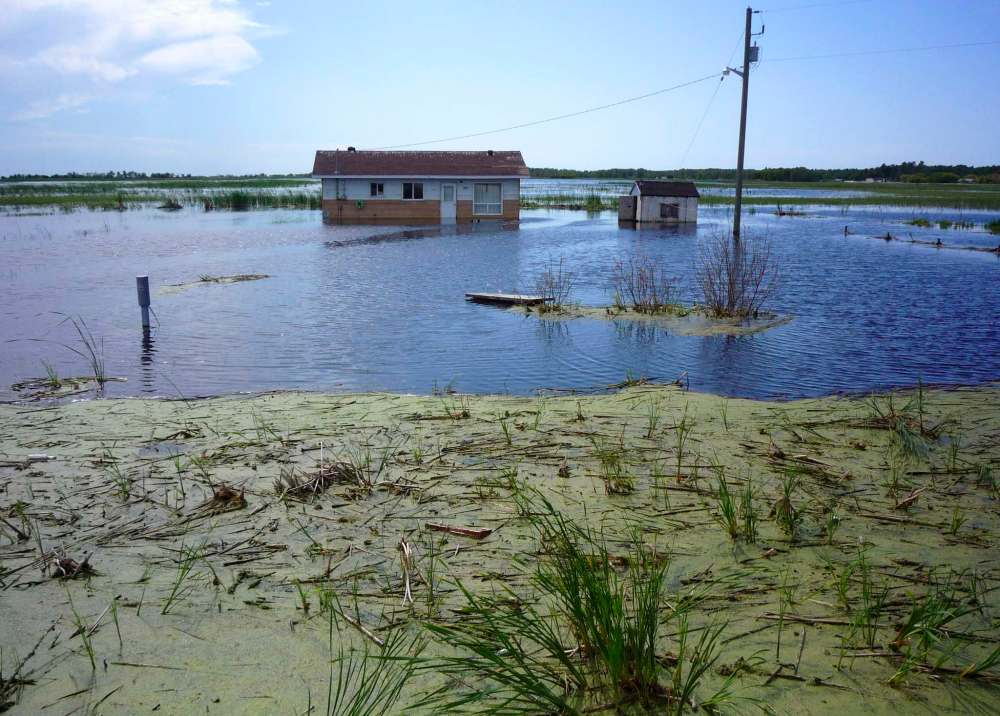
Today, nearly six years after the flood, more than 1,900 indigenous people remain displaced from their communities. They continue to reside in temporary housing in Winnipeg and other communities. The evacuees have been pushed off their traditional lands and out of their communities, invoking a loss of identity, way of life and social ties. Pre-existing medical conditions have been exacerbated, while a multitude of new mental-health issues have arisen. At least five people from Lake St. Martin First Nation alone have committed suicide since the flood.
But instead of acknowledging its wrongful actions or the tragic repercussions that have resulted, Manitoba has repeatedly sought to deny responsibility for the communities’ flooding. The province’s primary argument in Anderson posits natural factors as the true precursor of the flood.
Their statement of defence further claims that, even if Manitoba was in fact found to be responsible for the flood, the First Nations communities themselves should be held contributorily negligent. Manitoba has filed third-party claims against each First Nation, in addition to the cross-claims launched against Canada and the Manitoba Association of Native Firefighters Inc., the two other defendants in Anderson.
The litigation has been prolonged. An initial ruling by the Manitoba Court of Queen’s Bench denied the class-action certification in 2013; it was only this past January that the class action was certified by the Manitoba Court of Appeal. In filing its leave for appeal in the Supreme Court of Canada last week, Manitoba affirmed that its focus remains on litigation and evading responsibility, rather than on reconciliation.
Manitoba’s disregard for its own indigenous population, as evidenced by this litigation, is in stark contrast to the spirit of reconciliation prevalent today. Our city’s large indigenous presence fosters a higher awareness of indigenous issues than is present in most other Canadian cities. This past March, city council unanimously adopted an “Indigenous Accord” to enshrine its commitments to reconciliation. On paper, Manitoba has followed this message of reconciliation.
Last March, the Path to Reconciliation Act was passed by the province in the final weeks of the former NDP administration. This legislation affirms the province’s commitment to reconciliation, which it defines as “the ongoing process of establishing and maintaining mutually respectful relationships between Indigenous and non-Indigenous peoples in order to build trust, affirm historical agreements, address healing and create a more equitable and inclusive society.”

This Act also serves as a benchmark demonstrating how far removed Manitoba’s actions throughout the Anderson case are from any semblance of reconciliation. The province executed a flood plan that did not include First Nations in decision-making, and have responded to the class action with a combative defence that is the antithesis of how to build trust.
Rather than promoting healing, Manitoba has further burdened the already-afflicted communities with third-party claims and the full force of a taxpayer-funded legal counsel.
To create a more equitable society, the province must acknowledge the lived realities of the opposing parties. Lake St. Martin, one of the impacted First Nations communities, had a median average income of $1,636 in 2013 — a mere 6.7 per cent of the median income of other Manitobans. Pinaymootang First Nation has been under a do-not-consume water advisory since 2012. Indigenous peoples face a variety of distinct complex challenges stemming from the ongoing legacies of colonialism, including the location of reserves and the poor living conditions prevalent on many reserves. The flood — and displacement — has created a whole new set of challenges.
If Manitoba truly wants to embody a spirit of reconciliation, it should shift its focus in Anderson et al. from litigation to pursuing an out-of-court settlement, accept responsibility for its actions and seek to make amends. It is only once Manitoba takes these pivotal steps that the province can move forward toward reconciliation.
Christie McLeod is a first-year law student at York University’s Osgoode Hall Law School and is founder and managing director of Human Rights Hub Winnipeg.