

The hog industry is good for environment, economy
Advertisement
Read this article for free:
or
Already have an account? Log in here »
To continue reading, please subscribe:

Digital Subscription
One year of digital access for only $205*
- Enjoy unlimited reading on winnipegfreepress.com
- Read the E-Edition, our digital replica newspaper
- Access News Break, our award-winning app
- Play interactive puzzles
*First annual payment billed as $205.00 + GST for one year. This annual subscription will automatically renew at $233.00 + GST every 52 weeks (10% off the regular annual price of $259.35). Offer available to new and qualified returning subscribers only. Cancel any time.
To continue reading, please subscribe:
Add Free Press access to your Brandon Sun subscription for only an additional
$1 for the first 4 weeks*
- Enjoy unlimited reading on winnipegfreepress.com
- Read the E-Edition, our digital replica newspaper
- Access News Break, our award-winning app
- Play interactive puzzles
*Your next Brandon Sun subscription payment will increase by $1.00 and you will be charged $17.95 plus GST for four weeks. After four weeks, your payment will increase to $24.95 plus GST every four weeks.
Read unlimited articles for free today:
or
Already have an account? Log in here »
Hey there, time traveller!
This article was published 26/07/2017 (3345 days ago), so information in it may no longer be current.
There have been pigs in Manitoba from the beginning of European settlement. I have been a hog farmer for 35 years and, as descendants of the original Selkirk settlers, my family has been continuously farming near Stonewall for over 200 years. I believe I speak with considerable knowledge of farming sustainably.
Farmers have been called the original environmentalists. We live here — as do our parents, our children and our grandchildren. We intend to leave the land and water in as good or better shape than when it was passed on to us. Sustainability is all about ensuring that upcoming generations can have a good future with the land and other resources.
Is hog manure getting into our rivers and lakes? No. Manure itself does not get into waterways but, as it breaks down, some of its phosphorus binds to soil particles. Occasionally (e.g. during spring melt) some phosphorus-bound soil particles may run into ditches and eventually make their way into rivers and lakes. Again, this is not manure running off, but rather soil particles with some of the element phosphorus in it. By the way, it has been estimated that about one per cent or less of the phosphorus in Lake Winnipeg may come indirectly from hog manure.
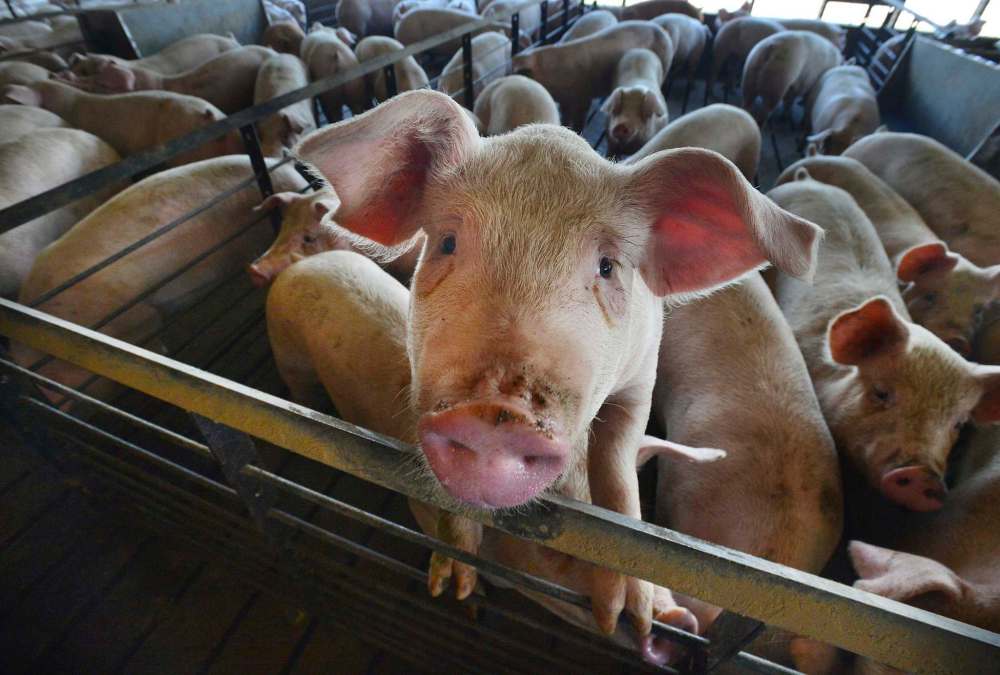
The vast majority of hog manure (about 85 per cent) is injected into and/or immediately incorporated into the soil. This method of application effectively stops manure from running off the land. I cannot over-emphasize this point: manure does not get into rivers and lakes. In fact, it is against the law for a landowner to let manure leave a field. Injecting manure also reduces greenhouse gases and significantly reduces odour.
Also by law, a manure management plan with soil test results is filed annually with the provincial government, showing where the manure will be applied, at what rates and what crops will be grown that season. Farmers are then required to follow that plan.
Is hog manure bad for the environment? No. Manure is an excellent fertilizer and has been used by humans for about 10,000 years. Manure is locally sourced, natural, organic and renewable. It builds up soil and breaks down very quickly in the environment.
On the other hand, synthetic fertilizer, which must be used if manure isn’t available, is imported, manufactured or mined, non-renewable, inorganic, costly and does not build up soil. Over 90 per cent of agro-Manitoba is phosphorus-deficient, so the use of fertilizer — either organic or synthetic — is essential.
While human waste must be treated, manure is not, because untreated manure is better for the soil.
As well, unlike all municipal systems that eventually discharge their effluent into waterways, hog manure is never allowed to go into ditches or waterways, so there is no need to treat it.
In Manitoba, manure is used responsibly and is good for both the soil and the environment.
Crops love manure and grow vigorously as they soak up its nutrients. Some of those crops are then fed back to pigs, forming a perfect nutrient cycle: local organic manure fertilizing local crops and feeding local pigs.
Are there too many pigs in Manitoba? No. The best way to determine this is to compare available crop land to the amount of manure produced. Some jurisdictions, including North Carolina, the Netherlands, South Korea and Quebec, do not have enough crop land to apply their pig manure at practical, environmentally sound rates. They must export or treat their manure with expensive treatment systems.
In Manitoba, we have about 11 million acres of crop land, about 10 million acres of which do not receive hog manure. In fact, with about 3.2 million pigs in Manitoba at any given time, the amount of manure produced by these animals can only fertilize a total of about 10 per cent of the province’s crop land. That means about 90 per cent of provincial crop land must be fertilized with imported synthetic fertilizer. So not only do we not have too many pigs, we could safely handle many more.
Manitoba hog farmers take care of their animals and follow national animal care codes of practice.

Our herds are regularly checked by veterinarians and our sows are being moved into group housing environments. Farmers use antibiotics only when necessary and never use growth hormones. Barns are engineered and constructed to high standards set out by national building codes, ensuring animals are protected from the harsh environment.
The industry regularly invests in research to ensure that we are continuously improving our methods for raising livestock and managing nutrients.
Manitoba’s hog industry employs about 13,000 people and generates up to $2 billion in annual revenue for the province.
This is a good industry: good for the environment, good for the economy and good for the people of Manitoba.
George Matheson, of Dunsmore Farm, raises hogs near Stonewall.
Related Articles
Industrial pork production has become unsustainable
Advertisement Advertise With Us
Advertisement Advertise With Us
History
Updated on Wednesday, July 26, 2017 6:38 AM CDT: Adds story tag