

Clearing the smoke on nicotine
Advertisement
Read this article for free:
or
Already have an account? Log in here »
To continue reading, please subscribe:
Monthly Digital Subscription
$1 per week for 24 weeks*
- Enjoy unlimited reading on winnipegfreepress.com
- Read the E-Edition, our digital replica newspaper
- Access News Break, our award-winning app
- Play interactive puzzles
*Billed as $4.00 plus GST every four weeks. After 24 weeks, price increases to the regular rate of $19.95 plus GST every four weeks. Offer available to new and qualified returning subscribers only. Cancel any time.
Monthly Digital Subscription
$4.99/week*
- Enjoy unlimited reading on winnipegfreepress.com
- Read the E-Edition, our digital replica newspaper
- Access News Break, our award-winning app
- Play interactive puzzles
*Billed as $19.95 plus GST every four weeks. Cancel any time.
To continue reading, please subscribe:
Add Free Press access to your Brandon Sun subscription for only an additional
$1 for the first 4 weeks*
*Your next subscription payment will increase by $1.00 and you will be charged $16.99 plus GST for four weeks. After four weeks, your payment will increase to $23.99 plus GST every four weeks.
Read unlimited articles for free today:
or
Already have an account? Log in here »
Hey there, time traveller!
This article was published 25/08/2017 (3081 days ago), so information in it may no longer be current.
At the end of July, the U.S. Food and Drug Administration (FDA) did something remarkable — even revolutionary. It decided to behave in a rational way about nicotine — embracing a sensible “harm reduction” approach. Canada would do well to follow.
Instead, Canada has been focused on “risk aversion” where nicotine is concerned — and such a stance, ironically, protects the cigarette trade.
Cigarette smoking, despite decades of efforts to eradicate it, still claims roughly 100 Canadian lives daily. It remains our single largest cause of preventable death.
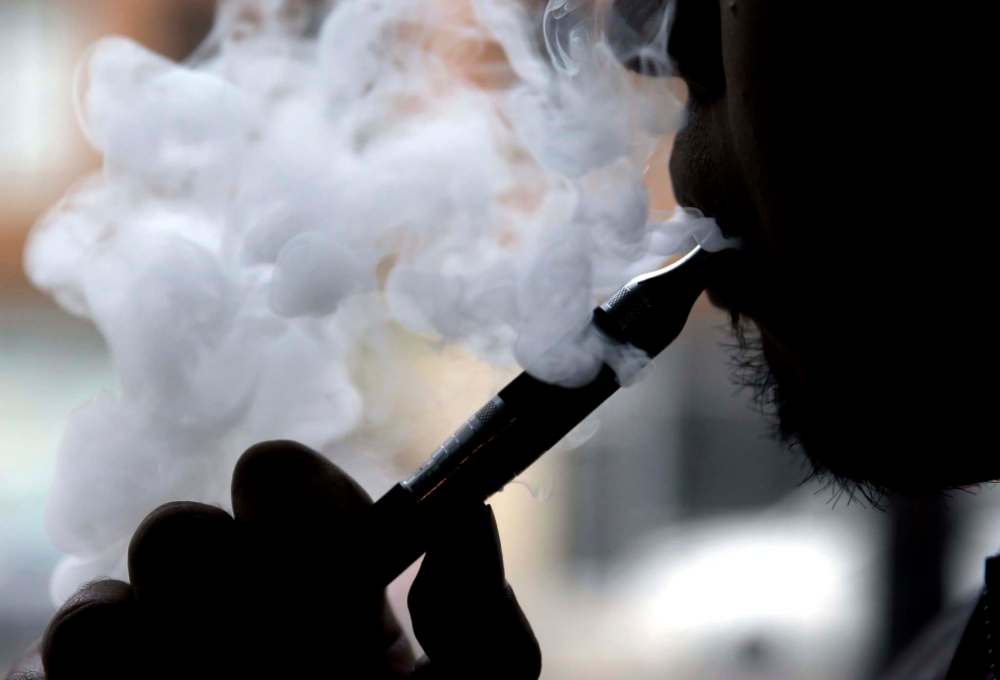
It has been known for decades that while people smoke for the nicotine, they die from the smoke. The culprit in this public-health disaster is the inhalation of the products of combustion rather than the use of dependence-producing but relatively innocuous nicotine. Just as we can stop cholera through cleaner water, we can stop the cigarette epidemic through the substitution of non-combustion alternatives to cigarettes.
Very large numbers of smokers are already keen to reduce risks and are already switching to emerging alternatives such as vaping products, various forms of smokeless tobacco, medicinal nicotine and products that heat, rather than burn, tobacco. To do so, they often have to overcome obstacles created by our governments and an avalanche of abstinence-only messaging.
To date, Canadian regulation has not only failed to adapt to and facilitate the transition to these massively lower-risk products, but hampered their development, marketing and accessibility. Smoke-free products could not only dramatically reduce the disease burden, but could facilitate total nicotine abstinence for those who wish it.
FDA commissioner Dr. Scott Gottlieb announced a plan to regulate tobacco and nicotine products in the U.S. based on a pronounced “continuum of risk.” They plan to help smokers move to non-combustion products. Gottlieb sees that nicotine is not only the problem (in keeping smokers addicted to cigarettes) but also, ultimately, the solution. Nicotine, in other words, can be delivered in a way that empowers smokers to discard those lethal cigarettes.
What is Canada’s approach?
Unfortunately, Canada has opted for a misguided “risk averse” stance encompassed in Bill S-5, which duly made it through the Senate this summer and is now (in a reverse of typical parliamentary procedure) awaiting approval from the House of Commons. Proponents of Bill S-5 argue it is an attempt to find balance between pragmatism and an abstinence-only agenda on nicotine use. The problem is, just as with other drug issues, there is no middle ground between rationality and irrationality.
If passed, Bill S-5 will make it illegal for a company to tell smokers that lower-risk products are, well, lower risk. When governments think the solution is to be exceedingly and irrationally risk averse about anything that could give smokers viable and dramatically less hazardous alternative products, they have just failed a “vision test.”
Canadian legislators have moved forward, seemingly reluctantly, from trying to ban electronic cigarettes outright to creating legislation that would still hamper marketing and sales of lower-risk products in such a way that fewer people smoking cigarettes will quit — call it “death by mandated deception.”

If this sounds like an exaggerated claim, consider that just one new non-combustion product has displaced over one-tenth of the Japanese cigarette market in less than two years and is forecasted by market analysts to replace 18 per cent by the end of this year. Waiting in the wings are myriad other new low-risk products on, or soon to be on, the global market.
Canada could potentially be on the threshold of a health breakthrough of historic significance — if we recognized nicotine’s continuum of risk. What holds us back is not a lack of science, technology, business viability nor consumer interest, but rather a collective failure of vision.
The cigarette epidemic could be ended. A million premature Canadian deaths over the next 25 years could be averted. It is time for our governments to take on smoking, to show vision and to spare us the embarrassment of Trump appointees looking more rational than our leaders.
We can replace an approach based on punishing and shaming smokers into trying to quit with one that empowers them to actually succeed. With a visionary approach, we can relegate cigarettes to history’s ashtray.
David Sweanor is an adjunct professor with the faculty of law and the Centre for Health Law Policy and Ethics at the University of Ottawa. He has helped develop tobacco-control laws in Canada and globally for more than 30 years.