

Therapy changes need clarity
Advertisement
Read this article for free:
or
Already have an account? Log in here »
To continue reading, please subscribe:

Digital Subscription
One year of digital access for only $205*
- Enjoy unlimited reading on winnipegfreepress.com
- Read the E-Edition, our digital replica newspaper
- Access News Break, our award-winning app
- Play interactive puzzles
*First annual payment billed as $205.00 + GST for one year. This annual subscription will automatically renew at $233.00 + GST every 52 weeks (10% off the regular annual price of $259.35). Offer available to new and qualified returning subscribers only. Cancel any time.
To continue reading, please subscribe:
Add Free Press access to your Brandon Sun subscription for only an additional
$1 for the first 4 weeks*
- Enjoy unlimited reading on winnipegfreepress.com
- Read the E-Edition, our digital replica newspaper
- Access News Break, our award-winning app
- Play interactive puzzles
*Your next Brandon Sun subscription payment will increase by $1.00 and you will be charged $17.95 plus GST for four weeks. After four weeks, your payment will increase to $24.95 plus GST every four weeks.
Read unlimited articles for free today:
or
Already have an account? Log in here »
Hey there, time traveller!
This article was published 23/10/2017 (3257 days ago), so information in it may no longer be current.
As some Manitobans grapple with successive health-care changes aimed at reducing Winnipeg Regional Health Authority’s budget by $83 million, changes in the province’s entire health-care system make it difficult for many users to get a clear picture of how it will all settle out.
Just one part of this macro cost-cutting is the delivery of the physiotherapy and occupational therapy services by WRHA. Changes to the current model are aimed at reducing spending by a reported $1.5 million in 2017-18 and $3.5 million in 2018-19.
These changes alone are worth examining as a case study in how not to roll out a significant health-care change. Bits of information released on the fly while the new system is still being worked out could leave some who are anticipating surgery needing a prescription for their anxiety. Worse, it appears the poor, once again, could be left in a position where they could lose their therapy if they can’t pay.
On Oct. 3, Lori Lamont, WRHA vice-president of inter-professional practice, announced that the region was committed to changing the two therapy programs, but not in the way originally proposed. Rather than a means test (measure of a person’s income eligibility) to determine if a patient could access therapy without additional charge, the authority would use “clinical criteria.” Those who do not meet the criteria for outpatient services would have to pay privately by insurance or out of pocket.
It is likely some health-care consumers in the room were looking forward to hearing what those criteria would consist of, hoping for a system that would be clear, open and non-discriminatory. One where patients could anticipate what would happen to them. One that wouldn’t place them at the mercy of a doctor who doesn’t know them, or worse, a collective group who sit in judgment on whether they are worthy of the outpatient services without knowing their personal circumstances.
On Oct. 18, the Free Press ran the list of clinical criteria. It includes surgeries that generally lead to followup therapies: hip, knees and hands among them. However, not crystal clear is where the line is drawn, how the system determines who is eligible for outpatient services.
It appears from the accompanying story that patients will be prioritized by how simple or complex their cases are. That could mean, according to the system’s individual or collective judgement, you could have to pay for followup therapy if your case is judged to be simple, and need permission to access the services at the HSC if it’s judged complex — even if you can afford to pay.
At first glance, it appears lower-income people may be denied followup therapy for “simple cases” if they can’t pay — therapy that could make a difference to their outcome. If this is a wrong interpretation, it would be helpful and welcome if the WRHA would set the record straight.
Knee-replacement patients were the largest category who used the followup physiotherapy without cost last year, Lamont said in a recent phone interview. She could not say definitively how many got a replacement, but did say the operation costs, on average, $20,800. Hip replacements cost $23,700.
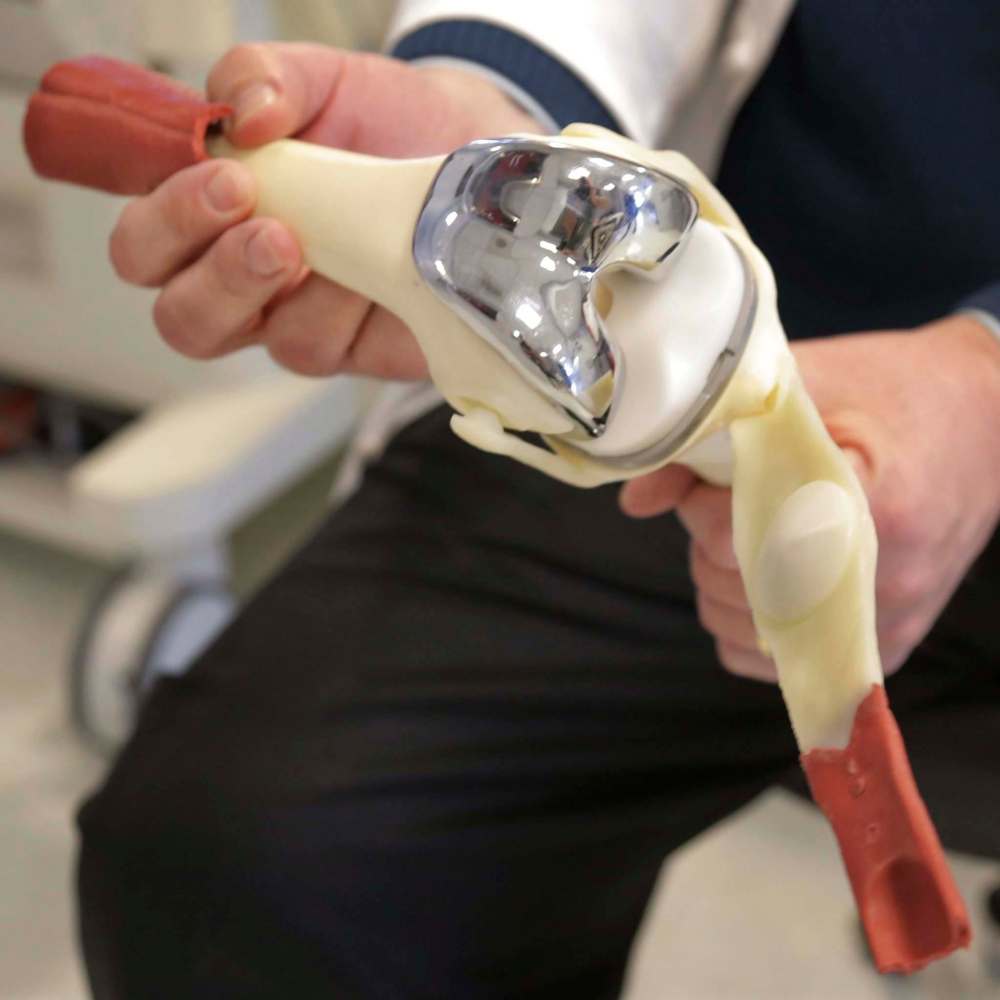
It is unclear whether a knee or hip replacement would be simple or complex. However, having had that knee surgery myself, I know the exercises are critical in order to bend the prosthesis and to make a success of an expensive operation. Some folks need the extra support of a physiotherapist at this time, lest they fail to achieve full benefit.
What is the human cost to that patient if they can’t afford to make the most of the operation? What is the cost to the system if they require revision surgery? Will revision surgery even be provided?
One bright spot in this situation is that there’s a patient appeal process.

The proposed changes need more clarification. Taxpayers are entitled to detailed reports after the new system is underway. How well is it working? How many have used the appeal process, and what were the outcomes?
Health care is too important to be left solely to physicians and providers. It has the feeling, at times, of an insulated society in which mere consumers don’t belong or physicians are far too busy to really share information. But consumers are entitled to understand the whole picture.
Perhaps physicians themselves will choose to be more upfront, even though they are employees in the system. There is a new type of activist physician nowadays who will speak out directly to consumers about important and touchy issues. How enlightened.
We can only hope the WRHA understands how important it is to communicate with consumers on an ongoing basis.
Gloria Taylor is a Winnipeg writer and editor and soon-to-be recipient of a new knee.
Related Articles
Kinew blasts physio outpatient closures
Advertisement Advertise With Us
Advertisement Advertise With Us