

JFK killing and government mistrust
Advertisement
Read this article for free:
or
Already have an account? Log in here »
To continue reading, please subscribe:
Digital Subscription
One year of digital access for only $1.44 a week*
- Enjoy unlimited reading on winnipegfreepress.com
- Read the E-Edition, our digital replica newspaper
- Access News Break, our award-winning app
- Play interactive puzzles
*Billed as $5.77 plus GST every four weeks. After 52 weeks, price increases to the regular rate of $19.95 plus GST every four weeks. Offer available to new and qualified returning subscribers only. Cancel any time.
To continue reading, please subscribe:
Add Free Press access to your Brandon Sun subscription for only an additional
$1 for the first 4 weeks*
- Enjoy unlimited reading on winnipegfreepress.com
- Read the E-Edition, our digital replica newspaper
- Access News Break, our award-winning app
- Play interactive puzzles
*Your next Brandon Sun subscription payment will increase by $1.00 and you will be charged $17.95 plus GST for four weeks. After four weeks, your payment will increase to $24.95 plus GST every four weeks.
Read unlimited articles for free today:
or
Already have an account? Log in here »
Hey there, time traveller!
This article was published 14/12/2017 (3086 days ago), so information in it may no longer be current.
The recent release of the JFK files led to a surge of media coverage about the Kennedy assassination and its aftermath.
But it’s not like public interest has ever really abated. On any day of the week, visit Dealey Plaza, the downtown Dallas site of the assassination. You’ll see curious tourists, sleuths trying to figure out what really happened and others who don’t agree about how it happened.
In some ways, it’s still Nov. 22, 1963.
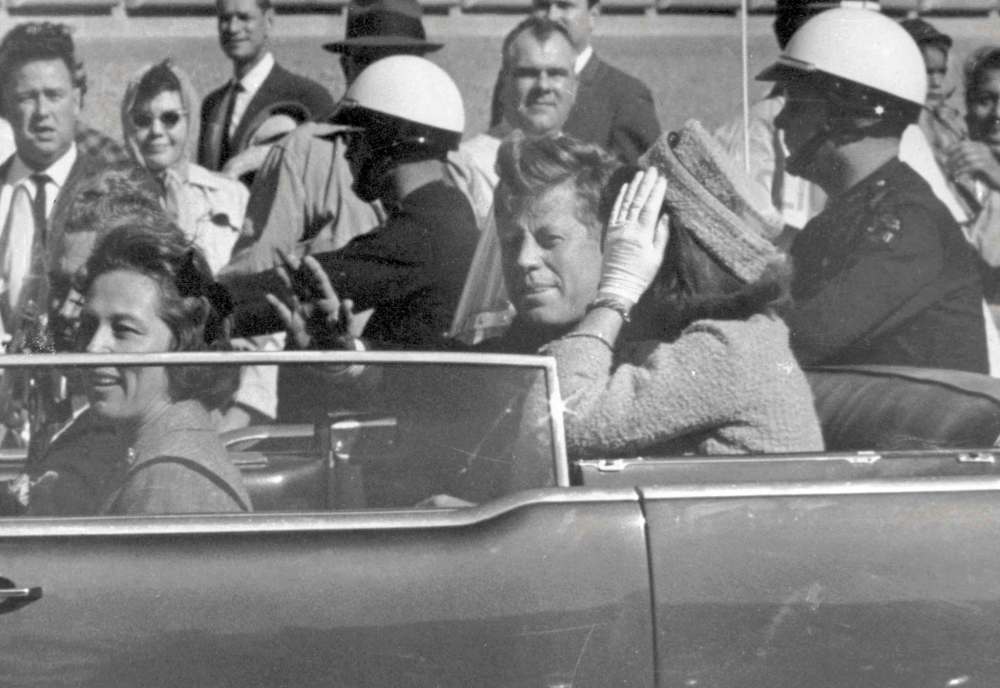
In the days after the tragedy, the public was at a loss over how to interpret the events. People distrusted the government’s explanation – a suspicion that continues to this day.
Even so, it doesn’t mean there aren’t any lessons to be learned from the assassination.
Perhaps it’s time for a different conversation about the Kennedy assassination – not one about who pulled the trigger, but about the lasting legacy of an unresolved event, and how it’s influenced what Americans do (and don’t) believe in today.
A cottage industry of conspiracies
On Oct. 28, President Trump tweeted that he was going to release all the remaining JFK files in order to “put any and all conspiracies to rest.”
Good luck, Mr. President.
The journalists, conspiracy theorists and scholars who have sorted through the 31,334 documents disclosed this year by the National Archives didn’t find anything that changes our previous understanding of the assassination or the events surrounding it.
But even if there were new revelations, would public opinion change?
For more than half a century, Americans have been exposed to a cottage industry of material about the Kennedy assassination. Over 1,000 books have been written, from Crossfire and On the Trail of Assassins to They Killed Our President and CIA Rogues and the Killing of the Kennedys.
It’s estimated that 95 per cent of these books are pro-conspiracy and reject the Warren Commission conclusion that Lee Harvey Oswald acted alone in assassinating President Kennedy. Most point out discrepancies and unanswered questions. Many confuse innuendo and rumor with logic and evidence.
Then there are fictional accounts of the assassination – fantasy novels, comic books, comedies, a Broadway musical and even a video game – that make no pretense of telling the truth.
Rush to judgment
Mark Lane’s 1966 book Rush to Judgment was one of the first commercially successful books to criticize the methods and conclusions of the Warren Report. However, even before Lane’s book and the Warren Commission began its report, there’s evidence that a different rush to judgment had already occurred.
Belief in a criminal conspiracy took hold within days of the assassination. A Gallup poll taken the week of the assassination found that 52 per cent of Americans already believed that the man who shot Kennedy didn’t act on his own and that others were involved.
In the minds of many Americans, a lack of a coherent narrative seems to have created a void that was filled by doubt and apprehension. The original Gallup news release noted the “widespread fear” that Oswald didn’t act on his own.
Since 1963, Gallup has continued to ask Americans whether they believe in the “lone gunman” theory or in a criminal conspiracy, and has consistently found that a majority believes it was a criminal conspiracy. (In 1966, the number dipped to 50 per cent. By December 1976 it spiked to 81 per cent.) The polls also show there has never been consensus as to who other than Oswald may have been involved.
It’s not like JFK conspiracy theories haven’t been thoroughly debunked. Gerald Posner’s 1993 book Case Closed effectively refutes all the major conspiracy theories. Vincent Bugliosi’s Reclaiming History (2007) – a more in-depth version of Case Closed – fastidiously explains the evidence establishing Oswald’s guilt and that he acted alone.
Was the proliferation of conspiracy books – which exploited deficiencies in the government’s handling of the case – a major reason the public stopped believing the government account of President Kennedy’s murder?
Social scientists have been able to show how people don’t necessarily wait for the facts, that they instead trust their gut to tell them what is true. Study after study has shown that the presentation of facts and contradictory evidence often doesn’t change beliefs. In fact, it can sometimes make pre-existing beliefs stronger.
We also see how conflicting information about the assassination can sow confusion – to the point where people either aren’t sure what to believe or pick and choose what they want to believe. The JFK assassination is a case study for confirmation bias, which is the tendency to search, interpret and favor information in a way that confirms our pre-existing beliefs.
Is it possible that the aftermath of the Kennedy assassination helped lay the groundwork for today’s alternative media ecosystem and fake-news peddlers? Did it show how easily cultural fissures could be created and exploited, and how difficult it is to lay a conspiracy theory to rest?
We do know that in 1964 – within a month of the Warren Commission’s official finding that Oswald was the lone assassin – public trust in federal government began a steady 54-year decline.
Today, it’s at a near-historic low.
A case never closed
An important but often overlooked aspect of the Kennedy assassination has to do with the sociological importance of due process, and the consequences of when a trial is interrupted.
Within 48 hours of Oswald’s arrest, Dallas nightclub owner Jack Ruby murdered him on national television.
This upended the American criminal justice process. Oswald’s death not only denied him his day in court, but it also denied Americans the sense of closure that can accompany a public trial. The presentation of evidence, the examination of witnesses, the deliberation of a jury, the rendering of verdict and the exhaustion of post-conviction remedies are all important elements of closure. Principles and process matter.
Not that there won’t be critics of courtroom-based outcomes, or that there won’t be differences between a legal verdict and popular opinion.

But a poignant lesson of the Kennedy assassination is that when the legal process is not allowed to run its course, it can have major, long-lasting influences on what some believe – and what others never will.
Every day someone new learns about the Kennedy assassination. Interest in the government’s release of all remaining documents suggests that many still believe there are new things to learn.
But it doesn’t mean Americans are going to learn something that’s going to change what we believe.
Ryan Kellus Turner is an adjunct professor of criminal justice at St. Edward’s University.
This article was first published at The Conversation Canada: theconversation.com/ca.