

Eating insects shouldn’t bug us so much
Advertisement
Read this article for free:
or
Already have an account? Log in here »
To continue reading, please subscribe:
Monthly Digital Subscription
$1 per week for 24 weeks*
- Enjoy unlimited reading on winnipegfreepress.com
- Read the E-Edition, our digital replica newspaper
- Access News Break, our award-winning app
- Play interactive puzzles
*Billed as $4.00 plus GST every four weeks. After 24 weeks, price increases to the regular rate of $19.95 plus GST every four weeks. Offer available to new and qualified returning subscribers only. Cancel any time.
Monthly Digital Subscription
$4.99/week*
- Enjoy unlimited reading on winnipegfreepress.com
- Read the E-Edition, our digital replica newspaper
- Access News Break, our award-winning app
- Play interactive puzzles
*Billed as $19.95 plus GST every four weeks. Cancel any time.
To continue reading, please subscribe:
Add Free Press access to your Brandon Sun subscription for only an additional
$1 for the first 4 weeks*
*Your next subscription payment will increase by $1.00 and you will be charged $16.99 plus GST for four weeks. After four weeks, your payment will increase to $23.99 plus GST every four weeks.
Read unlimited articles for free today:
or
Already have an account? Log in here »
Hey there, time traveller!
This article was published 26/03/2018 (2932 days ago), so information in it may no longer be current.
The sale of cricket flour is a sign the protein wars in Canada have reached a new level.
Loblaw, the largest food distribution company in the country, is now selling cricket flour. The product isn’t new — speciality stores have been selling it for a few years. But Loblaw is the first major retailer to sell the product under its private label.
This decision was not made lightly by Loblaw. A growing number of consumers is looking for protein alternatives beyond the meat trifecta of beef, pork and chicken.
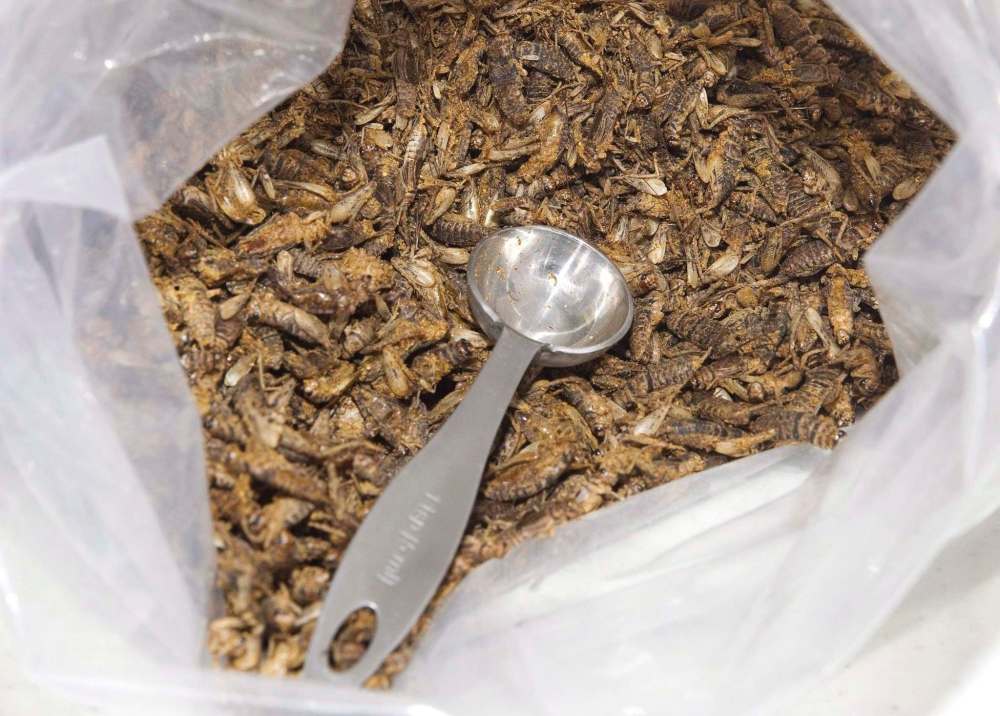
About 80 per cent of the world’s population eats bugs regularly. In the western world, however, it’s still not mainstream, mainly due to the creepy-crawly factor.
However, we’ve all eaten bugs, deliberately or not. Food safety research shows that bugs regularly get into the human food chain, through grains, vegetables, fruits or other means. Food-safety perfection is just an ideal, but bugs aren’t harmful.
Other research suggests that over a lifetime, the average human will ingest up to eight bugs just while sleeping. Bugs surround us, whether we like or not. But to accept them as an integral part of our food supply chain is still a psychological stretch.
For Loblaw though, it’s about health and sustainability — and the case for crickets is very compelling. A 2.5-tablespoon serving has 90 calories and 13 grams of protein. It also contains enough vitamin B12 to carry you through the day. Per kilogram, crickets contain as much protein as pork. The University of Oxford published a compelling study on the nutritional value of crickets versus meat products. Measuring protein content, vitamins, sugar and fat, crickets end up ahead in most categories.
Insects are better at converting feed to protein than larger livestock. Entomo Farms, based in Norwood, Ont., supplies the product to Loblaw. Operations in Norwood have 12-fold since 2014, as the demand for crickets grows exponentially. Because crickets can reproduce very quickly and take up very little space, the crop is incredibly efficient. Currency for crickets is rising, on both sides of the supply-demand continuum.
While some studies point out limitations around cricket consumption, scientific consensus is building. It’s not surprising then, that Loblaw has been looking at this for a few years.
Loblaw is testing consumers’ curiosity and willingness to explore new dietary options. But they’re not exactly giving the product away. When launched, the retail price point was almost $16 for a 113-gram bag. The price dropped to $14 a few days later.
Given how inexpensive cricket production is, margins are likely high because of the shelf space sacrificed to stock this item.
Cricket flour can be used in smoothies, yogurt, soups, oatmeal and baked goods, among many other things. Its neutral flavour won’t spoil the taste.
But Loblaw is bold to put a picture of a cricket on a package with its prized President’s Choice brand logo.
This shift also speaks to how our relationship with food is changing. Aesthetics, flavour, price and convenience remain the major factors in choosing the food we eat. But the nutritional content of every single ingredient in our foods is gaining more attention.
From our perspective, crickets don’t look appetizing. But neither did lobster, once known as “the cockroaches of the sea.”
While bugs have yet to make it into mainstream Canadian cuisine, they’re regularly included in meals in countries such as China, Mexico and Thailand.

Loblaw’s primary motivation is to enhance efficiencies by managing protein differently across global protein supply chains. Even if several studies dispute the nutritional value of insects and may not see them as a viable source of protein, animal protein remains under severe pressure, as pro-livestock factions know only too well. Loblaw is hedging against the questionable future of animal protein.
Health Canada will release a new food guide and based on principles disclosed last fall by the public regulator, it seems Canadians will be invited to think twice about their level of protein consumption, specifically from meat and dairy.
If crickets or other insects are to become part of the dietary way of life in Canada, it probably would be as a supplementary ingredient, not as a raw food product. It’s highly unlikely that steaks, chicken wings or pork chops will be replaced by a plateful of crickets any time soon. But ingredients sourced from the start of the food chain are starting to take their place in the retail market.
Sylvain Charlebois is dean of the faculty of management and a professor in the faculty of agriculture at Dalhousie University, senior fellow with the Atlantic Institute for Market Studies, and author of Food Safety, Risk Intelligence and Benchmarking.
— Troy Media