

Moving school buses into the 21st century
Advertisement
Read this article for free:
or
Already have an account? Log in here »
To continue reading, please subscribe:
Monthly Digital Subscription
$1 per week for 24 weeks*
- Enjoy unlimited reading on winnipegfreepress.com
- Read the E-Edition, our digital replica newspaper
- Access News Break, our award-winning app
- Play interactive puzzles
*Billed as $4.00 plus GST every four weeks. After 24 weeks, price increases to the regular rate of $19.95 plus GST every four weeks. Offer available to new and qualified returning subscribers only. Cancel any time.
Monthly Digital Subscription
$4.99/week*
- Enjoy unlimited reading on winnipegfreepress.com
- Read the E-Edition, our digital replica newspaper
- Access News Break, our award-winning app
- Play interactive puzzles
*Billed as $19.95 plus GST every four weeks. Cancel any time.
To continue reading, please subscribe:
Add Free Press access to your Brandon Sun subscription for only an additional
$1 for the first 4 weeks*
- Enjoy unlimited reading on winnipegfreepress.com
- Read the E-Edition, our digital replica newspaper
- Access News Break, our award-winning app
- Play interactive puzzles
*Your next Brandon Sun subscription payment will increase by $1.00 and you will be charged $17.95 plus GST for four weeks. After four weeks, your payment will increase to $24.95 plus GST every four weeks.
Read unlimited articles for free today:
or
Already have an account? Log in here »
Hey there, time traveller!
This article was published 22/06/2018 (2880 days ago), so information in it may no longer be current.
The sight of a school bus puts a smile on my face, particularly when a bunch of really young students pours out of it, labouring under their oversized backpacks. In many ways, the traditional yellow school bus represents our hopes for a positive and healthy future through the education of our children.
Although it is well established that school buses are more efficient than transportation by individual families, there is a hidden side of school bus travel that is not well known to the public. Research on the impact of emissions from diesel school buses on air quality and respiratory health reveals a disturbing picture.
When studying particulate matter (tiny particles that are damaging to lungs) and a number of airborne toxins, concentrations within a diesel school bus were found to be four to 12 times higher than in ambient air. Tracer studies show that up to 0.3 per cent of the exhaust from a diesel school bus can end up in the cabin of the bus.
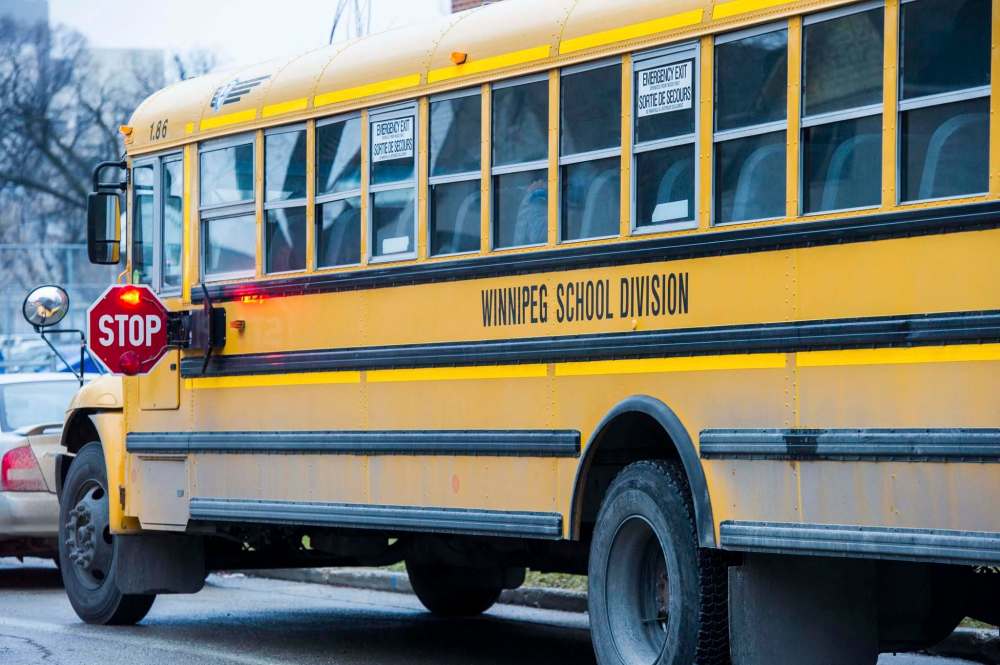
The risk posed by these pollutants is not confined to those students travelling on the bus. Idling of diesel school buses is shown to increase aerosol concentrations in school yards by three to five times compared to nearby control sites. The average child travelling on a school bus spends 45 to 60 minutes a day within its confines (that does not include time spent on school grounds close to an idling school bus, so the exposure to emissions from diesel combustion can be substantial).
Many of these studies were done in the United States (particularly on the West Coast) during the past 10 to 15 years. They have spurred on new policies for retrofitting existing school buses to reduce engine exhausts from entering the cabin, and have led to incentive programs for the purchase of zero-emission vehicles. The primary motivator for school districts was air pollution and children’s health, but fuel costs and operational savings were also factors in their decisions.
The average fuel consumption of a diesel school bus is 2.55 kilometres per litre, which is slightly higher than a diesel-powered transit bus, but still about a quarter of an average family sedan. The Ontario School Bus Association reports that the approximately 18,000 school buses operating in the province travel two million kilometres per school day.
The vast majority of these buses use diesel fuel; about $1-million worth of diesel is consumed per school day in Ontario alone. National statistics show that a total number of 36,800 school buses transport students on an average school day in Canada.
In Manitoba, there are more than 1,000 school buses estimated to be in operation, of which 82 per cent use diesel and 18 per cent use gasoline. In Winnipeg alone, approximately 60 new buses are purchased annually by school divisions, which means the transition to an alternative driving mode that is emission-free could be made over time, through changing annual purchasing requirements.
As is the case with transit buses, the future of school buses is in electrification. The duty cycle of a school bus is a perfect fit for battery-electric transportation. On average, school buses operate for about four hours (two hours in the morning and afternoon each) and travel about 60 km per two-hour use. Electric school buses currently on the market have a 120-150 km range, which means they can do the job on one charge. Charging time for these buses is five hours, more than enough to recharge the batteries during the school day or at night.

There is already a leading Canadian electric school bus manufacturer in Saint-Jérôme, Que. (the Lion Electric Company), which has made inroads into the North American market. Quebec’s largest school board in Montreal purchased its first e-school bus in 2016 and plans to transition fully within the next decade. The first e-school bus in Western Canada was operated on rural routes west of Edmonton in 2017 under a pilot program.
Ontario has provided funding to 14 school bus operators through their electric school bus pilot program (up to $400,000 per project). The program requires funding recipients to report on the economic and environmental performance of electric school buses operating on a number of different routes. Farther south, a May 2018 report suggests that the fleet of all-electric school buses will grow to 150 vehicles in California alone, most of which will be supplied by LION.
School boards that make purchasing decisions on the next batch of buses should take air pollution, noise, fuel/maintenance costs and carbon taxes into account. From an educational perspective, introducing schoolchildren to battery-electric transportation provides opportunities for early learning in this area. A passionate student can drive change in their homes and communities, and there is strong evidence that early education on sustainability initiatives such as recycling, water-use efficiency, energy conservation and local gardening can have a substantial impact on household awareness and behaviour.
When thinking about healthy communities, providing our students with cleaner, quieter and more sustainable bus rides would be a great place to start. The yellow school bus can be more than a symbol of education; it can be an example of sustainability in action and an encouraging sign of a healthier and brighter future.
Nazim Cicek is a professor and associate head of the department of biosystems engineering at the University of Manitoba.