

Canada slow to ban spanking
Advertisement
Read this article for free:
or
Already have an account? Log in here »
To continue reading, please subscribe:
Monthly Digital Subscription
$1 per week for 24 weeks*
- Enjoy unlimited reading on winnipegfreepress.com
- Read the E-Edition, our digital replica newspaper
- Access News Break, our award-winning app
- Play interactive puzzles
*Billed as $4.00 plus GST every four weeks. After 24 weeks, price increases to the regular rate of $19.95 plus GST every four weeks. Offer available to new and qualified returning subscribers only. Cancel any time.
Monthly Digital Subscription
$4.99/week*
- Enjoy unlimited reading on winnipegfreepress.com
- Read the E-Edition, our digital replica newspaper
- Access News Break, our award-winning app
- Play interactive puzzles
*Billed as $19.95 plus GST every four weeks. Cancel any time.
To continue reading, please subscribe:
Add Free Press access to your Brandon Sun subscription for only an additional
$1 for the first 4 weeks*
*Your next subscription payment will increase by $1.00 and you will be charged $16.99 plus GST for four weeks. After four weeks, your payment will increase to $23.99 plus GST every four weeks.
Read unlimited articles for free today:
or
Already have an account? Log in here »
Hey there, time traveller!
This article was published 03/12/2018 (2662 days ago), so information in it may no longer be current.
Recently, the American Academy of Pediatrics (AAP) released a policy statement recommending that parents not spank, hit or slap their children.
The announcement created a flurry of media attention around the worldwith headlines such as “Spanking is still really common, and still really bad for kids.”
The statement is significant, but it’s also old news. It adds to already substantial research evidence about the risks that physical punishment poses to children.
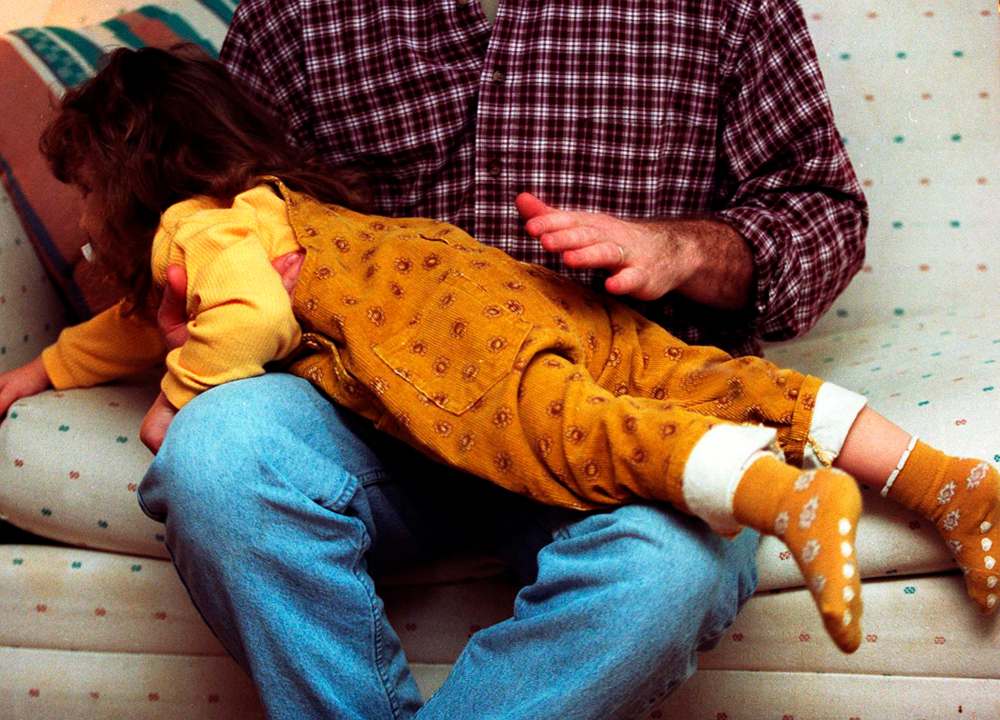
To date, 54 countries have banned the physical punishment of children, and 56 more have declared that they will. Canada has done neither.
In Canada, the law still permits parents to use physical punishment to discipline their children.
Truth and reconciliation
This is about more than health. In my research, I am involved in a multi-disciplinary project in which we examine the intertwined health, religious and reconciliation issues as they relate to corporal punishment.
What the AAP doesn’t mention is that interpretations of scripture in the Bible are one of the reasons corporal punishment has been normalized in the parenting toolbox. The influence of concepts such as “spare the rod; spoil the child” (based on Proverbs 13:24) have been widely used to justify physical punishment.
An egregious result of such teachings was the way physical punishment was used against Indigenous children in church-run and government-supported Indian Residential Schools. Call to Action 6 of the Truth and Reconciliation Commission calls upon the Government of Canada to remove Section 43 of the Criminal Code: the law that allows for the physical punishment of children.
Banning corporal punishment in Canada would be in keeping with the AAP’s strong and research-based statement about the need for adults to avoid physically punishing children. It would also be a critical step toward reconciliation.
Canada’s lethargy is baffling
It is baffling that this law reform remains so controversial here in Canada when it has been embraced around the world. In the past year alone, the Philippines, the Republic of Kosovo, South Africa and Scotland have all taken steps towards the full legal protection of children against violence.One argument against repealing the legislation includes the view that limited use of corporal punishment does no harm and may be a benefit to the child.
But the science disagrees.
Study after study demonstrates that not only is corporal punishment ineffective in promoting long-term positive health outcomes, but it also places children at risk for poor mental health, higher levels of violence and aggression, low emotional-adjustment and increased antisocial behaviour.
A recent study led by psychologist Frank J. Elgar showed that countries that have fully banned corporal punishment have less youth violence. Public health researcher Jo Becker argues that enduring change happens when bans are combined with public education. When laws changed, changes in attitudes and practices quickly followed.
A combination of both legislation and public education is the most sensible plan for Canada.
Children need discipline
People ask me: “What happens if my child tries to run out in front of a bus? Won’t changing this law stop me from protecting her?” Of course not! Keeping your child safe from danger is not physical punishment; it is a parental duty.
Physical punishment is hitting a child to cause them to feel pain in the hope that the experience of pain will correct their behaviour. This is fundamentally different from the use of appropriate force to protect a child, both in purpose and in action. Repealing laws that permit physical punishment in no way means that child discipline is not important. The opposite is true: providing discipline is an essential part of good parenting. But all children have the right to discipline that does not endanger their well-being.
I am downplaying the importance of the legal implications of reform. But the 110 countries that have either banned or are moving towards bans of physical punishment have had to think through legal issues, and Canada can do that too.
Many groups have called for change
In 2004, a national coalition of diverse organizations facilitated by the Children’s Hospital of Eastern Ontario published the “Joint Statement on Physical Punishment of Children and Youth.” Drawing on contemporary evidence, it draws attention to the risks posed by physical punishment and calls instead for positive approaches to discipline. It has been endorsed by 615 organizations from across Canada, including community organizations, cultural and religious groups, Indigenous groups, school boards, the Canadian Mental Health Association and the Canadian Medical Association.
Yet, the law permitting the use of physical punishment in Canada prevails.

What will it take to stop hitting our kids?
All the evidence we need to stop hitting our children is already available. Clearly, change is going to take something more. For one thing, it will require a critical examination of the cultural and religious norms and values that perpetuate this behaviour even in the face of overwhelming evidence documenting its harms. And it will require reflection on our collective tacit acceptance of violence against children.
Until that happens, and until the normalization and even justification of violence against children is called out by Canadians, our children will be at risk.
Valerie Michaelson is a post-doctoral fellow in the department of public health sciences and school of religion at Queen’s University, Ontario.
This article was first published at The Conversation Canada: theconversation.com/ca.