

Planned frac sand mine raises issues
Advertisement
Read this article for free:
or
Already have an account? Log in here »
To continue reading, please subscribe:
Digital Subscription
One year of digital access for only $75*
- Enjoy unlimited reading on winnipegfreepress.com
- Read the E-Edition, our digital replica newspaper
- Access News Break, our award-winning app
- Play interactive puzzles
*Billed as $5.77 plus GST every four weeks. After 52 weeks, price increases to the regular rate of $19.95 plus GST every four weeks. Offer available to new and qualified returning subscribers only. Cancel any time.
Monthly Digital Subscription
$4.99/week*
- Enjoy unlimited reading on winnipegfreepress.com
- Read the E-Edition, our digital replica newspaper
- Access News Break, our award-winning app
- Play interactive puzzles
*Billed as $19.95 plus GST every four weeks. Cancel any time.
To continue reading, please subscribe:
Add Free Press access to your Brandon Sun subscription for only an additional
$1 for the first 4 weeks*
- Enjoy unlimited reading on winnipegfreepress.com
- Read the E-Edition, our digital replica newspaper
- Access News Break, our award-winning app
- Play interactive puzzles
*Your next Brandon Sun subscription payment will increase by $1.00 and you will be charged $17.95 plus GST for four weeks. After four weeks, your payment will increase to $24.95 plus GST every four weeks.
Read unlimited articles for free today:
or
Already have an account? Log in here »
Hey there, time traveller!
This article was published 04/12/2018 (2726 days ago), so information in it may no longer be current.
Manitoba is poised to become a major Canadian player in providing large quantities of silica sand used in hydraulic fracking by the oil and gas industry.
Canadian Premium Sand is proposing to develop an open-pit mine and processing facility to initially extract 45-million tons of aggregate to produce roughly 26 million tons of frac sand over the lifespan of the mine.
The company has stated it could expand its operation if demand warrants, as the company has the rights to 360 million tons of known frac sand reserves through its quarry lease holdings in the area.
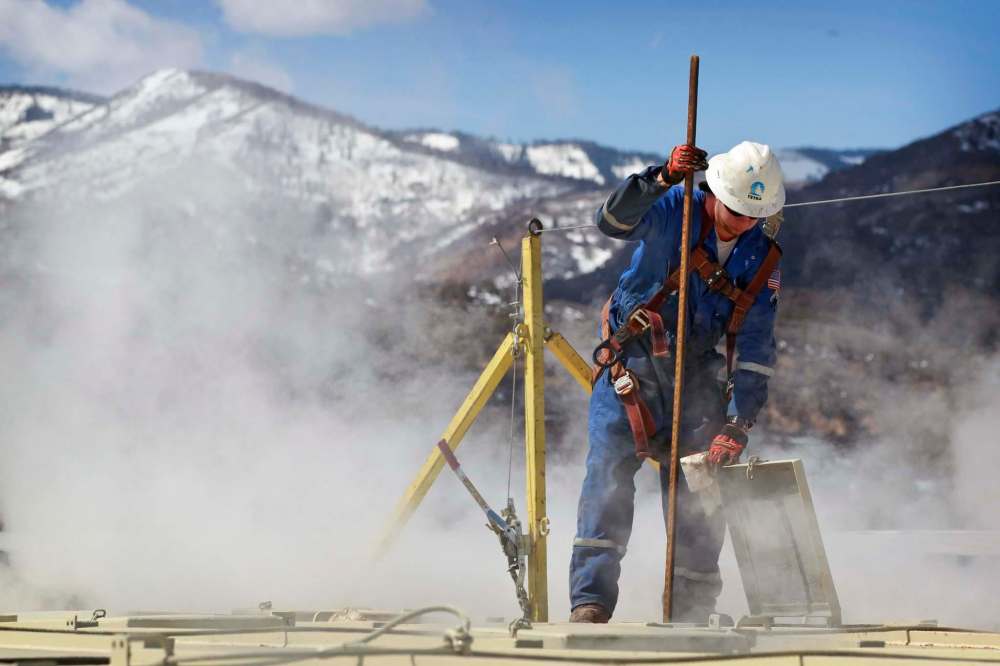
This proposed open-pit mine and processing facility will be the largest of its kind in Canada and one of the largest in North America. It is slated to be fully operational sometime in 2019. The proposed open-pit mine and processing facility will be located adjacent to Hollow Water First Nation on the eastern shores of Lake Winnipeg, some 210 kilometres north of Winnipeg.
In large-scale extraction projects, the economic returns must be balanced against the adverse social, economic and environmental impacts, which would be substantial. Laying aside for the moment the negative effects at the landscape level, there are three known adverse impacts with similar frac sand mines and processing facilities in the United States.
The first adverse impact is to human health, for both those working in and those living near this type of development. Prolonged exposure to fine silica sand particulates can lead to silicosis, and the material is also a lung carcinogen. The immediate threat comes to those who work at the mine and processing facility.
Intense exposure to fine crystalline silica particulate matter can cause health problems within a year, but symptoms generally occur after at least 10 to 15 years of exposure. This is particularly troubling for those living in proximity to frac sand mines, and especially so for the elderly or families with young children, as they are more susceptible to disease. Fine silica particulate exposure has also been linked with other lung ailments, including emphysema and bronchitis.
Then, there are water quantity and quality impacts, as the total amount of water withdrawn and/or consumed by frac sand mining operations and processing facilities can vary, and much of the variation depends on whether the mine and processing facility uses an open- or closed-loop process system. In terms of water volume, site withdrawals can range from 1.6 million to 7.6 million litres per day, according to data obtained by the Wisconsin Department of Natural Resources in January 2012.
Data on heavy metal content in sand wash ponds adjacent to frac sand mines obtained in the U.S. demonstrates that the same issue arises in frac sand mining. The more acidic water allows heavy metals such as arsenic, cadmium, aluminum, lead, manganese and copper to leach into water supplies at toxic levels. This issue also extends to reclamation processes.
Finally, it is also important to discuss the scale and impacts of truck-hauling traffic that accompanies frac sand mining operations. The frac sand mining operation proposed near Hollow Water First Nation will be hauling one to two million tons per year, which could see approximately 250 to 500 heavy-truck trips per day.

The most direct route for this increase in heavy-truck traffic would be Hwy. 304 to Hwy. 59, both single-lane either way from South Beach Casino. This will most certainly lead to increases in traffic accident rates on those highways. It is especially problematic for the tens of thousands who travel Hwy. 59 regularly to the east beaches communities to enjoy summer cottages, and for additional thousands who come to enjoy the beaches, such as Grand Beach, on a daily basis.
Before the company can build and operate its mine and processing facility, it must first receive a licence following a review process by the province of Manitoba under the Manitoba Environment Act. There is also a real possibility that this resource development project may be designated a project under the Canadian Environmental Assessment Act (CEAA) and the company will need to comply with the provisions of this act, which may include the need for a possible joint federal/provincial review process.
Another issue that has yet to be addressed is that of the legal obligation of the Crown to undertake Section 35 consultations with the affected Indigenous and Métis peoples when their rights may potentially be impacted. This consultation must occur at the earliest possible stages of planning and is independent of any review, licensing or approvals process undertaken by either the provincial or federal government. To date, this has not occurred.
Whether or not one supports this proposed resource development project for Manitoba is a moot point. What is important, and something that all Manitobans should agree on, is the need for a transparent public review process that considers the entire proposed frac sand mining, processing and transport development for both its benefits and adverse impacts prior to any government approval or licensing, and further, that the Crown undertake its fiduciary obligation to consult with Indigenous and Métis rights holders in the affected communities.
Don Sullivan is a landscape photographer, former director of the Boreal Forest Network and served as special adviser to the government of Manitoba on the Pimachiowin Aki UNESCO World Heritage site portfolio. He is a research affiliate with the Canadian Centre for Policy Alternatives Manitoba and a Queen Golden Jubilee medal recipient.
History
Updated on Tuesday, December 4, 2018 6:27 AM CST: Adds photo
Updated on Tuesday, December 4, 2018 10:56 AM CST: corrects spelling of frac