

Solving meth crisis involves all of us
Advertisement
Read this article for free:
or
Already have an account? Log in here »
To continue reading, please subscribe:
Monthly Digital Subscription
$1 per week for 24 weeks*
- Enjoy unlimited reading on winnipegfreepress.com
- Read the E-Edition, our digital replica newspaper
- Access News Break, our award-winning app
- Play interactive puzzles
*Billed as $4.00 plus GST every four weeks. After 24 weeks, price increases to the regular rate of $19.95 plus GST every four weeks. Offer available to new and qualified returning subscribers only. Cancel any time.
Monthly Digital Subscription
$4.99/week*
- Enjoy unlimited reading on winnipegfreepress.com
- Read the E-Edition, our digital replica newspaper
- Access News Break, our award-winning app
- Play interactive puzzles
*Billed as $19.95 plus GST every four weeks. Cancel any time.
To continue reading, please subscribe:
Add Free Press access to your Brandon Sun subscription for only an additional
$1 for the first 4 weeks*
*Your next subscription payment will increase by $1.00 and you will be charged $16.99 plus GST for four weeks. After four weeks, your payment will increase to $23.99 plus GST every four weeks.
Read unlimited articles for free today:
or
Already have an account? Log in here »
Hey there, time traveller!
This article was published 26/12/2018 (2638 days ago), so information in it may no longer be current.
It’s often a result of trauma. It’s trapping people from all walks of life. It’s a challenge for the health-care system, social service agencies and first responders.
And it’s only getting worse.
You might think I’m referring to the problem of homelessness in Winnipeg. But I’m talking about another crisis — one so big, it will compound the already staggering number of people experiencing homelessness in our city.
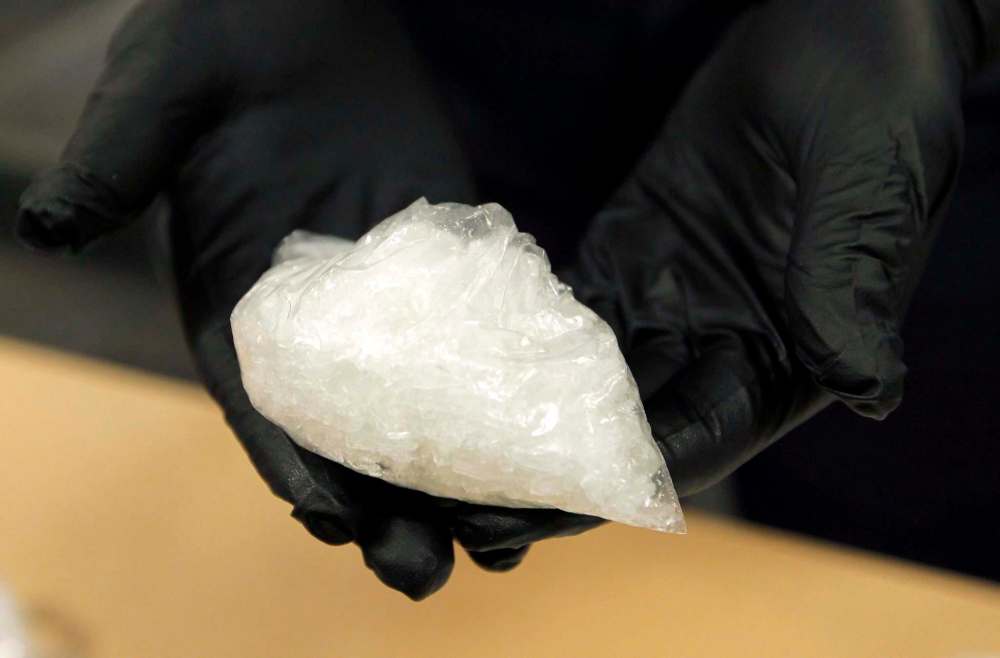
It’s no secret; Winnipeg is in the middle of a crystal meth epidemic.
I want to be clear that I’m not an expert. But we at Siloam Mission see people struggling with addictions every day. And I was fortunate to recently hear from a law-enforcement officer, a nurse and other social service agencies convened by MP Robert-Falcon Ouellette to help us better understand the crisis. And here’s what I’m learning: it’s going to get worse. That’s the bad news.
Meth is cheap. It’s readily available. Almost anyone can buy it. It’s used by almost every demographic in every corner of the city. And it’s spreading fast. The Addictions Foundation of Manitoba says meth is now the primary drug of use among people seeking care at their rehab facilities. And the spike in meth use has caused wait times to increase significantly.
Our health-care system is rattled, too. The Winnipeg Regional Health Authority reports a 1,700 per cent increase in meth-related emergency room visits between 2013 and 2017. And police are seeing a major increase in meth-related incidents, often involving violence. That’s a big strain on treatment facilities, health-care providers and first responders.
But then there’s the strain on families. People who struggle with a meth addiction often leave in their wake family and friends who love them very much but are at the end of their rope. What happens when they can’t cope anymore?
I’m afraid many people struggling with a meth addiction today will find themselves struggling with homelessness tomorrow. The harm to relationships that meth causes within families can be too much to bear for even the most loving and committed support system. The detrimental health effects meth has on people’s ability to function can make it impossible to keep a job or an apartment.
Right now, the lineups are at treatment centres and hospitals. If things don’t change, tomorrow they will be at homeless shelters. And many of those are already overfilled and overextended.

It sounds bleak. But there’s good news, too.
The police officer I had the honour of learning from is adamant that we can work together to beat it. So is the nurse. So is every social service agency I talk to. And so are we at Siloam Mission. Right now, thanks to the generosity of so many Manitobans, we’re in the middle of adding more than 50,000 square feet of program space to meet the growing demand for our services. And we’re paying close attention to see what we can do with the space to help address the meth crisis.
So we are asking ourselves: what can we do as a community if we come together? If government, the private sector, the social sector and people like you and me come together, what is possible? Because if we want to curb our meth crisis, it’ll have to be a real exercise in collaboration.
We’re not the experts, not by a long shot. But we want to do our part. So this is an open call: what can we as a community do together?
Jim Bell is CEO of Siloam Mission..