

Arrival of legal cannabis edibles will be complex challenge
Advertisement
Read this article for free:
or
Already have an account? Log in here »
To continue reading, please subscribe:

Digital Subscription
One year of digital access for only $205*
- Enjoy unlimited reading on winnipegfreepress.com
- Read the E-Edition, our digital replica newspaper
- Access News Break, our award-winning app
- Play interactive puzzles
*First annual payment billed as $205.00 + GST for one year. This annual subscription will automatically renew at $233.00 + GST every 52 weeks (10% off the regular annual price of $259.35). Offer available to new and qualified returning subscribers only. Cancel any time.
To continue reading, please subscribe:
Add Free Press access to your Brandon Sun subscription for only an additional
$1 for the first 4 weeks*
- Enjoy unlimited reading on winnipegfreepress.com
- Read the E-Edition, our digital replica newspaper
- Access News Break, our award-winning app
- Play interactive puzzles
*Your next Brandon Sun subscription payment will increase by $1.00 and you will be charged $17.95 plus GST for four weeks. After four weeks, your payment will increase to $24.95 plus GST every four weeks.
Read unlimited articles for free today:
or
Already have an account? Log in here »
Hey there, time traveller!
This article was published 04/01/2019 (2800 days ago), so information in it may no longer be current.
You think October 2018 was complicated? Wait until edible cannabis products are legalized by October 2019.
It’s just a matter of time before the edible market represents the majority of the cannabis market in Canada. A study released last year suggested that 93 per cent of consumers supporting Ottawa’s legalization plans would try a cannabis-infused food product. Curiosity will drive many Canadians to try edibles.
If the United States is a valid example, sales will likely explode over the next decade. A recent report says cannabis edibles sales in the United States reached US$1.4 billion over the past 12 months. That suggests sales could exceed $4.1 billion by 2022, and cannabis is not even legalized federally in the United States, just in some states.
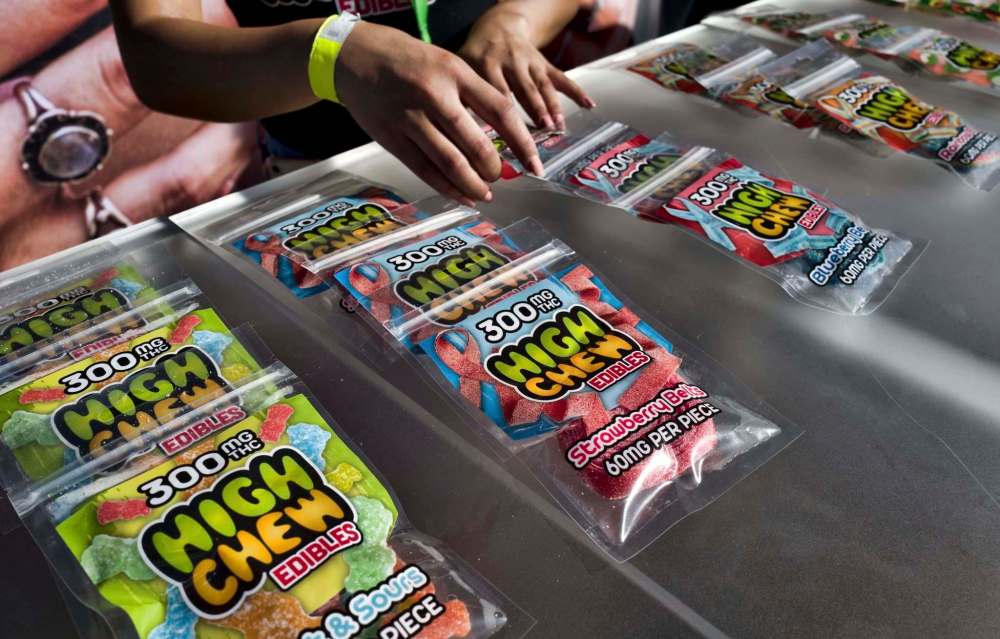
Canada must be ready, and so far Health Canada appears to be on the ball when it comes to edibles. Yet, a lot of work lies ahead.
Given how ill-prepared Health Canada was for the initial legalization of cannabis, the federal agency deserves credit for getting prepared so quickly on edibles. The plan was released just days before the holidays. Canadians have until Feb. 20 to comment on Health Canada’s 195-page regulatory framework on marketing edibles, extracts and topical applications. Despite the intricacies of the project, Ottawa still aims to make them legal no later than October 2019.
The framework offers no major surprises, although Health Canada clearly used the United States as a case study. Nightmarish scenarios of cannabis-infused gummy bears and other candy-like products being sold are already on our national regulator’s radar. Health Canada’s vigilance is quite apparent.
Health Canada recommends plain, child-resistant packaging and restricting the ingredients that can be used. It also wants to limit edibles to 10 milligrams of THC per package — that’s considered the typical single dose. These basic requirements protect children and ensure the industry is less prone to making undesirable products.
Canada’s cannabis market is very immature. This conservative and comprehensive approach, then, is intended to protect vulnerable populations. But there are some gaps. For example, it’s not clear where the line is between child-targeted products and candies for adults. Regulations need to be crystal clear.
Health Canada’s plan also addresses traceability of products. California retailers must take training on track-and-trace. The system was created to certify how cannabis waste is identified, weighed and tracked while on licensed premises, as well as its disposal.
Waste management is hardly mentioned in the Health Canada document, even though many reports of pets and children accidentally ingesting cannabis have already been filed. Health Canada doesn’t appear to address this issue at all in relation to edible products.
The Health Canada framework’s other major gap is on training — the document offers little insight. In Oregon, on the other hand, state training for cannabis industry workers is mandatory. They’re trained on handling cannabis items, producing and propagating cannabis and using cannabis as a food ingredient.
Several questions also remain for the food service industry. Regulatory oversight will come when the Canadian Food Inspection Agency gets involved. Americans are still struggling with this, looking for regulatory bodies to oversee the cannabis industry. We have CFIA in Canada, but it will be interesting to see how our food agency handles this, given its limited resources.

Some Canadians still feel uneasy about cannabis, and sound risk-mitigation practices are crucial.
The plan presented by Health Canada will likely be well received by the industry. The beverage sector, for example, is pursuing creative products, both alcoholic and non-alcoholic. And we should expect research and development on snacking and other food products in the spring.
However, provinces and cities have their own agendas, which create challenges for planning and strategizing. Nonetheless, we’re in for an interesting year of cannabis-related developments leading to October.
Sylvain Charlebois is scientific director of the Canadian Agrifood Foresight Institute, a professor in food distribution and policy at Dalhousie University, and a senior fellow with the Atlantic Institute for Market Studies.
— Troy Media
Related Articles
Cannabis edibles will be big — but concentrates could be even bigger
Advertisement Advertise With Us
Advertisement Advertise With Us