

Tackling homelessness requires aggressive strategy
Advertisement
Read this article for free:
or
Already have an account? Log in here »
To continue reading, please subscribe:

Digital Subscription
One year of digital access for only $205*
- Enjoy unlimited reading on winnipegfreepress.com
- Read the E-Edition, our digital replica newspaper
- Access News Break, our award-winning app
- Play interactive puzzles
*First annual payment billed as $205.00 + GST for one year. This annual subscription will automatically renew at $233.00 + GST every 52 weeks (10% off the regular annual price of $259.35). Offer available to new and qualified returning subscribers only. Cancel any time.
To continue reading, please subscribe:
Add Free Press access to your Brandon Sun subscription for only an additional
$1 for the first 4 weeks*
- Enjoy unlimited reading on winnipegfreepress.com
- Read the E-Edition, our digital replica newspaper
- Access News Break, our award-winning app
- Play interactive puzzles
*Your next Brandon Sun subscription payment will increase by $1.00 and you will be charged $17.95 plus GST for four weeks. After four weeks, your payment will increase to $24.95 plus GST every four weeks.
Read unlimited articles for free today:
or
Already have an account? Log in here »
Hey there, time traveller!
This article was published 06/02/2019 (2780 days ago), so information in it may no longer be current.
Tonight, when the temperature plummets, someone who doesn’t have a place to stay will end up in our shelter.
They’ll have a bed. A blanket. A roof over their head for the night and guaranteed safety until the sun rises.
It’s a dorm-like setting with 110 beds beside each other. It’s full almost every night of the year. And it’s been a safe refuge for thousands of vulnerable people in our city since 2007.
It’s crucial for people in a moment of crisis, but not the answer to ending homelessness. You can find emergency overnight shelters like ours in almost every urban centre in North America. Their purpose is to be a stop-gap measure, a temporary safe place for someone in a crisis.
They are not designed to be permanent homes. Many argue that a bare-bones shelter environment may even incentivize people to work hard to get a place of their own. Unfortunately, the shelter system isn’t working as imagined. The lack of amenities, privacy and storage does not always encourage people to move forward. In fact, for some, it can have the opposite effect.
When someone is struggling for a good night’s sleep, worried about their privacy and stressed because they can’t count on a place to stay each night, they are much more likely to fall into chronic homelessness. Their mental and physical health deteriorates. Their spirit breaks down. They enter survival mode and are forced to focus on securing food and a warm place for the night.
And so, for some, a place that was never designed to be a permanent home becomes just that. That’s why cities like Winnipeg are changing their approach to homelessness, focusing on providing more permanent housing to people who need it.
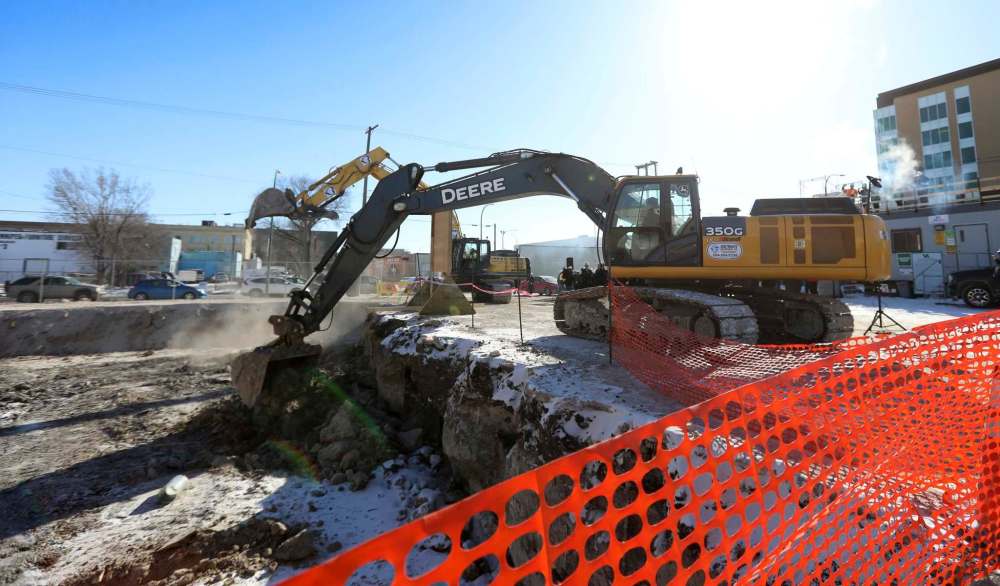
Right now, Siloam Mission is building a 54,000-square-foot expansion to our building at 300 Princess St. to meet the growing demand for our services. For more than a decade, we have focused on helping people progress and transition out of homelessness. We have invested in physical and mental health, job training and housing. Now we’re expanding our mental-health services, improving our health-care services and planning to start a social enterprise to employ people and reintegrate them into the workforce.
We’re also reimagining what our shelter can offer for those who are ready for the next step. With careful planning and research, we will be introducing new transitional strategies in our expanded shelter. Areas that have more privacy than what is usually found in an emergency shelter, providing more dignity and stability.
As a person moves forward, they will meet with caseworkers to find housing that is right for them, either at our own supportive housing facility — The Madison — or elsewhere in the city. And while we are working toward even greater capacity for transition into permanent housing and employment, our shelter will continue to provide emergency shelter beds for those in need.

Each of us has different capabilities, goals and hopes for the future. And lying in every shelter bed tonight is the untapped potential of a person who has so much to offer.
There is no easy fix for homelessness. This expansion and these transitional shelter beds will not eliminate the issues. But they will help vulnerable men and women in times of crisis find stability until we can help them to address the underlying issues and progress into the lives they deserve.
Isn’t it our duty, as a community, to work toward a future where the shelter system is no longer needed?
We’re eager to make that day a reality.
Jim Bell is CEO of Siloam Mission.
Related Articles
Siloam Mission offers sneak peek of new facility
Advertisement Advertise With Us
Advertisement Advertise With Us