

Is Manitoba’s fixed-date election law a hoax?
Advertisement
Read this article for free:
or
Already have an account? Log in here »
To continue reading, please subscribe:

Digital Subscription
One year of digital access for only $205*
- Enjoy unlimited reading on winnipegfreepress.com
- Read the E-Edition, our digital replica newspaper
- Access News Break, our award-winning app
- Play interactive puzzles
*First annual payment billed as $205.00 + GST for one year. This annual subscription will automatically renew at $233.00 + GST every 52 weeks (10% off the regular annual price of $259.35). Offer available to new and qualified returning subscribers only. Cancel any time.
To continue reading, please subscribe:
Add Free Press access to your Brandon Sun subscription for only an additional
$1 for the first 4 weeks*
- Enjoy unlimited reading on winnipegfreepress.com
- Read the E-Edition, our digital replica newspaper
- Access News Break, our award-winning app
- Play interactive puzzles
*Your next Brandon Sun subscription payment will increase by $1.00 and you will be charged $17.95 plus GST for four weeks. After four weeks, your payment will increase to $24.95 plus GST every four weeks.
Read unlimited articles for free today:
or
Already have an account? Log in here »
Hey there, time traveller!
This article was published 29/03/2019 (2663 days ago), so information in it may no longer be current.
Does Premier Brian Pallister have the constitutional authority to call an early election, as he has speculated he might do? Or do the relevant provisions of the Manitoba Elections Act providing for fixed-date elections mean the next election must occur on Oct. 6, 2020?
Pallister claims the law sets a “drop-dead” date for the next election, but nothing prevents him from going to the polls early. Recently, he has indicated he would not do so while under the threat of spring flooding.
The murkiness around the constitutionality of a fixed-date election system allows the premier to make this claim, but a premature election might be seen as opportunistic and a violation of an emerging constitutional convention regarding control over the timing of elections. Conventions are unwritten norms of behaviour regarded as binding by the relevant political actors, but are not enforceable through the courts.
Most provinces and the federal government now operate on a fixed-date election system. Having greater predictability than under the traditional system of unfixed election dates was supposed to deliver such benefits as fairer competition among parties, more opportunity to recruit quality candidates who would know when to leave their jobs, better planning and administration by election agencies, and less voter cynicism due to the perception that premiers would only call elections when conditions favoured their party.
In theory, fixed-date election laws are not complicated; in practice, things are not so simple. The complications arise from the attempt to do four things through the passage of a law.
The primary purpose is to remove the prerogative of the premier to determine the timing of elections, a prerogative that has been used regularly by prime ministers and premiers of all parties to gain a political advantage over their opponents.
Democratic accountability must be upheld, so therefore the legislature must remain free at all times to vote no confidence in the government, an action that might lead to an election. Also, the potential futility of a minority government being unable to pass bills or approve spending had to be avoided, so there must be an escape mechanism to allow a premier to recommend the lieutenant-governor call an election.
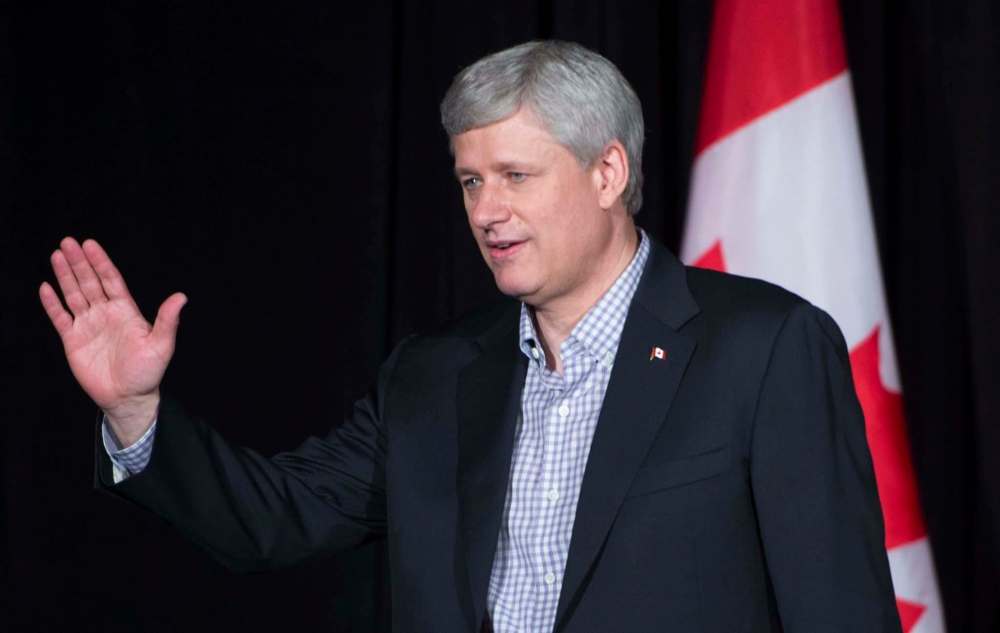
Fixed-date election laws must respect the royal prerogative of the lieutenant-governor to dissolve the legislature and to set an election date. Almost always, his/her decision is based on the advice of the premier, but this can be controversial — as witnessed at the federal level in 2008, when the governor general accepted then-prime minister Stephen Harper’s request for a prorogation of Parliament when his government was in danger of being toppled by a coalition of opposition parties.
The final purpose or effect of a fixed-date election law is to set the maximum life of the legislature to four years. Previously, the maximum life of the legislature was five years. Short extensions of the life of the legislature can occur to avoid overlap with federal election campaigns.
Fixed election dates came to Manitoba in 2008, when the NDP government of Gary Doer had the legislature pass the omnibus Bill 37, containing a series of reforms to election and lobbying laws. Other parts of the bill were controversial, but the Opposition Progressive Conservatives supported the fixed-date provisions. That support was based on principle, but it also reflected the result of the 2007 early election call that caught them unprepared and may have contributed to the NDP’s victory.

Since the fixed-date election law does not remove the right of the premier to recommend an early election, and because the lieutenant-governor almost always acts on that advice, critics argue fixed-date elections laws are a hoax. In response, defenders of the laws argue they represent a new constitutional convention that places limits on the right of first ministers to control the timing of elections.
In a case challenging the prorogation granted to Harper in 2008, the courts declared there was, at that time, no constitutional convention. For a convention to exist, there must be precedents; a convention must also be precise, identifiable and workable. For a convention to apply, it must be recognized as binding among the relevant political actors. And, finally, courts can recognize the existence of conventions but breaches of those norms of behaviour are penalized in the political arena, not in the legal arena.
The past two provincial elections, in 2011 and 2016, took place on the dates set out in Section 49 of the Manitoba Elections Act. It might be argued these two precedents represent a developing convention. However, conventions depend for their effectiveness on political actors regarding them as binding.
Apparently, Pallister does not see the law in this way. He must also believe, if he goes early to gain political advantage, he will not pay a price in terms of voter support because the initial charge of political opportunism will quickly be displaced by other election issues.
Paul G. Thomas is professor emeritus of political studies at the University of Manitoba.