

Western alienation rears its head yet again
Advertisement
Read this article for free:
or
Already have an account? Log in here »
To continue reading, please subscribe:
Digital Subscription
One year of digital access for only $1.44 a week*
- Enjoy unlimited reading on winnipegfreepress.com
- Read the E-Edition, our digital replica newspaper
- Access News Break, our award-winning app
- Play interactive puzzles
*Billed as $5.77 plus GST every four weeks. After 52 weeks, price increases to the regular rate of $19.95 plus GST every four weeks. Offer available to new and qualified returning subscribers only. Cancel any time.
To continue reading, please subscribe:
Add Free Press access to your Brandon Sun subscription for only an additional
$1 for the first 4 weeks*
- Enjoy unlimited reading on winnipegfreepress.com
- Read the E-Edition, our digital replica newspaper
- Access News Break, our award-winning app
- Play interactive puzzles
*Your next Brandon Sun subscription payment will increase by $1.00 and you will be charged $17.95 plus GST for four weeks. After four weeks, your payment will increase to $24.95 plus GST every four weeks.
Read unlimited articles for free today:
or
Already have an account? Log in here »
Hey there, time traveller!
This article was published 24/10/2019 (2432 days ago), so information in it may no longer be current.
If there was one defining moment for my younger self’s flirtation with western alienation, it came in 1986, when Brian Mulroney’s Progressive Conservatives snubbed Winnipeg’s Bristol Aerospace and awarded a $1.4-billion contract to maintain Canada’s CF-18 fighters to Canadair instead. Canadair had just been bought by Quebec-based Bombardier, which acquired the failing Crown corporation a month before scoring the CF-18 contract.
In 1987, the Reform Party, with its rallying cry, “the West wants in,” became the face of western alienation and separation. Fed up with politicians only representing the interests of the East, Preston Manning and his supporters built a party to address western concerns. While they did not make any headway in the 1988 election, Deborah Grey was elected in a 1989 byelection as the first Reform MP. In the 1993 election, the Reform Party elected 52 members.
Fast-forward to 2019, and certain elements in the West now seem to want out, again, flirting with the idea of separatism like they did in the heady days of constitutional negotiations with prime minister Pierre Trudeau in the 1980s. The West feels ignored, alienated and exploited. Gone is the Reform Party, having long since amalgamated with its former foes, the old Progressive Conservatives, and various iterations of the Canadian Reform/Alliance party to become, finally, the Conservative Party of Canada.
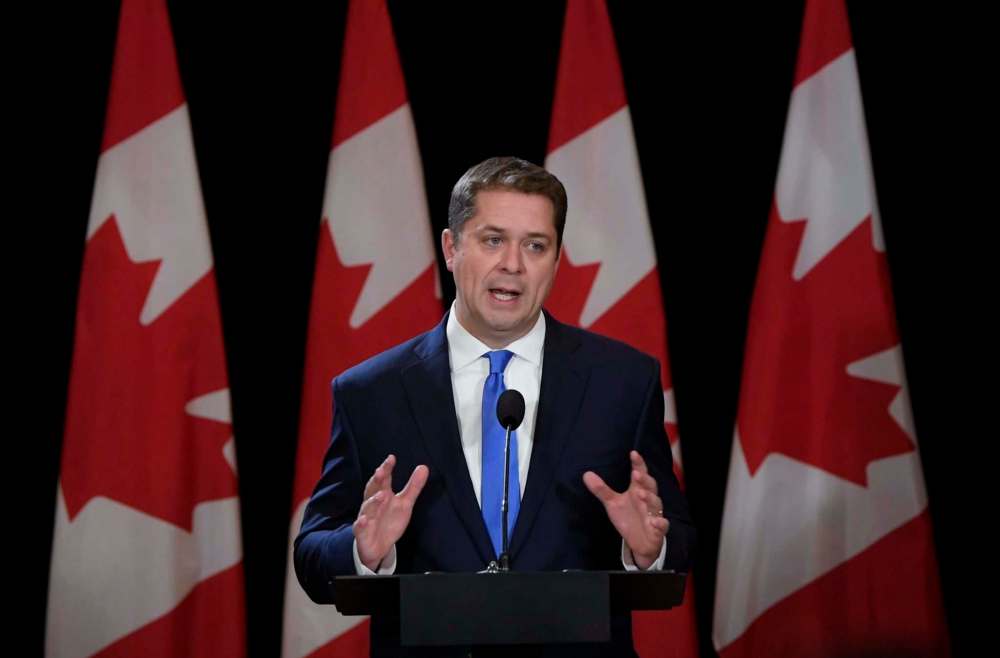
It seems that when the ballots were counted following Monday night’s vote, some of those on the losing side of the equation decided they have had enough, and there’s talk of a “Wexit” — the West leaving the country and standing on its own. The Liberals have effectively been shut out of Alberta and Saskatchewan, which elected only Conservatives, except in one Edmonton seat, which will send NDP MP Heather McPherson to Ottawa.
Of course, there are a lot of people in Alberta and Saskatchewan who didn’t bother to vote because they believed their vote wouldn’t count anyway. They support parties that aren’t Conservative, and they feel the Tories are so deeply ingrained in the province that voting is a waste of their time and energy. So they stayed home.
Yes, the Liberals lost the popular vote but won the election — another example of the failure of the first-past-the-post system. But rather than call for immediate electoral reform, those belonging to an online “Wexit” Facebook page simply want out of Canada because their team lost.
This is not the first time westerners have wanted out. Somewhere, I still have old buttons from the Western Canada Concept Party, which began in 1980 in response to the National Energy Program instituted by prime minister Pierre Trudeau.
The Western Canada Concept, which was founded after Trudeau’s 1980 re-election, was the first modern separatist party outside Quebec. In much of the West, Trudeau’s government was hated for its constitutional patriation, its move to implement French-language policies and, of course, the despised NEP.
There had been talk of separation before the 1980s, but according to political scientist Roger Gibbins, at that time, the focus for western premiers was to increase power at the provincial level. Since the ’80s, the devolution of power to the provinces has continued, but how the system elects government has never been changed.
Canadian federalism became decentralized in a bid to address the concerns of both the East and West over development of the 1982 Constitution, specifically related to natural resources. Alberta premier Peter Lougheed demanded that Pierre Trudeau implement section 92A in the Constitution, which gave the provinces control over their resources in 1982; this fundamentally altered the dynamic of the provincial-federal relationship.
Changes to the way the federal government funds health care and social programs also evolved over time, with more responsibility off-loaded to provinces as the federal government responded to taxpayers’ demands to cut deficits and trim costs. This has meant that when times are lean, provinces such as Manitoba have had to scramble to keep up. But this has been what the public desired: less government, less deficit.

At the very heart of it all is Canada’s very ineffective electoral system. Why isn’t there more outrage that the actual number of votes doesn’t reflect the number of seats?
Conservative Leader Andrew Scheer is right: now is the time for Prime Minister Justin Trudeau to be more co-operative. But the “Wexit” types thinking about separating might want to ponder what it is they really want — more power transferred from the federal government with each province becoming a separate independent state? Or do we instead work together on changing the electoral system, seeking to make real change that makes every vote count?
Dollars to doughnuts, electoral reform will not be one of the things Scheer demands. Instead, we’re more likely to see the “Wexit” provinces, Alberta and Saskatchewan, push for more power, with no talk about fixing the real reasons so many Canadians feel left out.
Shannon Sampert is a retired political scientist and consultant.
s.sampert@uwinnipeg.ca