

Birds victims of prairie transformation
Advertisement
Read this article for free:
or
Already have an account? Log in here »
To continue reading, please subscribe:

Digital Subscription
One year of digital access for only $205*
- Enjoy unlimited reading on winnipegfreepress.com
- Read the E-Edition, our digital replica newspaper
- Access News Break, our award-winning app
- Play interactive puzzles
*First annual payment billed as $205.00 + GST for one year. This annual subscription will automatically renew at $233.00 + GST every 52 weeks (10% off the regular annual price of $259.35). Offer available to new and qualified returning subscribers only. Cancel any time.
To continue reading, please subscribe:
Add Free Press access to your Brandon Sun subscription for only an additional
$1 for the first 4 weeks*
- Enjoy unlimited reading on winnipegfreepress.com
- Read the E-Edition, our digital replica newspaper
- Access News Break, our award-winning app
- Play interactive puzzles
*Your next Brandon Sun subscription payment will increase by $1.00 and you will be charged $17.95 plus GST for four weeks. After four weeks, your payment will increase to $24.95 plus GST every four weeks.
Read unlimited articles for free today:
or
Already have an account? Log in here »
Hey there, time traveller!
This article was published 09/11/2019 (2445 days ago), so information in it may no longer be current.
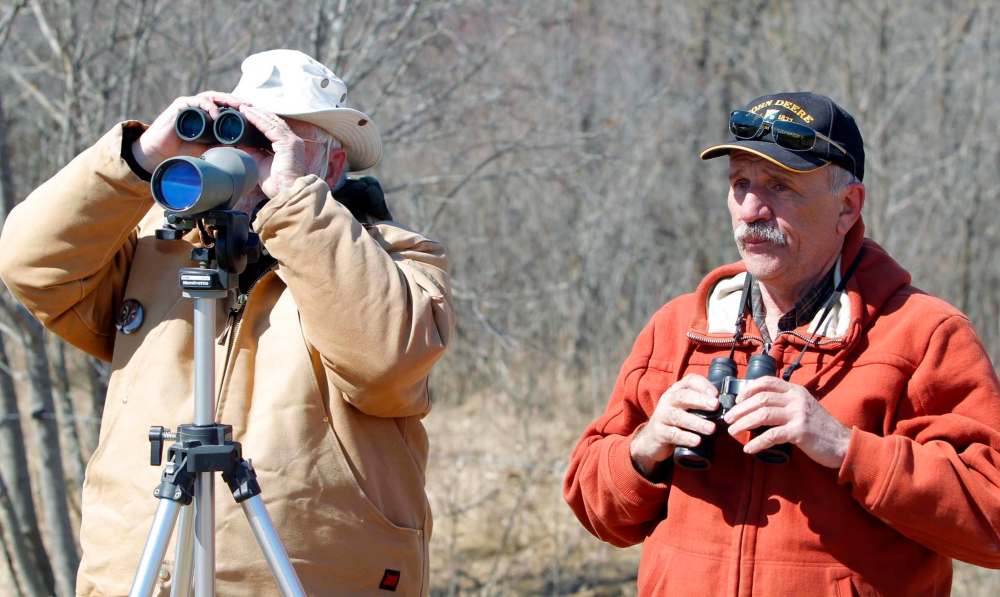
The grasslands of the Canadian Prairies are a hidden gem for bird watchers, with millions of migratory birds passing through the area each year. But they are also one of the most transformed landscapes in the world, vanishing more quickly than the Amazon rainforest, as they are swallowed up for other uses, such as agriculture and industry.
Scientists are concerned that these already stressed grasslands may not be able to cope with rapid and ongoing climate change. Canada’s prairie grasslands are expected to get warmer and wetter over time, but there will also be rapid swings between wet and dry conditions and seasonal variability.
These shifts have strong links to plant growth, seed production, insect emergence and the region’s suitability to plants and animals.
As these changes take hold, there will be winners and losers. A warmer and/or wetter year might nurture better growing conditions for the plants that animals rely on for food, or it might hinder animal reproduction. Over time, greater rates of change in temperature and precipitation may force species to adapt or perish.
Our new study found that climate change — long-term increases in temperature and precipitation — is affecting birds and aquatic insects more strongly than the temperature and precipitation in a given year. For some bird species, the progressively warmer, wetter conditions are beneficial.
The Prairies are becoming quieter
The Prairies have lost 60 per cent to 70 per cent of their original wetlands and more than 70 per cent of native grasslands due to agricultural development. The pressure to convert land from its natural state into farmland continues today.
Native grasslands and wetlands have been drained across the Canadian Prairies. Loss of these habitats is ongoing, with an additional 3.6 hectares of wetlands drained every day.
Some native grasslands are protected, but they are under-represented in protected refuges. These areas are often small and isolated, making them more vulnerable to environmental change.
Global warming, for example, is bringing more flood events, severe drought and climatic extremes in the Prairies, which can lead to less suitable habitat and environmental conditions for many animals, including birds. Experts warn that the “Prairies are getting quieter,” but the reasons behind the expanding silence are not fully understood.
Birds on the move
Our new research shows that changing climate patterns — particularly long-term precipitation and temperature change — are as important as habitat loss for birds on the Prairies.
As rainfall, snowfall and temperature have increased in some places across the Prairies since the mid-1900s, the number of birds and varieties have also increased. But the number of carnivores and omnivores have decreased with long-term increases in either temperature or precipitation.
Read more: Industrial noise compels Savannah sparrows to change their tune
As the Earth warms, some migratory birds are arriving from the south and nesting earlier in North America and Europe. Many species are also moving to areas that have become progressively warmer and possibly wetter perhaps to escape drier conditions in the south or shift into new areas that are now more attractive or suitable to birds.
If climate trends continue as projected, the influence of local climate and climate change will likely overtake land use as the most important factor influencing bird populations. There is evidence that the shift has already begun in the Prairies. How this plays out will depend on the balance between precipitation and temperature, and extreme warming could eventually have deleterious impacts on prairie wetlands.
Wetland benefits
In the same study, we found that aquatic insects — an essential food source for breeding birds — were more sensitive to land use and water chemistry than weather or climate change. Runoff from agricultural lands can add pollutants, including nutrients like nitrogen and phosphorus, to wetlands and have negative effects on aquatic insects.
Landscapes with a higher proportion of natural vegetation around wetlands (also known as riparian vegetation) provided more refuge habitat for species already vulnerable to habitat loss. These areas will only become more important as climate and land-use effects intensify.
The discovery that riparian vegetation improves some of the negative impacts of climate and water quality gradients on a variety of aquatic insects is key for mitigation, because many bird groups increased as the amount of vegetation increased. Riparian vegetation should be considered in future studies using land management experiments in agricultural environments.
Read more: How birders helped pinpoint hotspots for migratory bird conservation

Although both climate change and land use practices will influence prairie species, only the latter can be practically managed. To ensure that prairie biodiversity is sustained in a changing climate, government policies could encourage producers to retain wetlands, areas of natural habitat and riparian buffers to reduce disturbances and the negative consequences of increasingly intensive agriculture.
Rewarding producers for sustainable agricultural practices could be another path forward. Farm groups have been asking for almost a decade for producers to be compensated in some way for the ecosystem services — carbon storage by wetlands, groundwater recharge, water storage, maintaining habitat for biodiversity — they provide.
Chrystal Mantyka-Pringle is an adjunct professor of conservation biology, University of Saskatchewan. Lauren Bortolotti is an adjunct professor of wetland ecology, University of Saskatchewan. Lionel Leston is a postdoctoral fellow studying ornithology and conservation biology, University of Alberta, This article was also co-authored by Bob Clark, research scientist at Environment and Climate Change Canada, and Dave Howerter, chief conservation officer at Ducks Unlimited Canada.
This article was first published at The Conversation Canada: theconversation.com/ca.