

Harper comeback? Possible, but unlikely
Advertisement
Read this article for free:
or
Already have an account? Log in here »
To continue reading, please subscribe:
Digital Subscription
One year of digital access for only $1.44 a week*
- Enjoy unlimited reading on winnipegfreepress.com
- Read the E-Edition, our digital replica newspaper
- Access News Break, our award-winning app
- Play interactive puzzles
*Billed as $5.77 plus GST every four weeks. After 52 weeks, price increases to the regular rate of $19.95 plus GST every four weeks. Offer available to new and qualified returning subscribers only. Cancel any time.
To continue reading, please subscribe:
Add Free Press access to your Brandon Sun subscription for only an additional
$1 for the first 4 weeks*
- Enjoy unlimited reading on winnipegfreepress.com
- Read the E-Edition, our digital replica newspaper
- Access News Break, our award-winning app
- Play interactive puzzles
*Your next Brandon Sun subscription payment will increase by $1.00 and you will be charged $17.95 plus GST for four weeks. After four weeks, your payment will increase to $24.95 plus GST every four weeks.
Read unlimited articles for free today:
or
Already have an account? Log in here »
Hey there, time traveller!
This article was published 29/05/2020 (2210 days ago), so information in it may no longer be current.
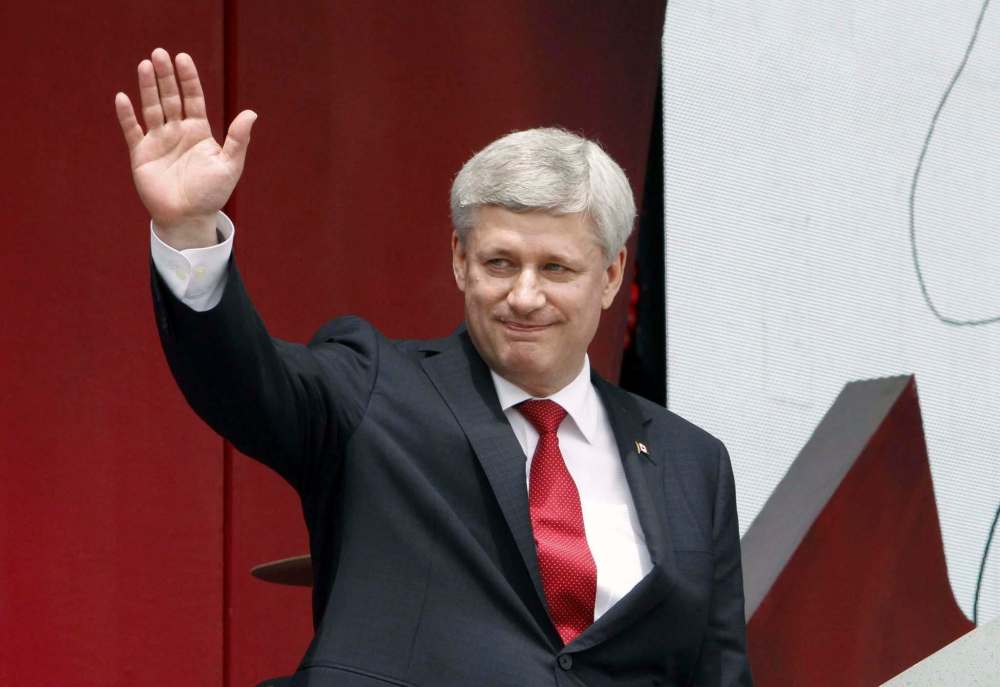
On Monday, media reported on a letter dispatched from a Conservative Party of Canada constituency association president in Quebec calling for the Tories’ leadership race to be postponed and the current interim leader, Andrew Scheer, to be sacked and replaced by former leader and prime minister Stephen Harper. To some, this was just the latest indication that Harper was interested in retaking the party leadership.
Is such a comeback possible? Sure. Harper was a proven winner, having won three elections before losing to Liberal leader Justin Trudeau in 2015. If he did stage a comeback, Harper would be by far the most experienced of the party leaders in the coming election campaign. And it’s likely there is a segment of Canadian voters for whom Trudeau’s leadership during the COVID-19 pandemic has fondly called to mind Harper’s time in the PMO.
But there are downsides. In the last election campaign, Tory candidates were confronted with what they called “Harper Fatigue” — voters had tired of Harper and some of the darker, more ruthless aspects of his leadership style. After nine years in office, many Canadians were simply weary of what one wag called Canada’s “authoritarian hockey dad.” I was doing research by accompanying candidates during the 2015 election campaign, and could clearly see that fatigue when Tory candidates were out door-knocking.
But people were tired of Harper in 2015, not repulsed by him. The scandals of Harper’s time in office were relatively minor (think about the Mike Duffy expense-account scandal). The result was that Harper did not lead the party to a major loss in 2015 as, for example, Kim Campbell did in 1993.
Harper hasn’t given any official indication that he is interested in the leadership. But his career after losing in 2015 has made it clear that his heart is still in politics. In 2018, he was elected chair of the International Democrat Union, an umbrella organization of centre-right and conservative parties. And when Harper resigned as a member of Conservative Fund Canada, the party’s powerful fundraising arm, those in the know speculated he was doing so either to play a more active role in the leadership race or to run himself.
The letter supporting Harper for interim leader draws an interesting historical parallel: Winston Churchill’s 1939 appointment as First Lord of the Admiralty, which would eventually lead to his becoming prime minister. In fact, there are two more accurate such parallels: first, former vice-president Richard Nixon ran for president in 1960 but was defeated by Democrat John F. Kennedy; following another defeat in a run for the governorship of California in 1962, Nixon vowed that his public life was at an end. Still, he remained active behind the scenes, and eventually clinched the Republication nomination for president in 1968 and went on to win.
Former Australian prime minister John Howard provides another example. Howard was leader of the Liberal Party but, in 1989, faced a caucus rebellion that resulted in his loss of the party leadership. Howard bided his time as the party went through a series of leaders; in 1995, Howard won the Liberal leadership once again and went on to become prime minister in 1996, and would remain in office until 2007.
The record has not been as positive for Canadian politicians. Joe Clark, who served as Canada’s prime minister in 1979-80, returned from retirement to lead the Progressive Conservative Party in 1998, but the party went nowhere under his leadership and eventually merged with the Canadian Alliance to form the modern Conservative Party.

Similarly, former prime minister Arthur Meighen resigned as Conservative Party leader after serving as prime minister in the 1920s. In 1941, Meighen became party leader once again and ran in a byelection to secure a seat in the House of Commons. Meighen lost that race and promptly resigned as leader.
If he is really contemplating a comeback, Harper should consider examining these Canadian careers for indications of how to not go about doing so.
A Harper candidacy is possible, but is it probable? With only weeks to go until the vote, the likelihood that the former prime minister will get into the race is low. The party’s organizing committee has already delayed the vote once owing to COVID-19 and would be loathe to do so again, especially if it was perceived to be doing so for Machiavellian purposes. While Harper might have credibly entered the race early on after resigning from the Conservative Fund, the moment seems to have passed — at least for the time being.
But the former prime minister is still a formidable presence in the party and could play a role in the leadership race. It is particularly noticeable that he has not endorsed front-runner Peter MacKay for leader, despite that it was Harper and MacKay’s co-operation that led to the formation of the Conservative Party in 2003.
Royce Koop is head of the political studies department at the University of Manitoba.