

Port of Churchill’s potential expanding
Advertisement
Read this article for free:
or
Already have an account? Log in here »
To continue reading, please subscribe:
Digital Subscription
One year of digital access for only $1.44 a week*
- Enjoy unlimited reading on winnipegfreepress.com
- Read the E-Edition, our digital replica newspaper
- Access News Break, our award-winning app
- Play interactive puzzles
*Billed as $5.77 plus GST every four weeks. After 52 weeks, price increases to the regular rate of $19.95 plus GST every four weeks. Offer available to new and qualified returning subscribers only. Cancel any time.
To continue reading, please subscribe:
Add Free Press access to your Brandon Sun subscription for only an additional
$1 for the first 4 weeks*
- Enjoy unlimited reading on winnipegfreepress.com
- Read the E-Edition, our digital replica newspaper
- Access News Break, our award-winning app
- Play interactive puzzles
*Your next Brandon Sun subscription payment will increase by $1.00 and you will be charged $17.95 plus GST for four weeks. After four weeks, your payment will increase to $24.95 plus GST every four weeks.
Read unlimited articles for free today:
or
Already have an account? Log in here »
Hey there, time traveller!
This article was published 05/12/2020 (2004 days ago), so information in it may no longer be current.
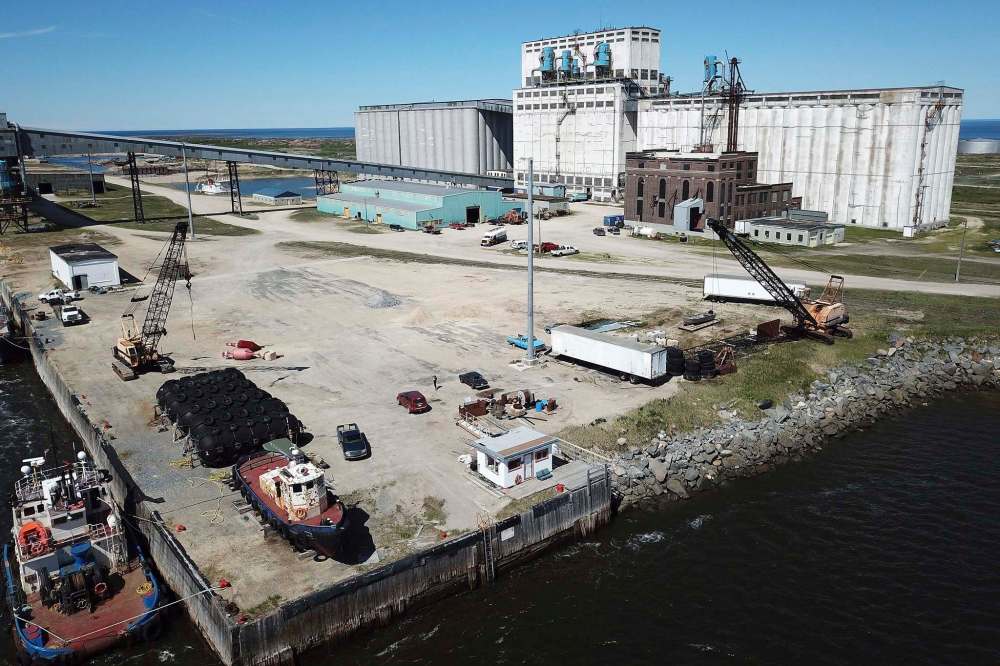
In 2018, the Arctic Gateway Group reconnected Churchill with North America’s transportation infrastructure and the rest of the world. By purchasing Canada’s northernmost major port and fixing the railroad, this public-private partnership got one step closer to the goal of capitalizing on Churchill’s proximity to the North American heartland and to European and Asian markets.
Now, as climate change continues to impact Canada’s Arctic and Hudson Bay and sea ice recedes, the business case for the Port of Churchill is getting stronger. However, there are two challenges: one is climate change itself, which is making the shipping season longer but also resulting in an economic shift as countries around the world move to reduce emissions and decarbonize. The other is the need for additional public support to cover capital costs.
Recently, Arctic Gateway made it clear to the federal and provincial governments that additional funding is needed to succeed in its vision to position northern Manitoba as a trade and transportation hub. The way forward is clear: Canada must join the other leading industrialized maritime nations that are investing in their ports and adapting to a transportation industry that will soon move toward electric vehicles and alternative power sources — and thrive while doing so.
According to the International Energy Agency, industrial ports and domestic shipping fleets are among the most effective places to achieve economy-wide greenhouse gas emission reductions and scale up hydrogen supply chains. The shipping industry and ports have an important role to play in Canada’s plans for a net-zero economy by 2050.
The full-scale adoption of zero-emission ships will also create growth opportunities and expertise in Canada’s shipbuilding sector that will benefit coastal communities and others across the country.
The United Kingdom and Norway have developed detailed maritime climate plans that leverage ports and the development of zero-emission ships to achieve domestic climate goals and to position themselves for a share of the potential trillion-dollar market associated with the global transition to cleaner shipping. Government-funded demonstration projects, procurement policies and ambitious targets proving zero-emission technologies are central to their plans because they help to overcome up-front capital costs and reduce private sector risk.
The United Kingdom’s new Ten Point Plan for a Green Industrial Revolution will see investment of more the 200 million pounds into modern ports, hydrogen hubs and clean maritime technology demonstration projects.

Canada numbers among the few countries that could become leading exporters of clean hydrogen due to our low-carbon electricity and abundance of water. Hydrogen fuel cells are more efficient than gas-powered motors and produce only water and heat as emissions, making hydrogen the ideal power source for the transition to net-zero emissions.
However, competing in the emerging global hydrogen market will depend in large part on our ability to build supply and demand at home. Ports provide a tremendous opportunity to scale-up hydrogen demand while having the added strategic benefit of being Canada’s gateway to the international energy marketplace.
The combination of clean, low-cost Manitoba hydroelectricity (which can be converted into hydrogen) and our proximity to Europe through the Port of Churchill provide a unique opportunity for Manitoba to diversify its economy and build resiliency in a changing global economy.
It is time for Canada to unlock the potential of the maritime sector and ports to help cut emissions across the entire country. Doing so is not just good for the environment, it is critical to securing our place as a leading energy supplier in the future clean energy economy.
Brent Dancey is the director of marine climate action at Oceans North, a charity that supports marine conservation in partnership with Indigenous and coastal communities.