

Federal supports must be more focused
Advertisement
Read this article for free:
or
Already have an account? Log in here »
To continue reading, please subscribe:

Digital Subscription
One year of digital access for only $205*
- Enjoy unlimited reading on winnipegfreepress.com
- Read the E-Edition, our digital replica newspaper
- Access News Break, our award-winning app
- Play interactive puzzles
*First annual payment billed as $205.00 + GST for one year. This annual subscription will automatically renew at $233.00 + GST every 52 weeks (10% off the regular annual price of $259.35). Offer available to new and qualified returning subscribers only. Cancel any time.
To continue reading, please subscribe:
Add Free Press access to your Brandon Sun subscription for only an additional
$1 for the first 4 weeks*
- Enjoy unlimited reading on winnipegfreepress.com
- Read the E-Edition, our digital replica newspaper
- Access News Break, our award-winning app
- Play interactive puzzles
*Your next Brandon Sun subscription payment will increase by $1.00 and you will be charged $17.95 plus GST for four weeks. After four weeks, your payment will increase to $24.95 plus GST every four weeks.
Read unlimited articles for free today:
or
Already have an account? Log in here »
Hey there, time traveller!
This article was published 15/12/2020 (2125 days ago), so information in it may no longer be current.
Since its election, the current federal Liberal government has consistently demonstrated its disinterest in targeting spending to those in need and limiting debt accumulation.
Despite expected deficits of $381.6 billion this year and $121.2 billion next year, and that the national debt (adjusted for financial assets) is on track to reach $1.5 trillion by 2025-26, the federal government announced more new spending in its recent fiscal update.
For example, in 2021, families with children (with household incomes up to $120,000) will receive four additional tax-free payments from the Canada Child Benefit (CCB), totalling $1,200 per child under the age of six. Families with income above $120,000 will receive additional payments totalling $600 (again per child under the age of six).
These payments are in addition to the basic CCB benefit, which can be as high as $6,765 (per child under six), depending on household income. The total projected cost of the extra CCB payments in 2021 is $2.4 billion.
The CCB, which was created in 2016, is not a targeted program. By the government’s numbers, roughly 90 per cent of families with children receive the CCB. In 2019, only 16.2 per cent of the money went to families with incomes below $40,000, while 50.3 per cent went to families with incomes above $70,000.
Like the new additional CCB payments in 2021, the increases introduced in 2016 were financed by borrowing. So parents will benefit today — in the form of higher and additional CCB payments — while their children will bear the cost in the form of higher debt and higher taxes in the future.
Of course, stabilizing incomes during a recession is a legitimate policy goal for government. Programs such as employment insurance, for instance, are intended to replace lost or reduced wages with government transfers.
However, the lack of targeting in many programs introduced by the federal government during the COVID-19 recession has likely made some people better off through government transfers compared to their employment income.
For example, an analysis of $81.6 billion in recession-related spending — the Canada Emergency Response Benefit (CERB), Canada Emergency Student Benefit (CESB), one-time payments to recipients of Old Age Security, the Guaranteed Income Supplement and the Canada Child Benefit — concluded that up to $22.3 billion (or 27.4 per cent) of the spending was potentially wasteful due to poor targeting.
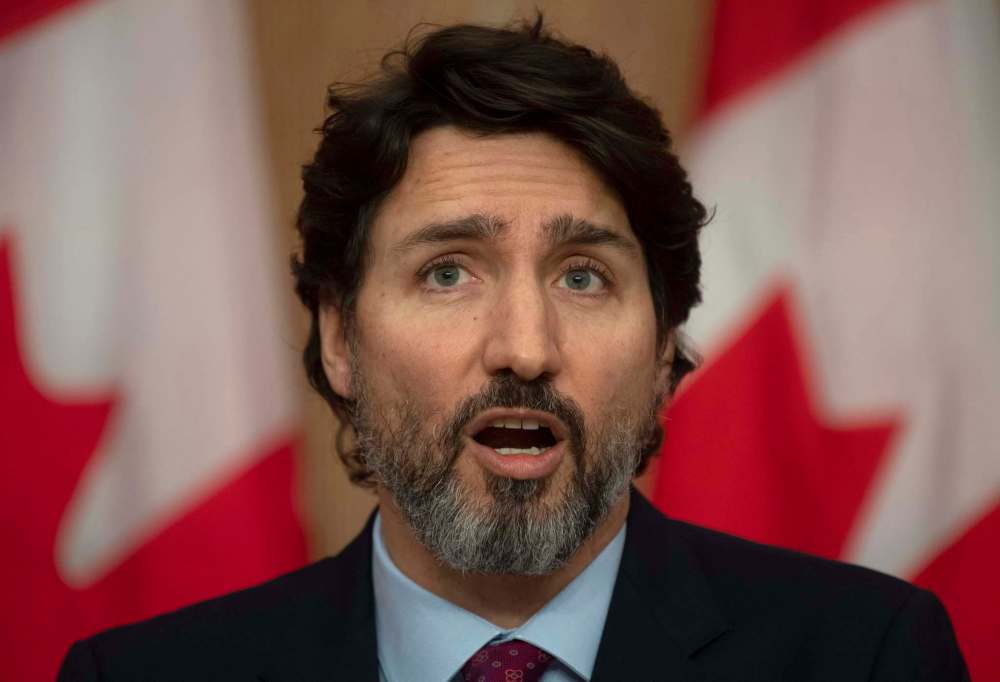
And the government of Prime Minister Justin Trudeau will continue this approach. The additional CCB payments in 2021 include no criteria related to changes in household income. Families who experience pronounced drops in their income because of the recession will receive the same new additional benefit as families who experience no change in their income, or perhaps even saw their household incomes increase.
So the extra $2.4 billion being spent (and financed by borrowing) in 2021 will not target families with children whose incomes have been hurt by the recession. All families with children under six who are eligible for the CCB will benefit from the new spending.

The government’s continued approach doesn’t target spending to Canadians most in need. But it has increased the costs of recession-related spending and the amount of money borrowed, partly explaining the historic federal budget deficit expected this year ($381.6 billion).
This approach helps explain why Canada is expected to run the largest deficit of any industrialized country in 2021.
We need better care and more prudent management of federal finances. That should start with better targeting of assistance to those in genuine need.
Jason Clemens and Milagros Palacios are economists at the Fraser Institute.
— Troy Media
Related Articles
Groups warn of CERB clawbacks on vulnerable youth
Advertisement Advertise With Us
Advertisement Advertise With Us