

Ontario’s changes to blue box recycling don’t go nearly far enough
Advertisement
Read this article for free:
or
Already have an account? Log in here »
To continue reading, please subscribe:
Monthly Digital Subscription
$1 per week for 24 weeks*
- Enjoy unlimited reading on winnipegfreepress.com
- Read the E-Edition, our digital replica newspaper
- Access News Break, our award-winning app
- Play interactive puzzles
*Billed as $4.00 plus GST every four weeks. After 24 weeks, price increases to the regular rate of $19.95 plus GST every four weeks. Offer available to new and qualified returning subscribers only. Cancel any time.
Monthly Digital Subscription
$4.99/week*
- Enjoy unlimited reading on winnipegfreepress.com
- Read the E-Edition, our digital replica newspaper
- Access News Break, our award-winning app
- Play interactive puzzles
*Billed as $19.95 plus GST every four weeks. Cancel any time.
To continue reading, please subscribe:
Add Free Press access to your Brandon Sun subscription for only an additional
$1 for the first 4 weeks*
*Your next subscription payment will increase by $1.00 and you will be charged $16.99 plus GST for four weeks. After four weeks, your payment will increase to $23.99 plus GST every four weeks.
Read unlimited articles for free today:
or
Already have an account? Log in here »
Hey there, time traveller!
This article was published 14/06/2021 (1744 days ago), so information in it may no longer be current.
Ontario’s revamped blue box recycling is a “bold step” or “flawed and not enough” — depending entirely on who’s doing the talking.
In fact, it’s both.
The principle of making the producers of the products and packaging that fill those bins to overflowing responsible for paying for the recycling, rather than cost-sharing it with municipalities, is a bold step for Ontario, as Environment Minister Jeff Yurek says.
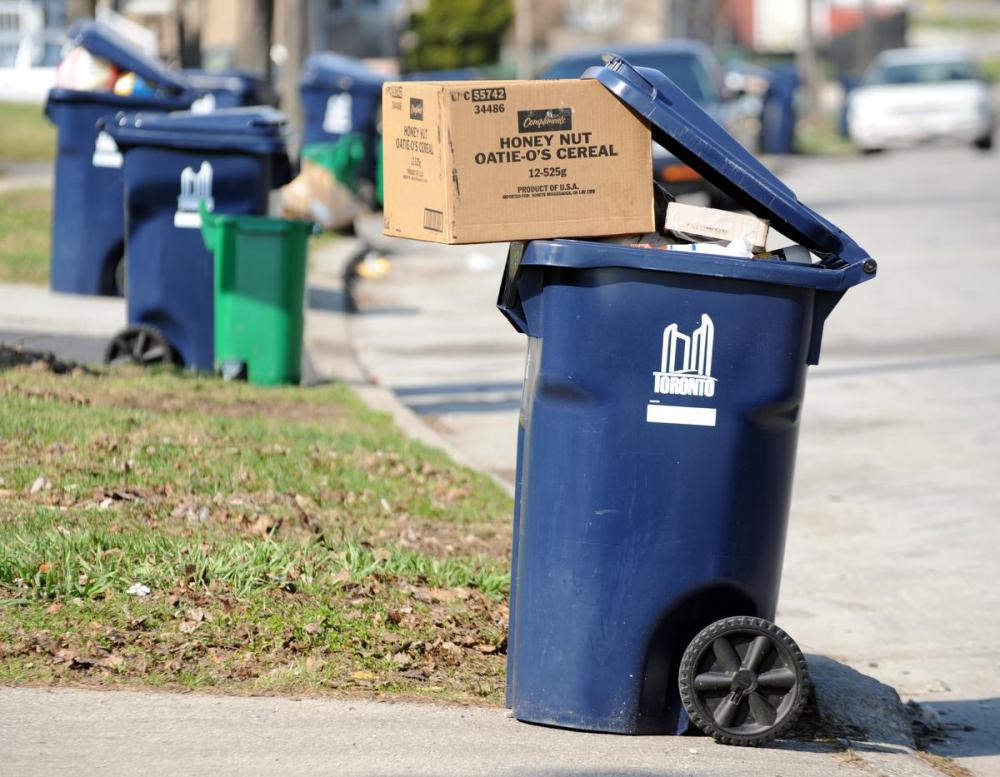
The move to extended producer responsibility has been talked about for more than a decade and the Ford government is the one finally to move it forward, albeit slowly over the next four years.
It means municipalities won’t be on the hook for millions in blue box recycling costs. It will expand services to communities that don’t have it now. And Ontario will finally collect a consistent set of paper, plastic, glass, metal and beverage containers everywhere from Toronto to the Township of Tiny. Those broad strokes are all good.
But when it comes to the details, Ontario’s new blue box program is flawed and not enough, as environmentalists say. That’s especially true when it comes to the level of recycling that the government is requiring product producers to provide and pay for.
The recycling targets are too low and the categories are too broad to really drive the needed change in design towards easier-to-recycle packaging and, better still, less of it to begin with.
For example, the government has given producers years to meet a target of recycling just half the rigid plastics, which includes everything from clear grocery store clamshells to take-out food containers and yogurt tubs. That’s not far off where Toronto is already.
That broad category means there’s little incentive for companies to stop making hard-to-recycle items such as black plastic food trays and Styrofoam because they can achieve their recycling requirements with the easy-to-recycle yogurt tubs, detergent bottles and the like.
It doesn’t require service expansion into apartments and condos for years to come. And it all but ignores the need to expand the recycling program beyond residences to the commercial and institutional sectors.
All these shortcomings mean Ontario’s “enhanced” blue box recycling still won’t do enough to reduce all the waste that’s being trucked to landfills, which are quickly nearing capacity.
That should be causing more concern than it is but municipal governments, quite understandably, are just happy to be relieved of the burden of running a program that gets more expensive and less effective every year.
Toronto, one of the first communities scheduled to move to the new system in July 2023, expects to save as much as $15 million a year.
Mississauga and Brampton switch in 2024, along with Kitchener — birthplace of the curbside blue box program in Ontario. Hamilton, Burlington and Oakville transition in 2025.
“It will save property taxpayers $150 million a year and lead to better, more innovative and sustainable packaging practices,” says Graydon Smith, president of the Association of Municipalities Ontario.

The way the system is paid for is definitely changing. But it’s highly unlikely this new program will drive major innovation or sustainable packaging — unless the recycling requirements and targets are increased.
They should be.
Ontario’s cities and large towns have had blue box recycling for more than two and half decades but the program has never lived up to its billing, never transformed the economics of waste.
The bold promise of extended producer responsibility isn’t just about changing who pays and simplifying recycling rules. It’s supposed to drive positive environmental change.
On that most important of fronts, the Ford government has fallen short.