

Olympics may not tempt some golfers but playing for Canada is a chance to become part of national fabric forever
Advertisement
Read this article for free:
or
Already have an account? Log in here »
To continue reading, please subscribe:

Digital Subscription
One year of digital access for only $205*
- Enjoy unlimited reading on winnipegfreepress.com
- Read the E-Edition, our digital replica newspaper
- Access News Break, our award-winning app
- Play interactive puzzles
*First annual payment billed as $205.00 + GST for one year. This annual subscription will automatically renew at $233.00 + GST every 52 weeks (10% off the regular annual price of $259.35). Offer available to new and qualified returning subscribers only. Cancel any time.
To continue reading, please subscribe:
Add Free Press access to your Brandon Sun subscription for only an additional
$1 for the first 4 weeks*
- Enjoy unlimited reading on winnipegfreepress.com
- Read the E-Edition, our digital replica newspaper
- Access News Break, our award-winning app
- Play interactive puzzles
*Your next Brandon Sun subscription payment will increase by $1.00 and you will be charged $17.95 plus GST for four weeks. After four weeks, your payment will increase to $24.95 plus GST every four weeks.
Read unlimited articles for free today:
or
Already have an account? Log in here »
Hey there, time traveller!
This article was published 28/07/2021 (1889 days ago), so information in it may no longer be current.
Olympic golf sure has been challenged, hasn’t it? At least the rebirthed version of it, the sport having returned to the 2016 Summer Games in Rio de Janeiro, Brazil after a 100-plus-year absence.
That year saw some top golfers take a pass, citing concerns over Zika, which we’ve sadly come to see as like the par-3 course of viruses. This time around the field — on the men’s side — will lack several stars again, and you don’t need to be told what concern existed about going to Tokyo. No athlete should be criticized for opting out of the Olympics when the host city is under a state of emergency. Fans have been barred from events as a result of a fourth wave of COVID-19 there. And two top players who were in — U.S. Open winners Bryson DeChambeau and Jon Rahm — are now out after testing positive for the virus.
In both 2016 and this year, however, there has also been the underlying fact that, epidemic/pandemic or not, some golfers just can’t be bothered. Unlike NHLers, who’ve always pined to play in the Olympics smack-dab in the middle of their seasons, some multimillionaire professional golfers are not inclined to travel thousands of miles to play for free just before chasing a massive pot of gold at the end of the FedEx Cup rainbow. That brush doesn’t paint all big names, however. Rickie Fowler got the Olympic rings tattooed on his arm upon competing in 2016. And the exuberance Justin Rose showed in winning gold was very real and tremendous. Even Rory McIlroy, who passed on Rio and made some flippant comments about not even wanting to watch the competition, later regretted his stance and cited the success of golf’s Olympic return.
It hasn’t been the case for the Canadian contingent either. Not for Brooke Henderson, Alena Sharp, Graham DeLaet and David Hearn in 2016, and not for Henderson, Sharp, Corey Conners and Mackenzie Hughes this year.
“I never questioned not going. I thought it was a once-in-a-lifetime opportunity. I’d like to think in four years I’ll have a chance again but you never know so I wanted to be a part of it,” said Hughes.
All four compare the Olympics to a major championship. Henderson, who tied for seventh in Rio, noted the global stage on which the Games are played. She’s right. As commercial as the competition has become, the Olympics are an event that tens of millions watch. Sports fans and non-sports fans. Children discovering and genuinely feeling nationalism for the first time.
“As a kid I remember watching the Olympics all the time and it was such a cool thing to watch all the Canadian athletes trying to win a gold medal,” said Hughes, “and I remember being very proud and patriotic thinking whenever they won a medal that you kind of felt like we won a medal, as a country.”
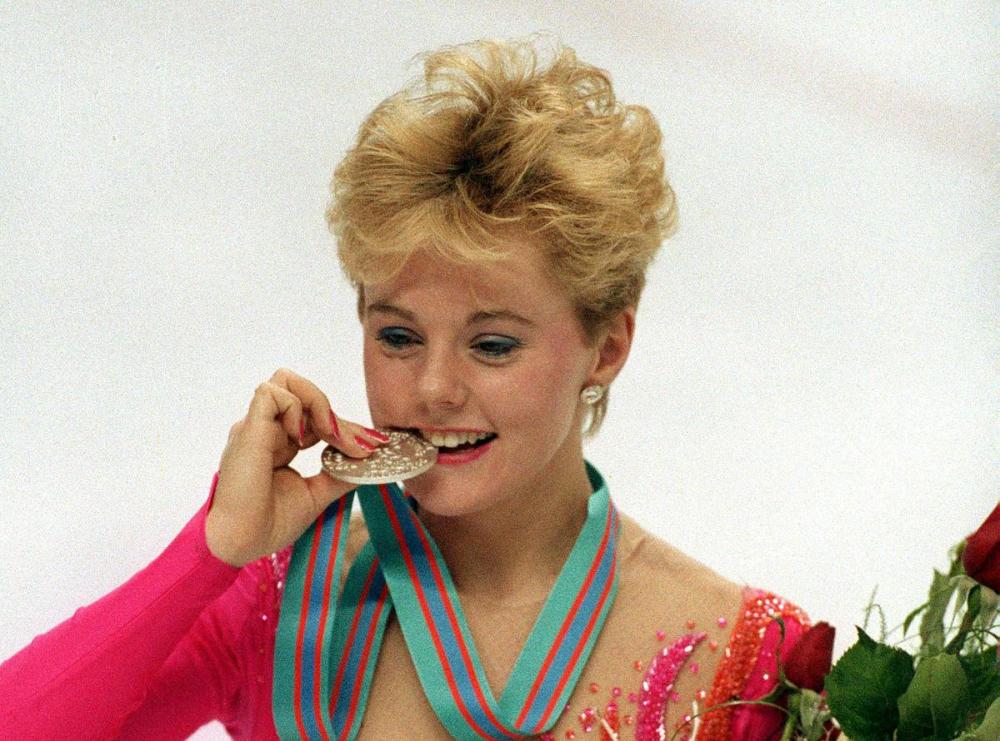
Personally, it was a runner-up performance that aroused such an emotion in me for the first time. It was Elizabeth Manley figure-skating her heart out in Calgary to win a silver medal behind the unconquerable Katarina Witt. I was nine then and can still see the sheer joy and wonderment in Manley’s face after a near-flawless free skate. I get goosebumps thinking about it. Me, a hockey-playing kid who probably rolled his eyes at the figure skaters he saw on the rink before his own practice. I recall Manley’s performance with more fondness than Gretzky-to-Lemieux in the 1987 Canada Cup. That’s the Olympics for you.

And that is the opportunity on tap for our four Canadians. To deliver a Manley-like moment. To become part of the national fabric forever. I’ll probably never complete a triathlon but I sure do remember watching Simon Whitfield win gold in Sydney. I know nothing about gymnastics but I know the name Rosie MacLennan. And that of Daniel Igali, Jennifer Heil, Jon Montgomery, Penny Oleksiak, and now, of course, Maggie Mac Neil and Maude Charron. Any my goodness the pride we all had in our women’s soccer team in 2012, robbed of a shot at gold but winning bronze with incredible resilience. The recently retired Diana Matheson joining superstar Christine Sinclair as household names after her game-winning goal.
This is not to say that the greatest of Canada’s golfing moments have not been celebrated widely. This country was sent into a gleeful tizzy when Mike Weir won the Masters in 2003. Also when Henderson won a major in 2016 and then the CP Women’s Open in Regina in 2018, ending a long drought of a Canadian not winning one of our national championships. It is national news when any player wins on the LPGA Tour or PGA Tour because it happens so rarely. An Olympic medal, however, is the rarest of the rare in sports. Special spots in all of our hearts are reserved for those athletes who do so.
“It would be unbelievably special and by far the most significant golfing accomplishment of my life,” Hughes said when asked to contemplate winning gold.
Indeed it would.
Jason Logan is the editor of SCOREGolf Magazine and is based in Toronto. He is a contributor to the Star’s Sports section. Follow him on Twitter: @jasonSCOREGolf
Related Articles
Column: Olympic format of stroke play is dull, but it works


Advertisement Advertise With Us
Advertisement Advertise With Us