

Time to rethink vaccination strategy
Advertisement
Read this article for free:
or
Already have an account? Log in here »
To continue reading, please subscribe:

Digital Subscription
One year of digital access for only $205*
- Enjoy unlimited reading on winnipegfreepress.com
- Read the E-Edition, our digital replica newspaper
- Access News Break, our award-winning app
- Play interactive puzzles
*First annual payment billed as $205.00 + GST for one year. This annual subscription will automatically renew at $233.00 + GST every 52 weeks (10% off the regular annual price of $259.35). Offer available to new and qualified returning subscribers only. Cancel any time.
To continue reading, please subscribe:
Add Free Press access to your Brandon Sun subscription for only an additional
$1 for the first 4 weeks*
- Enjoy unlimited reading on winnipegfreepress.com
- Read the E-Edition, our digital replica newspaper
- Access News Break, our award-winning app
- Play interactive puzzles
*Your next Brandon Sun subscription payment will increase by $1.00 and you will be charged $17.95 plus GST for four weeks. After four weeks, your payment will increase to $24.95 plus GST every four weeks.
Read unlimited articles for free today:
or
Already have an account? Log in here »
Hey there, time traveller!
This article was published 13/12/2021 (1687 days ago), so information in it may no longer be current.
Omicron is on the prowl. While early indications are that it does not cause serious illness, it is very infectious. The current approach to enforcing vaccination mandates will not probably get us to 90-per-cent-plus of everyone over six being fully vaccinated, which is probably the level needed manage this disease.
The pace of first vaccination doses is slowing, suggesting that we may settle at about 80 to 85 per cent fully vaccinated in early 2022 — probably still too low to declare victory and return to a no-mask normal life.
So, what is answer? Let me begin by reviewing the claims of those who choose no COVID-19 vaccination. From my reading, I break them into three groups:
First are those who fear COVID-19 and recognize its potential for harm, but who are also leery of vaccines because of other experiences with the health-care system.
Second are the young, healthy people who point to the very high survival rates for vast majority in their age group. Further, they usually buttress their argument by noting that many fully vaccinated people are contracting the disease. Math is not their strong point. With so many vaccinated, any efficacy rate below 100 per cent will see infections within this group. Six months after the second dose, efficacy dips to 65 per cent, especially for aging boomers like me.
Third are the virulent anti-vaxxers, comprised of conspiracy worshippers, anti-government cranks and some practitioners of alternative medicine who seek to undermine conventional medicine to build their own businesses.
On some days, I would like nothing more than to shrink-wrap and store the unvaccinated for the duration. Norman Doidge, writing recently in Tablet magazine, said such punitive instincts reveal “an important mental capacity has been lost… the ability to model other people’s minds.”
Now, as much as I would like vaccine QR codes tattooed on our foreheads, so I can see readily identify the unvaccinated and cross to the other side of the street, my simple triage of the vaccine-hesitant suggests a three-pronged attack:
The first group wants reassurance; undoubtedly, this frustrates many in government and public health, who must wonder how much more they need to do. The regular television briefings, information-saturated websites and news stories of rising case counts should be enough, but many have grown weary of COVID-19 news, and others have slipped into social-media bubbles that insulate them from reality.
Here are two suggestions: first, for the next two months, conduct exit polls at vaccine clinics of those who have just received the first dose, to discover what motivated them and/or changed their minds; and second, go “old school” on information dissemination and use mail drops to each home, sharing vaccine information and case studies (from the survey).
Do these mail drops every week, with updated information. This could increase vaccine uptake by the first group, something the exit polls can monitor.
The second group poses a different challenge. They have a Ptolemaic view of reality and seem to think “The sun revolves around me and what I do (refuse vaccination) has no impact on anyone else.” Compounding this view is that COVID-19 remains hidden. We are not in the Middle Ages, when ox-drawn carts transported the dead every day through the streets. For most of us, COVID-19 remains an abstraction.
The reality in hospitals is different, especially when an entire wing, or a dialysis unit, is shut down because of an outbreak. Highlighting how COVID-19 impacts our health-care system and putting faces on those denied treatment for serious non-COVID-19 conditions might be a way to break the empathy barrier of the smug second group.
None of this will touch the third group. For them, we need to turn the problem inside-out.

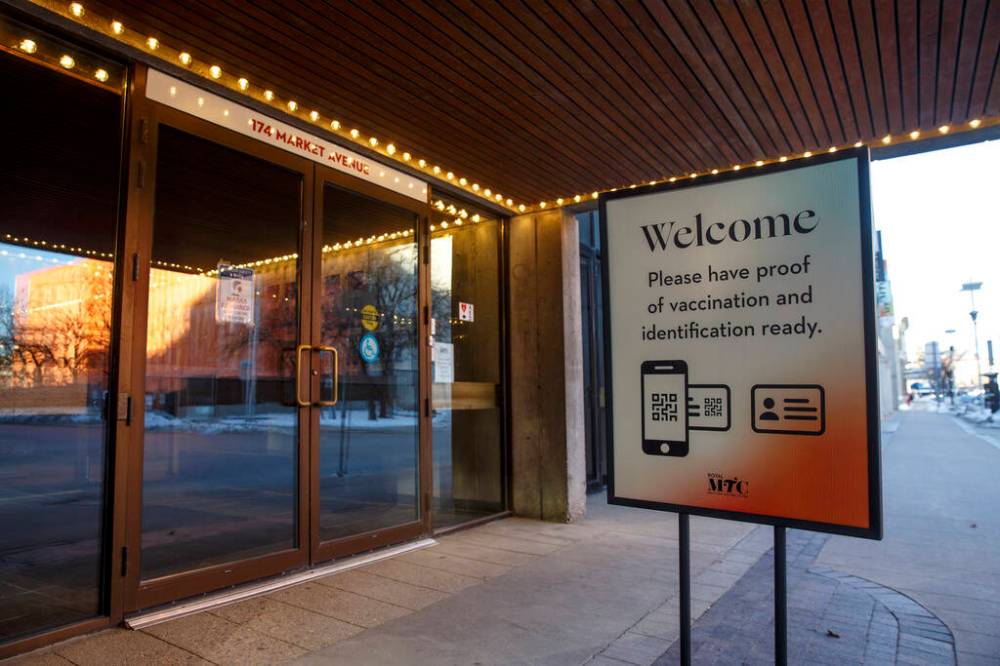
In early 2022, let’s drop the vaccine mandates. Instead, government should require every business open to the public to advertise prominently whether it requires vaccination to enter. We can assume those without such notices allow the unvaccinated to enter.
This allows the customer to choose. As we approach 80 per cent vaccination rates, my bet is that most businesses, sports and culture venues will cater to the 80 per cent, leaving the unvaccinated 20 per cent to niche operations. I would visit only grocery stores, movie houses or big-box stores that screened out the unvaccinated; I suspect many vaccinated people would do the same.
Government would need to buttress this with random checking of the “vaccination businesses” to ensure they are checking vaccination status, imposing severe penalties on any who fake their vaccination status or fail to check. Financial support may also be needed to support the verification process.
This approach would restore consumer choice based on full information, allow the vaccinated to have a more normal life, and appropriately pinch the unvaccinated.
Gregory Mason is associate professor of economics at the University of Manitoba.