

Canadian curling is in crisis. The Beijing Olympics are a challenge and an opportunity
Advertisement
Read this article for free:
or
Already have an account? Log in here »
To continue reading, please subscribe:

Digital Subscription
One year of digital access for only $205*
- Enjoy unlimited reading on winnipegfreepress.com
- Read the E-Edition, our digital replica newspaper
- Access News Break, our award-winning app
- Play interactive puzzles
*First annual payment billed as $205.00 + GST for one year. This annual subscription will automatically renew at $233.00 + GST every 52 weeks (10% off the regular annual price of $259.35). Offer available to new and qualified returning subscribers only. Cancel any time.
To continue reading, please subscribe:
Add Free Press access to your Brandon Sun subscription for only an additional
$1 for the first 4 weeks*
- Enjoy unlimited reading on winnipegfreepress.com
- Read the E-Edition, our digital replica newspaper
- Access News Break, our award-winning app
- Play interactive puzzles
*Your next Brandon Sun subscription payment will increase by $1.00 and you will be charged $17.95 plus GST for four weeks. After four weeks, your payment will increase to $24.95 plus GST every four weeks.
Read unlimited articles for free today:
or
Already have an account? Log in here »
Hey there, time traveller!
This article was published 02/02/2022 (1692 days ago), so information in it may no longer be current.
BEIJING It’s been a jarring fall from global dominance, Canada’s steep tumble from the heights of curling supremacy.
And if the fallout of the plummet registered particularly loudly four years ago in Pyeongchang, when rinks skipped by Kevin Koe and Rachel Homan failed to win a medal for Canada in either the men’s or women’s competition for the first time since curling became an Olympic fixture in 1998, the noises of decline haven’t exactly subsided since.
Once the sport’s undisputed power, Canada has missed the final in two of the three women’s world championships since the 2018 Games. On the men’s side, the country hasn’t won world championship gold going back to 2017.
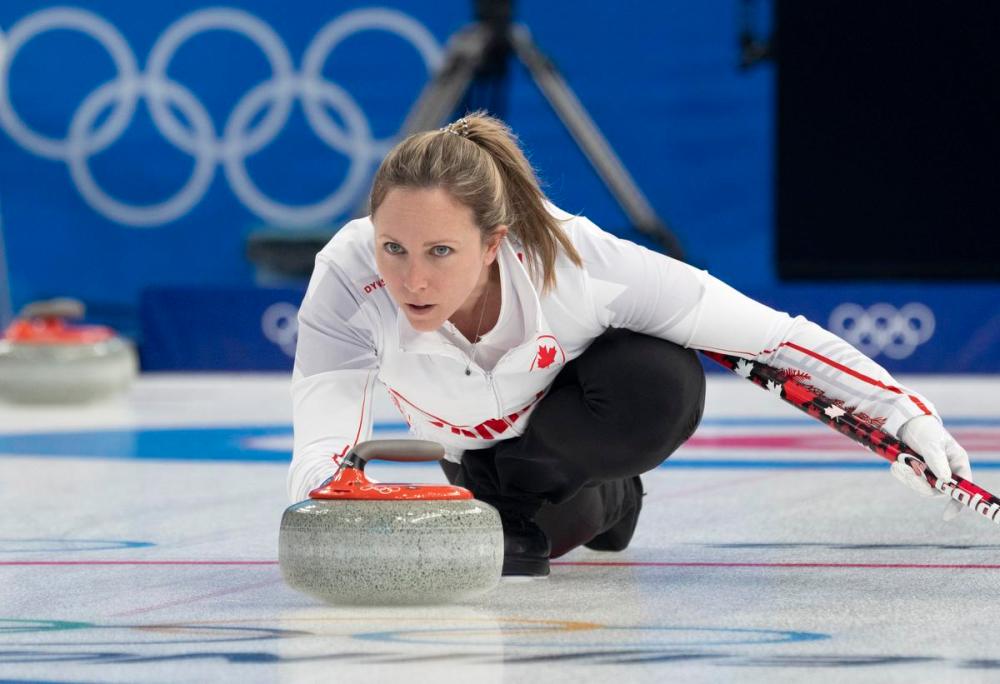
In other words, Canadian curling arrives at the Beijing Olympics in crisis, or at least something close.
“In crisis sounds a little dire, but we’re definitely in tough,” Gerry Peckham, Curling Canada’s high-performance director, said in a recent interview. “Since 2018, the world has strengthened dramatically … You have a whole bunch of powerhouses out there. The field is incredibly difficult.”
With that in mind, thank the International Olympic Committee for including mixed doubles in the Games for a second straight running. The event, which made its debut in 2018 with John Morris and Kaitlyn Lawes capturing gold, has been Canada’s recent saving grace. Of the three disciplines being contested here, it’s the only one in which Canada currently sits No. 1 in the world rankings. But while Morris is back to defend the gold — this time with longtime partner Homan as his teammate — nobody wearing a maple leaf is suggesting a trip to the podium is a given.
Morris calls the 10 teams in the draw that began here Tuesday the “best mixed doubles field ever assembled, bar none.” And the Canadians dropped their opener, 6-4 to Britain’s Bruce Mouat and Jennifer Dodds.
Marc Kennedy, the veteran curler who won gold for Canada as Kevin Martin’s second at the 2010 Vancouver Olympics and who’s here as Canada’s alternate for both mixed doubles and the Brad Gushue-skipped men’s rink, has called the levelling of the international landscape “the new normal for Canada.”
“We’ve been met with adversity from around the world and now it’s our opportunity to adapt and grow and change and learn, and try and get better,” Kennedy said. “Those conversations are happening all the time. At the end of the day, it’s on the curlers. It’s on the curlers to be doing the right things, getting better and changing their practices and their approach to curling. And I think that has happened, and it’s only going to continue to happen.”
There are plenty of theories for why Canada’s mastery of the global game is no longer a foregone conclusion. Among them: Canadian curlers, it’s often said, spend too much time competing and too little time practising — a reality of the demands of the professional circuit that helps pay the bills for so many would-be Olympians. Meanwhile, competing nations from Sweden to Scotland and beyond have put considerable resources into developing top performers, devoting more time to focused training and less time to travelling and competing, all with impressive results.
“You’ve seen a bit more of a rise of professional curlers in other countries that are paid full-time to curl,” Morris said. “It’s a little more challenging for us in Canada, because we have such depth and so many curlers that we can’t just invest in one or two teams, because then we would kind of kill the sport because it would make the fringe teams not want to play anymore. We have a bit more of a challenge in Canada, but it’s a good challenge.”
There’s a growing consensus, insiders will tell you, that change eventually needs to come. Perhaps there’ll be a move to help Canada’s best teams find more time to practise their craft together, rather than chase prize money around the world. Perhaps there’ll be an altered competition calendar to help better prepare for big, global moments. The details won’t be ironed out until after these Games, no matter the outcome. The men’s and women’s Olympic tournaments begin Feb. 9 and 10 here, respectively.
“I think that if we want to keep setting the standard as the best curlers in the world, we really have to put our heads together — from the athletes to the administrators to the high-performance directors — and we’ve really got to work together,” Morris said. “Because if we don’t, it’s going to be a hard hole to dig ourselves out of if we continue to have other countries beating us.”
It hasn’t helped that Canadian coaches have become popular exports who’ve helped rival nations improve their programs. Morris himself has directly contributed to the rise of global parity by acting as coach of the mixed doubles team of Tahli Gill and Dean Hewitt, the first Australians to qualify for an Olympics in the sport. Which ought to make things awkward come Sunday, when Canada plays Australia.
“It’ll probably be my toughest game mentally because they are such good friends and such wonderful people,” Morris said of the Australians, with whom he has severed coaching ties during the Games. “I like to play with a little bit of an edge and want to crush my opponent. It’s hard to want to crush them ’cause they’re so nice.”

Morris has said that Gill and Hewitt, if the rocks tumble their way, could potentially win a medal. And if fate doesn’t similarly favour Morris and Homan, there’s every chance Canada could find itself off the podium in yet another global curling competition.
Then again, as Morris was saying Wednesday here, if losing is the best teacher, Canada has been learning a lot of late. Given how Homan skipped a women’s rink that missed the playoffs entirely in Pyeongchang and failed to qualify for Beijing — Canada’s Olympic representative here is skipped by 2014 gold medallist Jennifer Jones — you can make the case Morris’s partner arrives in search of big-stage redemption.
“I wasn’t part of that experience with (Homan) in 2018 … but I do know this: It’s nice to have something to prove as an athlete,” Morris said. “And I know she has something to prove. And motivation is a good thing.”
On the curling rink, the motivation of having something to prove has certainly become a Canadian thing. We’ll see soon enough if it’s a sufficient force to lift Canada back to the top of the world’s pecking order.
Dave Feschuk is a Toronto-based sports columnist for the Star. Follow him on Twitter: @dfeschuk
Related Articles
Canada's Chinese community celebrates Olympics




Advertisement Advertise With Us
Advertisement Advertise With Us