

It’s clear COC is telling Canadian athletes not to speak on human rights while at Beijing Olympics. It’s the why that catches your eye
Advertisement
Read this article for free:
or
Already have an account? Log in here »
To continue reading, please subscribe:

Digital Subscription
One year of digital access for only $205*
- Enjoy unlimited reading on winnipegfreepress.com
- Read the E-Edition, our digital replica newspaper
- Access News Break, our award-winning app
- Play interactive puzzles
*First annual payment billed as $205.00 + GST for one year. This annual subscription will automatically renew at $233.00 + GST every 52 weeks (10% off the regular annual price of $259.35). Offer available to new and qualified returning subscribers only. Cancel any time.
To continue reading, please subscribe:
Add Free Press access to your Brandon Sun subscription for only an additional
$1 for the first 4 weeks*
- Enjoy unlimited reading on winnipegfreepress.com
- Read the E-Edition, our digital replica newspaper
- Access News Break, our award-winning app
- Play interactive puzzles
*Your next Brandon Sun subscription payment will increase by $1.00 and you will be charged $17.95 plus GST for four weeks. After four weeks, your payment will increase to $24.95 plus GST every four weeks.
Read unlimited articles for free today:
or
Already have an account? Log in here »
Hey there, time traveller!
This article was published 02/02/2022 (1708 days ago), so information in it may no longer be current.
BEIJING As Beijing’s Games open, we should be clear about the Canadian Olympic Committee’s purpose. Field a team, keep those athletes as COVID-free as they can be, get them on a plane and safely into the country, and get them safely out. In between, the job is to make sure as many of those athletes win medals as possible, because that’s how the game is judged. It’s simple, really. National Olympic committees are not designed to not go to Olympics, or to start fights with host countries. It’s not in the job description.
And so don’t expect much in the way of commentary on China’s human rights from Canadian athletes. This country has been relatively progressive as countries in international sport goes, but clearly, the COC is telling its athletes not to speak ill of China on Chinese soil. Which is the same position as Human Rights Watch, for the record. It’s smart.
It’s the why that catches your eye, though. In the COC’s opening press conference for the Beijing Games officials rightly spoke about the struggle to get here in a pandemic, the challenges athletes had overcome, the possibilities here. As chief sport officer Eric Myles said, “we need these Games,” and of the athletes, he praised “the seriousness of these people.” The way he said it, it sounded like the highest compliment.
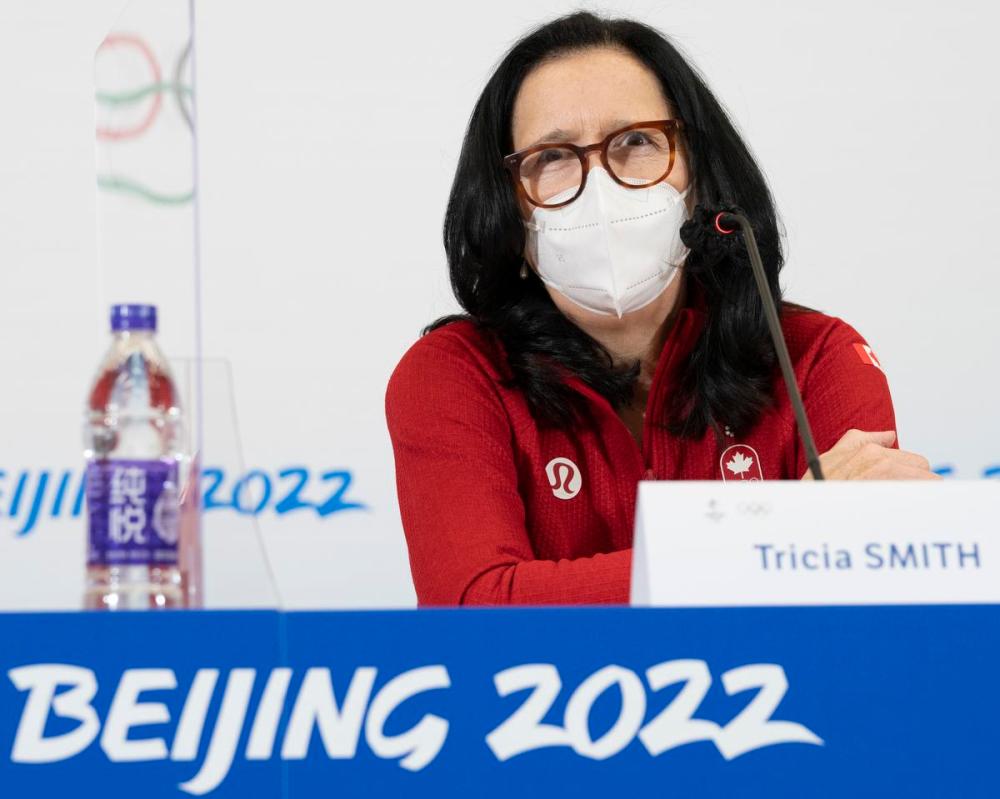
And all that is true. Athletes have such narrow windows to actually compete in an Olympics, and the calls for the COC to boycott over China’s human rights violations ignored that to provoke China in such a way would have required something like an all-of-government strategy and plan behind it. The diplomatic boycott from Canada, the United States, Britain and Australia was as far as anyone was going to go.
But we should have room for nuance here. It was always clear that the COC didn’t want its athletes talking about China while here, but when asked what they told the athletes, it felt like it went a little further than it should.
“We can’t tell athletes what they can and cannot say, but we can certainly give them the parameters of what’s permitted in a country just by the country’s laws,” said COC president Tricia Smith, who is also an IOC member. “And we could also we also tell them about (the International Olympic Committee’s) Rule 50 and the changes to Rule 50, and actually the greater opportunity that athletes do have to speak about things that are consistent with Olympic ideals, so we certainly give them all the facts so they can make their own decisions.”
The Olympic ideals is a genuinely powerful concept, when correctly applied: athletes from across the world coming together to compete without fear or favour, ideally if not actually on a level playing field, bringing different people and cultures together with respect. The Olympics always, always, always delivers on something close to that scale, in ways big and small.
The world rarely works that way, but Myles justly pointed out the advances the COC has made on LGBTQ issues, inclusivity, and even some Indigenous issues since 2014, when a concerted effort began to be made. But what a failure that the instruction to athletes means bowing to China’s criminalization of speech that China deems critical. That cannot be the bar for athletes. It just can’t. But the IOC baked it in before we started.
“Certainly, the IOC is clear that under Rule 50, there can’t be any speech that is contrary to the Olympic ideals,” said Smith. “And so I think that that would be consistent in terms of an athlete speaking about a particular country, that wouldn’t be consistent with the IOC rule, either.”
Rule 50’s most famous line says “No kind of demonstration or political, religious or racial propaganda is permitted in any Olympic sites, venues or other areas; it also explains where athletes could express themselves “while respecting local laws, athletes have the opportunity to express their opinions.” The IOC’s tame Athletes’ Commission issued a reworked Rule 50 before Beijing to include a ban on expression that is targeted, directly or indirectly, “against people, countries, organizations, and/or their dignity.”

It was purpose built for these illiberal Olympics. To say that athletes can’t ever criticize a country, while using a country’s laws to govern speech, is an IOC failure most of all. But the COC is on board. In a follow-up conversation, Smith said, “we have a line to walk really carefully,” and that’s about right. Coincidentally, the question that followed the ones about China were questions about a potential bid for the 2030 Olympics in Vancouver.
And that’s where you see what the COC is, and what it is built to do. It’s not built not to bid for Olympics, or not to play by the IOC’s rules most of the time. The bid itself could be interesting, in the way that it says it will centre four First Nations and maybe more: the Líl̓wat, Musqueam, Squamish and Tsleil-Waututh. Promises like that are always best viewed with caution, but it could perhaps be something like a sustainable Games, with existing venues, and the possibility of something much closer to a good Games.
But that means eating the IOC’s version now, and there are moral complications that come with that. Smith says, “I just think if you weigh the pros and cons of being here and not being here and being able to speak out now or speak out when you get home, I think being here and, and bringing attention to issues (later) so that those important discussions and conversations can happen is really important.”
It’s not convincing, but that’s life in Beijing. So don’t expect Canadian athletes to speak up while we’re here, and don’t be surprised if they don’t. Athletes are built to compete, and Olympic committees are built to be a part of that, and the IOC is built to drag the Games anywhere they can, and for the next 10 years Western democracies may be on the menu. And if that means another Olympics in Canada, well, the Canadian Olympic Committee seems to be applying the same credo to all its actions here in Beijing: it is trying to win.
Bruce Arthur is a Toronto-based columnist for the Star. Follow him on Twitter: @bruce_arthur
Related Articles
Smart beds, PCR tests and Pizza Hut: A Team Canada athlete takes us inside the Olympic Village



Advertisement Advertise With Us
Advertisement Advertise With Us