

Shane Warne was cricket’s rock star. You couldn’t help but watch
Advertisement
Read this article for free:
or
Already have an account? Log in here »
To continue reading, please subscribe:

Digital Subscription
One year of digital access for only $205*
- Enjoy unlimited reading on winnipegfreepress.com
- Read the E-Edition, our digital replica newspaper
- Access News Break, our award-winning app
- Play interactive puzzles
*First annual payment billed as $205.00 + GST for one year. This annual subscription will automatically renew at $233.00 + GST every 52 weeks (10% off the regular annual price of $259.35). Offer available to new and qualified returning subscribers only. Cancel any time.
To continue reading, please subscribe:
Add Free Press access to your Brandon Sun subscription for only an additional
$1 for the first 4 weeks*
- Enjoy unlimited reading on winnipegfreepress.com
- Read the E-Edition, our digital replica newspaper
- Access News Break, our award-winning app
- Play interactive puzzles
*Your next Brandon Sun subscription payment will increase by $1.00 and you will be charged $17.95 plus GST for four weeks. After four weeks, your payment will increase to $24.95 plus GST every four weeks.
Read unlimited articles for free today:
or
Already have an account? Log in here »
Hey there, time traveller!
This article was published 12/03/2022 (1605 days ago), so information in it may no longer be current.
The shock of the death of Australian cricket legend Shane Warne, from an apparent heart attack last week at age 52, continues to reverberate around the world.
A date has yet to be announced for the memorial service at the iconic Melbourne Cricket Ground, Warne’s home turf and scene of many of his exploits. A statue of him already graces the 100,000-capacity venue, and now a grandstand will be named in his honour.
Leg-spin bowlers who deliver a consistent threat have always been a rarity in the game, and even Warne made an unremarkable debut in 1992 as an afterthought in a unit built around fast bowlers. But that changed in 1993 on the big stage, facing England in the Ashes for the first time.
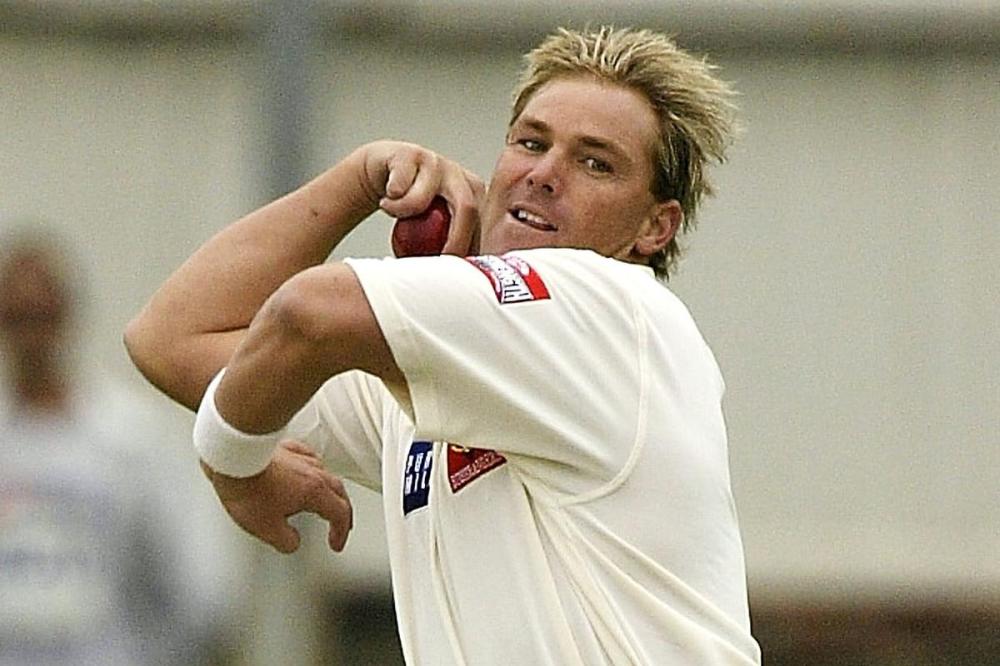
A bit slimmer and with a shock of blond hair and stud earring — more rock star than cricketer — his first ball was a gem: drifting one way, landing and then turning sharply in the other direction before hitting the stumps. It was quickly dubbed the “Ball of the Century” and a legend was born.
Even if you didn’t know much about cricket, you’d stop to watch Warne and his remarkable feats — packaged with charisma that propelled him into mainstream consciousness, where he remained with books, documentaries and even a musical based on his life.
His wide appeal rested on the paradox of an uncultivated everyman along with undeniable sporting genius. He could read game situations better than most, thinking steps ahead of the rest. It made him a hero to both jocks and cricket nerds.
Bowlers usually hand their sweater or hat to the umpire as they enter a match. With Warne, you could almost picture him telling the umpire to hold his beer while he slowly lumbered up to bowl, cigarette dangling from his lips. And yet, there was no doubt he worked hard on his game — just in his own way. Elaborate coaching sessions and nutrition plans weren’t for him. A heavy smoker, he was content with pizza and french fries.
Late in his career, he clashed with cerebral Australia coach John Buchanan, who emphasized data analysis and mental exercises. This was anathema to Warne, who just wanted to enjoy the sport guided by his instincts. When asked about the coach, he famously quipped: “The coach is something you travel in to get to a game.” This was music to the ears of many cricket fans: You tell ’em, Warney.
His game involved theatrics — creating tension and, most important, anticipation. He would stand at the top of his mark, staring down at the batter while he spun the ball, tossing it from one hand to the other. Fans watched and wondered what he was thinking. Which of the lethal deliveries in his arsenal would he unleash? Warne knew the batter was thinking the same thing. Just like that, he was in his opponent’s head.
Warne literally put Daryll Cullinan, one of South Africa’s finest cricketers of the 1990s, on a psychologist’s couch.
Cullinan fancied himself one of the best batters in the world, but had a tough time deciphering Warne and revealed to the press that he’d sought professional help. When they faced off next, in the 1997 Boxing Day test match in Melbourne, Warne greeted Cullinan with two words — “Hourly rates?” — before dismissing him for no score, along with a few more jibes.
Most brash, blond Australian cricket stars fade after they retire from competition. Not Warne. The highlights got even brighter after he retired from international cricket in 2007 as the most successful bowler in test history with 708 wickets, a world record at the time.

His star status, affability and cricket insight made the transition to television commentary seamless.
Famous for having a good time, Warne not only always knew where the party was, he brought it with him. Warne counted the likes of Mick Jagger, Elton John, Ed Sheeran and Coldplay’s Chris Martin as friends, and a high-profile engagement to actor Elizabeth Hurley after retirement kept him in more than just the sports pages.
Warne also had an unparalleled sense of occasion, putting on a show on the biggest stages including the 1999 World Cup semifinals and final, plus several Ashes series.
With all of that, plus the “Ball of the Century,” Warne’s legend is secure. He loved life and cricket and gave both his all. There will simply never be another.
Faraz Sarwat is a Toronto-based freelance writer. Twitter: @Farazcricket