

Basic investing concepts in a nutshell for the average investor
Advertisement
Read this article for free:
or
Already have an account? Log in here »
To continue reading, please subscribe:
Monthly Digital Subscription
$1 per week for 24 weeks*
- Enjoy unlimited reading on winnipegfreepress.com
- Read the E-Edition, our digital replica newspaper
- Access News Break, our award-winning app
- Play interactive puzzles
*Billed as $4.00 plus GST every four weeks. After 24 weeks, price increases to the regular rate of $19.95 plus GST every four weeks. Offer available to new and qualified returning subscribers only. Cancel any time.
Monthly Digital Subscription
$4.99/week*
- Enjoy unlimited reading on winnipegfreepress.com
- Read the E-Edition, our digital replica newspaper
- Access News Break, our award-winning app
- Play interactive puzzles
*Billed as $19.95 plus GST every four weeks. Cancel any time.
To continue reading, please subscribe:
Add Free Press access to your Brandon Sun subscription for only an additional
$1 for the first 4 weeks*
- Enjoy unlimited reading on winnipegfreepress.com
- Read the E-Edition, our digital replica newspaper
- Access News Break, our award-winning app
- Play interactive puzzles
*Your next Brandon Sun subscription payment will increase by $1.00 and you will be charged $17.95 plus GST for four weeks. After four weeks, your payment will increase to $24.95 plus GST every four weeks.
Read unlimited articles for free today:
or
Already have an account? Log in here »
Hey there, time traveller!
This article was published 14/03/2022 (1518 days ago), so information in it may no longer be current.
We’re bombarded these days with piecemeal media messages about how to invest.
Some of these snippets are valid and useful, but others could lead you into serious trouble.
Case in point is the crypto.com ads in which actor Matt Damon cites the maxim “fortune favours the brave” to imply we should all load up on cryptocurrencies.
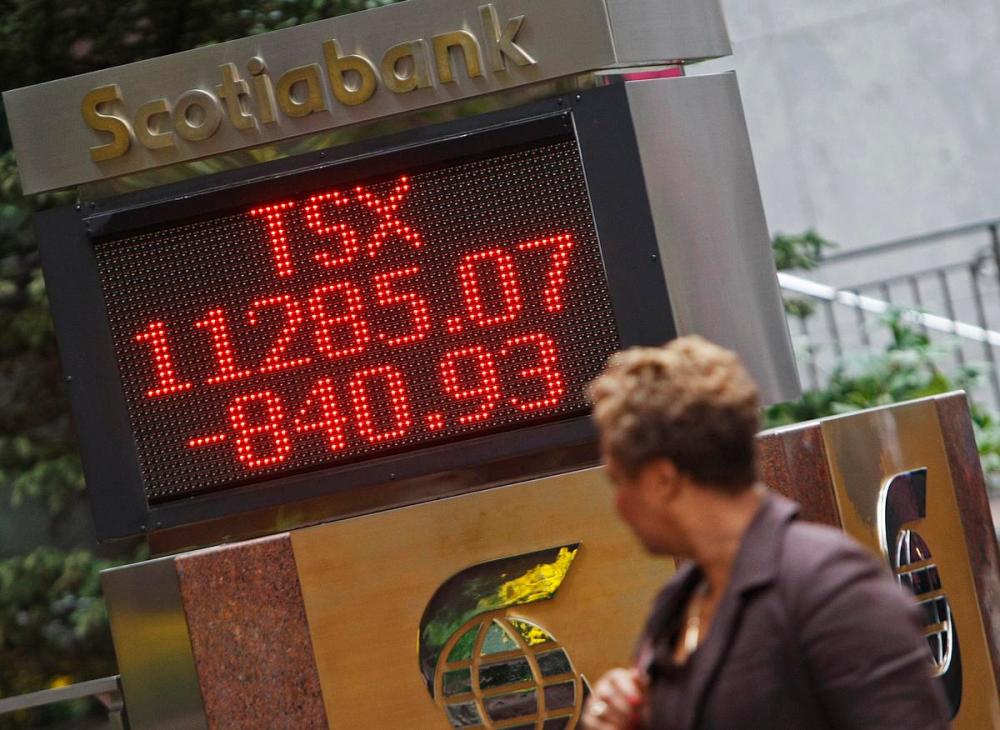
That kind of incautious bravado could devastate your portfolio. If you had boldly loaded up heavily on, say, hot tech stocks in the late 1990s tech boom and then stuck with them, you would have had your portfolio gutted in the ensuing tech crash.
You’re far better served by a balanced investing approach that takes on some risk in the pursuit of reward but carefully avoids too much of it.
That example begs the question of how average investors can cut through the hype to get a proper perspective on how to invest wisely.
In my view, the key should be developing an understanding of the investment basics. Think of these basics as the foundational concepts for managing your portfolio in a sound manner. They’ve developed over time as a rough consensus among investing professionals based on research and long experience.
Since these basics can be hard to piece together on your own, I provide my take below on some of the key basic investing concepts in a nutshell.
If you’re looking for a more in-depth description of investing basics, an excellent source is the new book “Reboot Your Portfolio” by portfolio manager Dan Bortolotti.
Sound investing foundation
While the investing basics are well-established, they’re not codified in any single document and are subject to moderate variation in how different professionals interpret them.
But they nonetheless provide a common conceptual foundation which investors can then build upon with different investing strategies, whether it be passive indexing or various active approaches such as growth or value.
If you invest with a financial adviser, you will likely get advice that is grounded in these basics, since professional accreditation standards largely ensure that advisers are schooled in them.
Understanding the basics is particularly important if you’re a do-it-yourself investor. But the knowledge can also help you work more effectively with an adviser.
Basics in a nutshell
The starting point for the investing basics is your objectives, risk tolerance, time horizon and other individual factors.
That in turn provides the basis for building a balanced portfolio that is right for your personal circumstances based largely on two core asset classes: stocks and relatively safe forms of fixed income (typically investment-grade bonds in a fund or ETF but also government-insured GICs).
Stocks are relatively risky. They’re particularly volatile over short periods. But stocks can also be expected to provide most of your portfolio returns over the long run. Investment grade bonds don’t provide much yield these days, but they are essential to stabilizing your portfolio when stocks perform poorly.
While individual asset allocations will vary based on individual circumstances, the classic mix of 60 per cent equity and 40 per cent fixed income is an often-used benchmark that works well for many people investing for the long run. Retirees often suit a little less equity, and younger investors often benefit from more. You should also dial down your equity component if you’re investing for relatively short time horizons, particularly if it’s less than five years.
The equity side of your portfolio should be diversified across individual stocks, sectors and geographic areas. You share proportionately in the rewards when particular stocks or sectors thrive, but that approach also ensures you aren’t overly impacted by misfortune affecting a small segment of the market.
It’s possible to justify adding modest portions of non-core asset classes like commodities or high-yield bonds in the right circumstances. Use particular caution in adding volatile asset classes like cryptocurrencies, which don’t have long-established track records.
Timing the market is very difficult or impossible to do with any reasonable degree of reliability, so investors should generally stick close to their long-run “strategic” asset allocation. (Some knowledgeable investors may justify modest short-term adjustments to their asset mix to reflect current market conditions, which is known as “tactical” asset allocation.)
When parts of your portfolio get hit by a downturn, you should avoid selling the depressed assets at beaten-down prices. That avoids locking in losses and allows them to recover over time.
The smart investor also looks to rebalance when their actual asset allocation diverges from their target to a substantial degree. Rebalancing involves selling the assets that have done relatively well to buy more of the depressed assets at attractive prices.
At a practical level, you also need to make effective use of tax-advantaged accounts such as RRSPs, TFSAs and RESPs to minimize taxes.
Following the basics consistently should provide you with confidence that you’re making the most of long-term investing opportunities.
They’ve especially proven their worth in helping investors weather severe market downturns, such as the tech crash in 2000-2002; the Great Financial Crisis in 2008-09; and the initial pandemic market plunge of March 2020.
Implementation
To put the basics into practice, you need to combine them with a particular strategy for selecting individual investments.
While there are many good investing strategies that can work well if done properly, one of the best approaches is the one advocated by Bortolotti in his book: a classic, passive approach using broad-based, low-fee stock and bond ETFs that track the overall markets for stocks and investment-grade bonds.
Bortolotti is a portfolio manager and certified financial planner with PWL Capital Inc., an investment firm for high net worth investors that emphasizes financial planning and uses a passive investment approach. Bortolotti also operates the influential passive investing website canadiancouchpotato.com.
Bortolotti’s book is an excellent how-to-and-why manual for putting a passive approach into practice for do-it-yourself investors.
It is grounded in the investing basics and covers all the practical details: setting up an account at a discount broker, selecting ETFs, and actually placing the order (using a “limit” order in preference to a “market” order).
In recent years, passive do-it-yourself investing has become remarkably easy with the advent of asset-allocation ETFs that provide fully functioning portfolios incorporating thousands of securities with a single purchase. All you do is select the portfolio ETF that best aligns with your desired asset allocation.

“My goal is to try to convince do-it-yourself investors that the best thing you can do is get out of your own way,” says Bortolotti. “Just build a portfolio that makes sense, save your money, and step aside and let it do its thing.”
While the book showcases the many proven benefits of passive investing, its value isn’t limited to passive investors. Even if you fall more into the active investing camp, this book can still provide a lot of benefit. Bortolotti’s insights into the investing basics and much of his practical advice applies to both types of investors.
Furthermore, there are few pure active investors these days. Many investors incorporate passive ETFs into portfolios alongside active investments. Passive investing provides a great benchmark and default option where you don’t have compelling reason to select active investments for specific elements of your portfolio.
It pays for all investors to acquire some understanding of passive investing, whether that’s your predominant approach or not.
David Aston, a freelance contributing columnist for the Star, is a personal finance and investment journalist. He has a Chartered Financial Analyst designation and is a Chartered Professional Accountant. Reach him via email: davidastonstar@gmail.com