

Farming impacted by urban politics
Advertisement
Read this article for free:
or
Already have an account? Log in here »
To continue reading, please subscribe:

Digital Subscription
One year of digital access for only $205*
- Enjoy unlimited reading on winnipegfreepress.com
- Read the E-Edition, our digital replica newspaper
- Access News Break, our award-winning app
- Play interactive puzzles
*First annual payment billed as $205.00 + GST for one year. This annual subscription will automatically renew at $233.00 + GST every 52 weeks (10% off the regular annual price of $259.35). Offer available to new and qualified returning subscribers only. Cancel any time.
To continue reading, please subscribe:
Add Free Press access to your Brandon Sun subscription for only an additional
$1 for the first 4 weeks*
- Enjoy unlimited reading on winnipegfreepress.com
- Read the E-Edition, our digital replica newspaper
- Access News Break, our award-winning app
- Play interactive puzzles
*Your next Brandon Sun subscription payment will increase by $1.00 and you will be charged $17.95 plus GST for four weeks. After four weeks, your payment will increase to $24.95 plus GST every four weeks.
Read unlimited articles for free today:
or
Already have an account? Log in here »
Hey there, time traveller!
This article was published 18/08/2022 (1465 days ago), so information in it may no longer be current.
Most Canadians have never been on a farm, let alone lived on one, which makes more than 98 per cent of our population agriculturally illiterate.
For many Canadians, crop production is an unknown concept. Because of this, it’s relatively easy to use fear to influence public opinion on any food-related issue involving agriculture. Activists know this well.
Our great rural-urban divide has always fuelled food politics, and that’s not going to change anytime soon. But now, agri-food policies are increasingly being urbanized by an agenda that’s pushing the entire western world toward the precipice of a food security catastrophe.
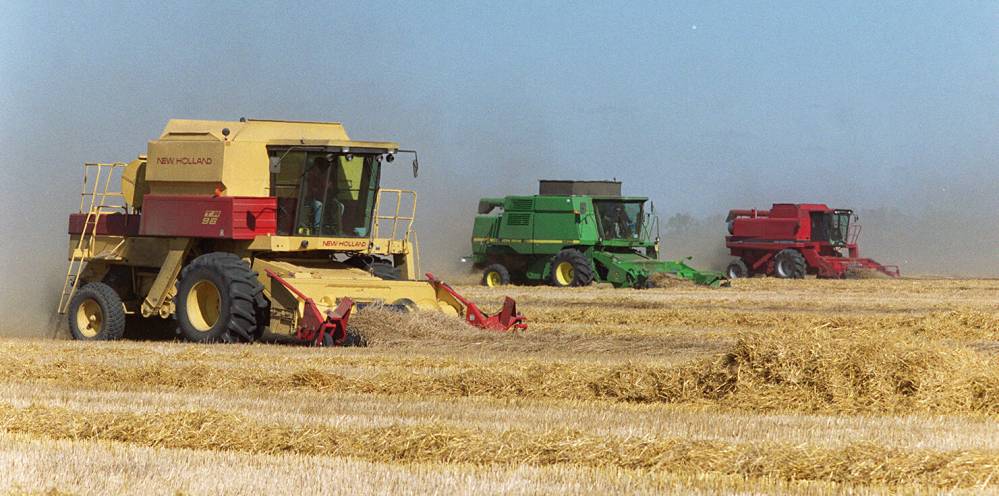
Jeff de Booy / Winnipeg Free Press files
Grain farmers will be among the most adversely affected by a fertilizer ban.
The Trudeau government wants a 30 per cent reduction in emissions by 2030, which doesn’t necessarily include fertilizer. But producers claim reducing nitrous oxide emissions can’t be achieved without reducing fertilizer use.
Most common fertilizers contain nitrogen, phosphorus and potassium. Nitrogen is the issue. Surpluses of nitrogen in the atmosphere can produce pollutants such as ammonia and ozone. Too much nitrogen will contaminate soils, and waterways and, of course, harm our health. Policy-makers have every right to be concerned.
But the federal government wants an absolute reduction in emissions, regardless of productivity or efficiency of fertilizer use. For many crops, Canadian farmers’ ability to grow anything will be severely compromised unless they use more land.
This is all happening as food security concerns around the world are rampant. The Netherlands is witnessing massive protests from farmers as they face similar emission targets, even fertilizer bans, by 2030.
And make no mistake: Canada could be next to adopt outright fertilizer bans.
Canada produces food for the world, not just for Canada. Aggressive emission targets will likely lead to more people, not fewer, experiencing famine worldwide, none of whom will be Canadian. Since we trade with the rest of the world, mainly with the United States, our crops would likely become less competitive. With lower supplies, input costs for food manufacturers and grocers would likely increase significantly, pushing food prices higher.
The needs regarding food production vary widely from region to region and between crops. Supply-managed commodities such as dairy, eggs and poultry will be spared, receiving more for their products no matter what. Most of these commodities are produced in Ontario and Quebec.
Grain production, on the other side, won’t be so protected. Suggested emission targets will again transfer more wealth from some sectors to others by compromising the livelihood of many internationally focused farming businesses. And those farmers come from across Canada. Free-market livestock sectors such as cattle and hogs are also affected by all of this.
This is all happening for one reason, beyond the focus on emission targets. The government is already imposing a 35 per cent tariff on Russian fertilizer, even if tariffs aren’t actually punishing the Russian regime. This only impacts our farmers, as our government wants to discourage the use of fertilizers for its own convenience.
The Canadian fertilizer emission reduction plan also points to how farming is losing to urban politics. The signals have been there for a while, with “No Mow May,” bees on cereal boxes and city councils ruling on pesticides. Activists are successfully using urban-centric artifacts to influence policy issues, which could spill over to agriculture. Cities essentially want farmers to treat fields like city lawns. But the stakes are much higher for farming.
This has been happening as activism has become institutionalized in recent years. Interest groups, even academics who have become advocates, will weaponize science to support a narrative that fits with a biased view of what farmers should and shouldn’t do. This is beyond dangerous. It’s a reckless way of dictating policy.
Virtue-signalling — supporting ideals over fact — is practised by those who likely see their quality of life being affected. They’re also dead wrong. This goes for all issues, but food and energy policies are the ones that will be felt most acutely.
The federal government wants to make agriculture greener and more sustainable. There’s nothing wrong with that; the sector can always do better. Many are speaking about regenerative agriculture and the circular economy. Those concepts have merit and can help our agri-food sector become more efficient.
But what is not appreciated is how farming has evolved in just the last five years, adopting more sustainable practices. Crop rotation schedules, biodiversity considerations and the no-till approach have all made agriculture more sustainable, helping farmers reduce emissions.

Farming is a business, and cutting costs is part of doing business. Farmers don’t want to overspread expensive fertilizers, since this would make their business less profitable. Most farmers hire soil scientists to ensure they can rely on reusing natural resources to make a living.
Farmers are the most responsible environmental stewards in the world. Incentivizing farmers using productivity-based metrics linked to fertilizer would be more appropriate — and less foolish.
The government can look at other sectors to hit targets, but messing around with our food system can be quite perilous.
Sylvain Charlebois is senior director of the agri-food analytics lab and a professor in food distribution and policy at Dalhousie University.