

Tim’s franchisees may find cups half-empty
Advertisement
Read this article for free:
or
Already have an account? Log in here »
To continue reading, please subscribe:
Monthly Digital Subscription
$1 per week for 24 weeks*
- Enjoy unlimited reading on winnipegfreepress.com
- Read the E-Edition, our digital replica newspaper
- Access News Break, our award-winning app
- Play interactive puzzles
*Billed as $4.00 plus GST every four weeks. After 24 weeks, price increases to the regular rate of $19.95 plus GST every four weeks. Offer available to new and qualified returning subscribers only. Cancel any time.
Monthly Digital Subscription
$4.99/week*
- Enjoy unlimited reading on winnipegfreepress.com
- Read the E-Edition, our digital replica newspaper
- Access News Break, our award-winning app
- Play interactive puzzles
*Billed as $19.95 plus GST every four weeks. Cancel any time.
To continue reading, please subscribe:
Add Free Press access to your Brandon Sun subscription for only an additional
$1 for the first 4 weeks*
*Your next subscription payment will increase by $1.00 and you will be charged $16.99 plus GST for four weeks. After four weeks, your payment will increase to $23.99 plus GST every four weeks.
Read unlimited articles for free today:
or
Already have an account? Log in here »
Hey there, time traveller!
This article was published 04/03/2023 (1111 days ago), so information in it may no longer be current.
The ongoing internal feud at Tim Hortons between some franchisees and Restaurant Brands International, Inc. (RBI), Tim Hortons’ parent company, is nothing short of epic.
For more than seven years, we have seen public accusations and a raft of legal threats between parties. But it now looks as if RBI has had enough.
RBI recently terminated the contract of a long-standing franchise owner. Ron Fox, who owned a few Tim Hortons franchises in the Brantford, Ont., area for well over two decades, was leading a group of frustrated franchisees concerned about declining profitability amid soaring costs for food and supplies charged by the franchisor.
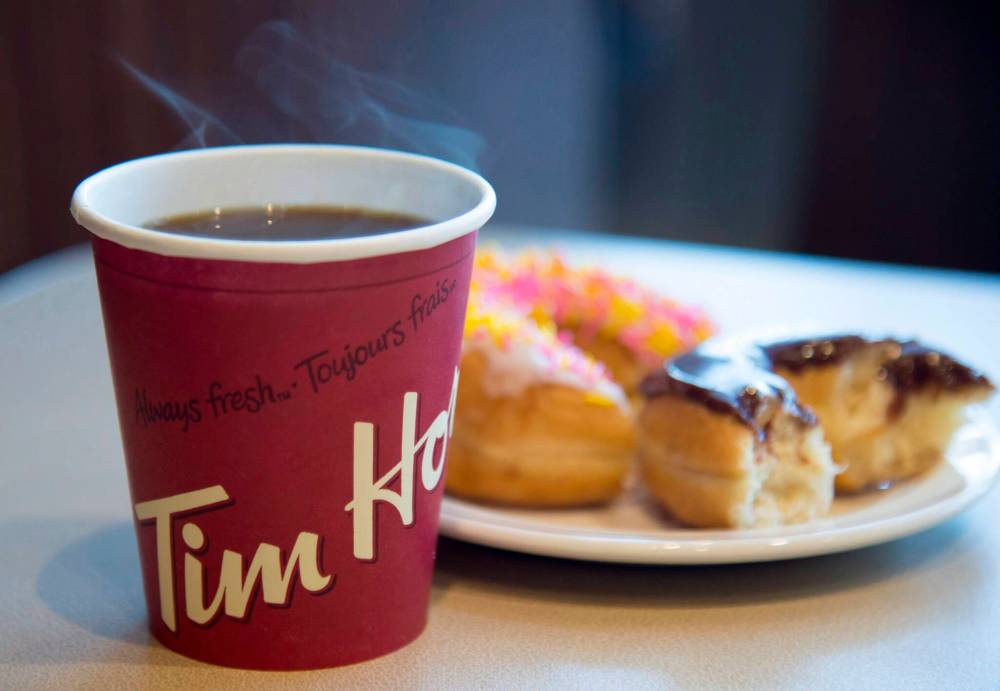
The coffee may taste the same, but change is coming to Tim Hortons franchises across Canada. (Jonathan Hayward/The Canadian Press files)
It was also reported that RBI sent default notices to the current members of the group’s board, which includes none other than Jeri Horton-Joyce, the daughter of chain founder Tim Horton.
RBI stormed into the lives of Tim Hortons franchisees in 2014 by way of a multibillion-dollar merger between American fast food restaurant chain Burger King and Canada’s top coffee shop and restaurant chain, Tim Hortons. After acquiring Popeyes in 2017, it became the fifth-largest fast-food operator in the world. It’s a gigantic organization with a distinctive zero-based budgeting track record.
Brazil’s 3G Capital, which focuses on cost management and penny-pinching measures, was behind the deal, along with the famous Warren Buffett.
A few years prior, 3G Capital also acquired Anheuser-Busch InBev and Kraft-Heinz. The group creates value by cutting, restructuring and leveraging the value out of its supply chain to support global brands. When 3G Capital acquired Tim Hortons, the aim was to do just that and make Tim Hortons a successful global brand.
But early on, ideologies clashed between the old guard and the newly formed company. Franchisees prided themselves on being incredibly community-focused. And they were. Tim Hortons dominated the market by monopolizing hockey rinks, soccer fields and small-town Canada.
But RBI quickly made significant changes in the company’s costing structure, alienating the franchise’s longtime players. That’s why some of them formed an association in 2017 called the Alliance of Canadian Franchises, formerly the Great White North Franchisee Association, with about 1,000 stores being represented. They have a public board, a website, a podcast — all separate from RBI.
RBI’s series of marketing blunders early on galvanized the rebel alliance. RBI introduced several new products on the menu that made little sense. The delayed loyalty-program launch, the introduction of meatless products — the disasters just piled on.
But RBI turned the marketing fortunes around and has had a few marketing coups of late: several appropriate seasonal changes to the menu, the incredibly successful “Tim Biebs” campaign, and the launch of popular breakfast cereals, converting grocery foot traffic into more coffee store business.
Suddenly, the brand connected again with communities, progressively mastering the magic of the old while fostering a new, evolving business model globally.
The franchise now has stores in 15 countries, including India and Pakistan. Tim Hortons will have 3,000 stores in China by 2026. The chain currently operates a little more than 3,500 stores in Canada. In a few years, Tim Hortons will have more stores outside Canada than within.
Even though the chain has reached a point of saturation in Canada, closing 53 stores last year, same-store sales were up more than 11 per cent last fiscal year.
Slowly, the dissenting voices within the ranks of the franchisees have become just noise, and the old regime’s influence is fading away.
The goal for RBI is for Tim Hortons to be more like the Burger King franchise structure, another RBI division. A Burger King franchise owner will operate 150 restaurants on average, not just two or three. This comes with much less corporate and personal pampering, higher supply-chain efficiencies and sound cost-management practices. When most franchise owners operate more than 100 stores, consensus on these features is easily attained.
About two-thirds of Tim Hortons franchisees are perfectly fine with RBI’s modus operandi. But enough was enough. Instead of waiting for the Alliance to exhaust its resources, RBI has clearly decided to clean house and will likely let go of a few more recalcitrant owners over the next several months. Don’t be surprised.

Bottom line: when someone purchases a franchise, especially in the food sector, that person is simply buying a sponsored management position within a larger network, which comes with some support and moderate perks. That support will change with ownership; when ownership changes, franchisees should also expect rules to change.
In food franchising, particularly, franchisees are rarely in control, no matter how successful their stores are.
Since Subway is now for sale, store franchisees around the world should take note.
Sylvain Charlebois is senior director of the agri-food analytics lab and a professor in food distribution and policy at Dalhousie University.
— Troy Media

Advertisement Advertise With Us
Advertisement Advertise With Us