

Consumers paying more tax on less food
Advertisement
Read this article for free:
or
Already have an account? Log in here »
To continue reading, please subscribe:

Digital Subscription
One year of digital access for only $205*
- Enjoy unlimited reading on winnipegfreepress.com
- Read the E-Edition, our digital replica newspaper
- Access News Break, our award-winning app
- Play interactive puzzles
*First annual payment billed as $205.00 + GST for one year. This annual subscription will automatically renew at $233.00 + GST every 52 weeks (10% off the regular annual price of $259.35). Offer available to new and qualified returning subscribers only. Cancel any time.
To continue reading, please subscribe:
Add Free Press access to your Brandon Sun subscription for only an additional
$1 for the first 4 weeks*
- Enjoy unlimited reading on winnipegfreepress.com
- Read the E-Edition, our digital replica newspaper
- Access News Break, our award-winning app
- Play interactive puzzles
*Your next Brandon Sun subscription payment will increase by $1.00 and you will be charged $17.95 plus GST for four weeks. After four weeks, your payment will increase to $24.95 plus GST every four weeks.
Read unlimited articles for free today:
or
Already have an account? Log in here »
Hey there, time traveller!
This article was published 23/03/2023 (1295 days ago), so information in it may no longer be current.
As if shrinkflation weren’t painful enough for all of us, it looks as if the taxman is making shrinking packages even more painful for our wallets.
Shrinkflation occurs when a food manufacturer reduces quantities but continues to sell the product at the same price. We have seen this happening pretty much everywhere in all sections of the grocery store. It’s even happening in the fresh section, with strawberries and blueberries.
The Canada Revenue Agency (CRA) has provisions that make some smaller products taxable that aren’t in their larger forms. This policy is not new: it actually dates back to 2007, when the GST/HST Memorandum was revised. Some articles of the memo even existed back in 1997.
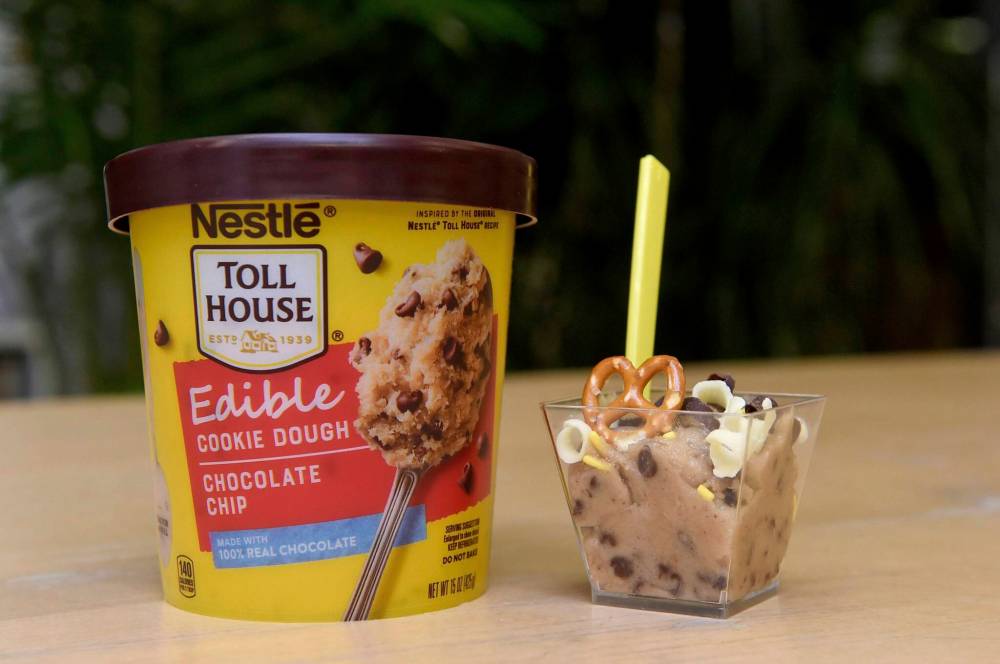
Diane Bondareff/AP Images for Nestle Toll House
Ice cream packaged in quantities of less than 500 ml is considered a single serving and is therefore taxable.
But what is new is the number of products now subject to this tax act owing to reduced quantities. An increasing number of products — hundreds — are now taxed that weren’t before.
The act’s policy section Schedule VI, Part III, clearly defines a snack and the meaning of a single serving. For instance, the threshold for ice cream is 500 millilitres. Anything below that means the product is taxable, as it is considered a snack, not part of basic groceries. Cakes, muffins, pies, pastries, tarts, cookies, doughnuts, brownies, croissants with sweetened filling or coating, or similar products are all taxable if quantities are reduced below the thresholds specified by the act.
If food items are pre-packaged for sale to consumers in quantities of less than six items, these products are taxed.
Grocery shopping is complicated enough, but now, due to shrinkflation, consumers have to worry about how much more they need to pay. Depending on the province you live in, it could add five to 13 per cent more to the price tag of some products you’re buying.
And chances are, you have never noticed.
Consumers are being double-slammed by the industry and the taxman, in most cases, without knowing it. By “shrinkflating” a product, consumers get less and are taxed more. Just great.
Few will ever understand or even know how to interpret the act and appreciate how it applies to the 18,000 to 25,000 food products you can find in a regular grocery store. Knowing how many items were taxed in compliance with the law is practically impossible.
A recent survey conducted by Dalhousie University, in partnership with Caddle, shows that 67 per cent of Canadians have found at least one mistake on their grocery receipt in the last year. That is an astonishing number.
According to the same survey, only 9.2 per cent have seen tax on a food item that shouldn’t have been taxed. The true number is likely much higher. One can only assume that many consumers wouldn’t have been able to pick up on mistakes related to taxable items.
The law is incredibly confusing for everyone. Even some grocers have admitted to having made mistakes by applying taxes on food products when they shouldn’t have.
With shrinkflation, many products that are now taxed find their way into lunchboxes for school children. Most of these products were designed to bring convenience to our lives, but paying more taxes is certainly not what most consumers would consider convenient.
Food at the grocery store should never be taxed unless it is serviced to be consumed right away. Or, at the very minimum, the act should be changed to exempt smaller single servings and packages that include less than six items.

Shrinkflation has been around for well over 30 years, perhaps even longer. The strategy has angered many consumers for obvious reasons. With food inflation at a 40-year-high, most consumers are blaming the industry for their ills at the grocery store.
Yet many tend to forget how our own fiscal regime also makes our food more expensive. For example, the carbon tax, which impacts food affordability through the supply chain, will rise to $65 a metric ton on April 1 and will reach $170 a metric ton by 2030. It is incumbent on Canadians to know how the policy will influence our food bill over time.
But while the carbon tax is hidden, sales taxes are very real for all of us. Higher food costs due to more taxes adds insult to injury. This is not unacceptable.
Dr. Sylvain Charlebois is senior director of the agri-food analytics lab and a professor in food distribution and policy at Dalhousie University.
— Troy Media