

Canadian history gets spritz of hairspray
Advertisement
Read this article for free:
or
Already have an account? Log in here »
To continue reading, please subscribe:

Digital Subscription
One year of digital access for only $205*
- Enjoy unlimited reading on winnipegfreepress.com
- Read the E-Edition, our digital replica newspaper
- Access News Break, our award-winning app
- Play interactive puzzles
*First annual payment billed as $205.00 + GST for one year. This annual subscription will automatically renew at $233.00 + GST every 52 weeks (10% off the regular annual price of $259.35). Offer available to new and qualified returning subscribers only. Cancel any time.
To continue reading, please subscribe:
Add Free Press access to your Brandon Sun subscription for only an additional
$1 for the first 4 weeks*
- Enjoy unlimited reading on winnipegfreepress.com
- Read the E-Edition, our digital replica newspaper
- Access News Break, our award-winning app
- Play interactive puzzles
*Your next Brandon Sun subscription payment will increase by $1.00 and you will be charged $17.95 plus GST for four weeks. After four weeks, your payment will increase to $24.95 plus GST every four weeks.
Read unlimited articles for free today:
or
Already have an account? Log in here »
Hey there, time traveller!
This article was published 06/04/2023 (1265 days ago), so information in it may no longer be current.
Many of us have a somewhat vague recollection of the big milestones in Canadian history, including the firsts: first prime minister (Sir John A. Macdonald), first female prime minister (Kim Campbell), first Manitoba premier (Alfred Boyd, although Louis Riel has the honorary title as the first leader), first Canadian in outer space (Marc Garneau).
But when I start talking about recent Canadian history in the undergraduate class I teach at the University of Manitoba, I am often met with blank stares.
In March, Free Press editor Paul Samyn visited the class and asked my students which newspapers they read. Of those that still read them, few chose local papers. Most had accessed the New York Times, largely because Apple offers it as part of a subscription service.
Because of that, it seems many of these students know far more about America’s past than they do about Canada.
There is the claim that Canadian history, particularly political history, is boring, especially compared with recent events occurring in New York with a certain former U.S. president.
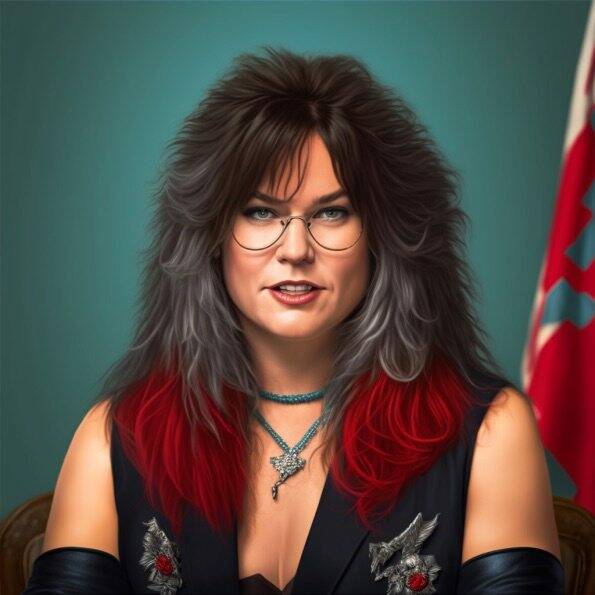
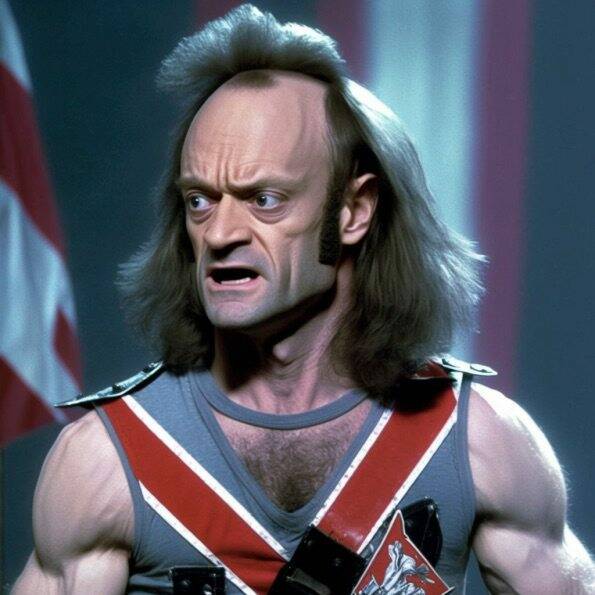
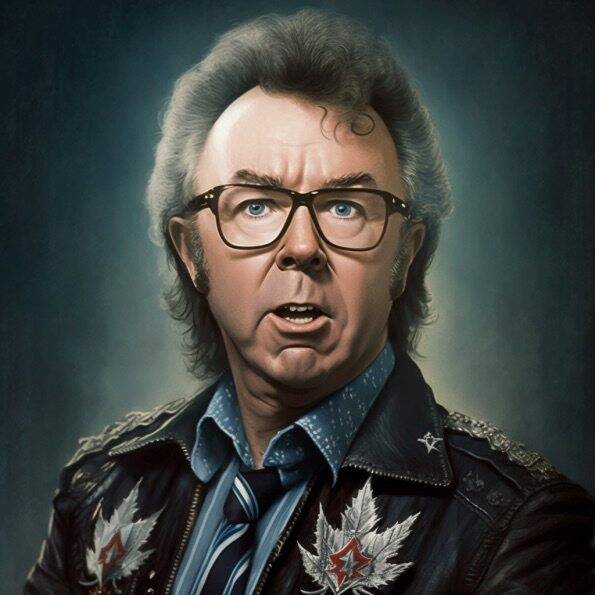
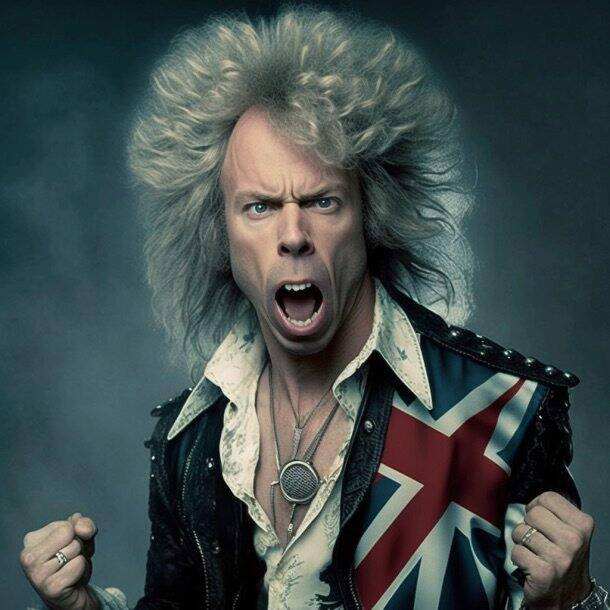
But Alberta podcast host and former journalist Craig Baird is working hard to dispel that myth. Over the weekend, he woke up the Twitter-verse with a thread of images he created using artificial intelligence. They were of all of Canada’s prime ministers, past and present, envisioned as ’80s metal band members.
There’s nothing quite like seeing former prime minister Jean Chrétien rocking a mullet, mutton-chop sideburns and a set of pipes that a serious CrossFit junkie would envy. Suddenly, our political history just got a bit more interesting.
Baird said he created these images because he wanted “to get people talking and interested in Canadian history with the pictures. We have [had] 23 prime ministers, but most people can probably only name five or six.
There is so much history there and if you make something interesting and fun, people are going to be far more invested.”
Baird has been working on his podcast — Canadian History Ehx — since 2019. Topics range from the Frank Slide, a deadly rockslide that buried an Alberta mining town, to the role Indigenous soldiers played in the First World War.
There are more than 500 episodes available and, as Baird says, “I cover all aspects of Canadian history, the good and bad.”
Working out of Stony Plain, Alta., Baird’s interest in history was sparked by the Heritage Minutes — 60-second historical TV vignettes — and CBC’s Canada: A People’s History. Baird says, “From there I began to learn about Canadian history and found it was far from boring, but also barely known by Canadians, it seems.”
Surveys support Baird’s concerns. A 2019 poll from Historica Canada, the organization behind Heritage Minutes, found that 67 per cent of respondents to a survey on Canadiana gave incorrect answers.
Another Historica poll, this one from 2021, looked at Canada’s curricula and suggested that what is being taught in grades 7 to 12 across the country comes up short.
The survey found the curricula did not provide a comprehensive view of the country’s past, particularly in teaching Indigenous history. Ontario got the highest grade, at 85 per cent, while Alberta barely passed, at 50. Manitoba scored a C with 65.
No wonder our newcomers know more about our past than our high school students do. Canadian history is a component of the citizenship exam; as a result, 82 per cent of foreign-born Canadians feel comfortable talking about our history, compared with those of us born here, at 70 per cent (in yet another poll conducted in 2019).
Why should this matter? If we are going to discuss the problematic nature of Canadian history, we should know it first.

True, much of what we know and understand about Canada has been told through a distinct lens of white-nation-building, but we can use that as a starting point to interrogate and challenge.
And as Baird says, we do need to know about our history, warts and all. Turning our political figures, current and former, into AI-generated memes may seem frivolous, but if it results in Canadians engaging in research about history, it’s a worthy endeavour.
Finding out how un-boring Canada really is via a podcast could be a healthy next step.
Shannon Sampert is a communications consultant and former politics and perspectives editor at the Winnipeg Free Press.
shannon@mediadiva.ca
History
Updated on Thursday, April 6, 2023 1:11 PM CDT: Adds photo captions