

Remembering farmers on Earth Day
Advertisement
Read this article for free:
or
Already have an account? Log in here »
To continue reading, please subscribe:
Digital Subscription
One year of digital access for only $1.44 a week*
- Enjoy unlimited reading on winnipegfreepress.com
- Read the E-Edition, our digital replica newspaper
- Access News Break, our award-winning app
- Play interactive puzzles
*Billed as $5.77 plus GST every four weeks. After 52 weeks, price increases to the regular rate of $19.95 plus GST every four weeks. Offer available to new and qualified returning subscribers only. Cancel any time.
To continue reading, please subscribe:
Add Free Press access to your Brandon Sun subscription for only an additional
$1 for the first 4 weeks*
- Enjoy unlimited reading on winnipegfreepress.com
- Read the E-Edition, our digital replica newspaper
- Access News Break, our award-winning app
- Play interactive puzzles
*Your next Brandon Sun subscription payment will increase by $1.00 and you will be charged $17.95 plus GST for four weeks. After four weeks, your payment will increase to $24.95 plus GST every four weeks.
Read unlimited articles for free today:
or
Already have an account? Log in here »
Hey there, time traveller!
This article was published 22/04/2023 (1281 days ago), so information in it may no longer be current.
JUST a few short years ago, Franklin Ngugi and his wife Winfred Wawira thought it was impossible for farming to be profitable enough to provide for their needs. They are only in their 30s, exceptionally young for farmers in Meru County, Kenya. As I recently walked through their farm with some of my colleagues from Canadian Foodgrains Bank, they shared stories of past crop failure, decreased rainfall, and difficulties getting their crops to market.
The couple’s situation echoes a common narrative for farmers in many parts of the world. Unpredictable and decreasing rainfall, diminishing ground water, lack of access to resources, and fragile and volatile markets make farming difficult the world over. But research indicates that sub-Saharan Africa is already exceptionally vulnerable to food insecurity and this threat is multiplied by climate change. According to the United Nations’ Intergovernmental Panel on Climate Change, the broad-ranging effects of a changing climate are likely to increase food insecurity for an additional 180 million people by 2050. Franklin and Winfred have experienced this first-hand: “The rains simply do not come the way we are used to, making it difficult to grow our crops, feed our animals, or feed ourselves.”
The feeling of helplessness that comes with dependence on the often-unfavourable whims of weather and market patterns resonates with me. While I have never personally experienced food insecurity, I have watched helplessly as my crops and gardens succumbed to the dry heat of the summer. I also have vivid memories of difficult seasons growing up on a Manitoba farm, when gathering enough feed for our modest dairy herd was left unrealized at harvest. My late father, a man of few words and even fewer complaints, would rarely verbalize his worries. But we could sense his quiet uncertainty as we headed into winter, even while he taught us to trust that, somehow, our needs would be met.
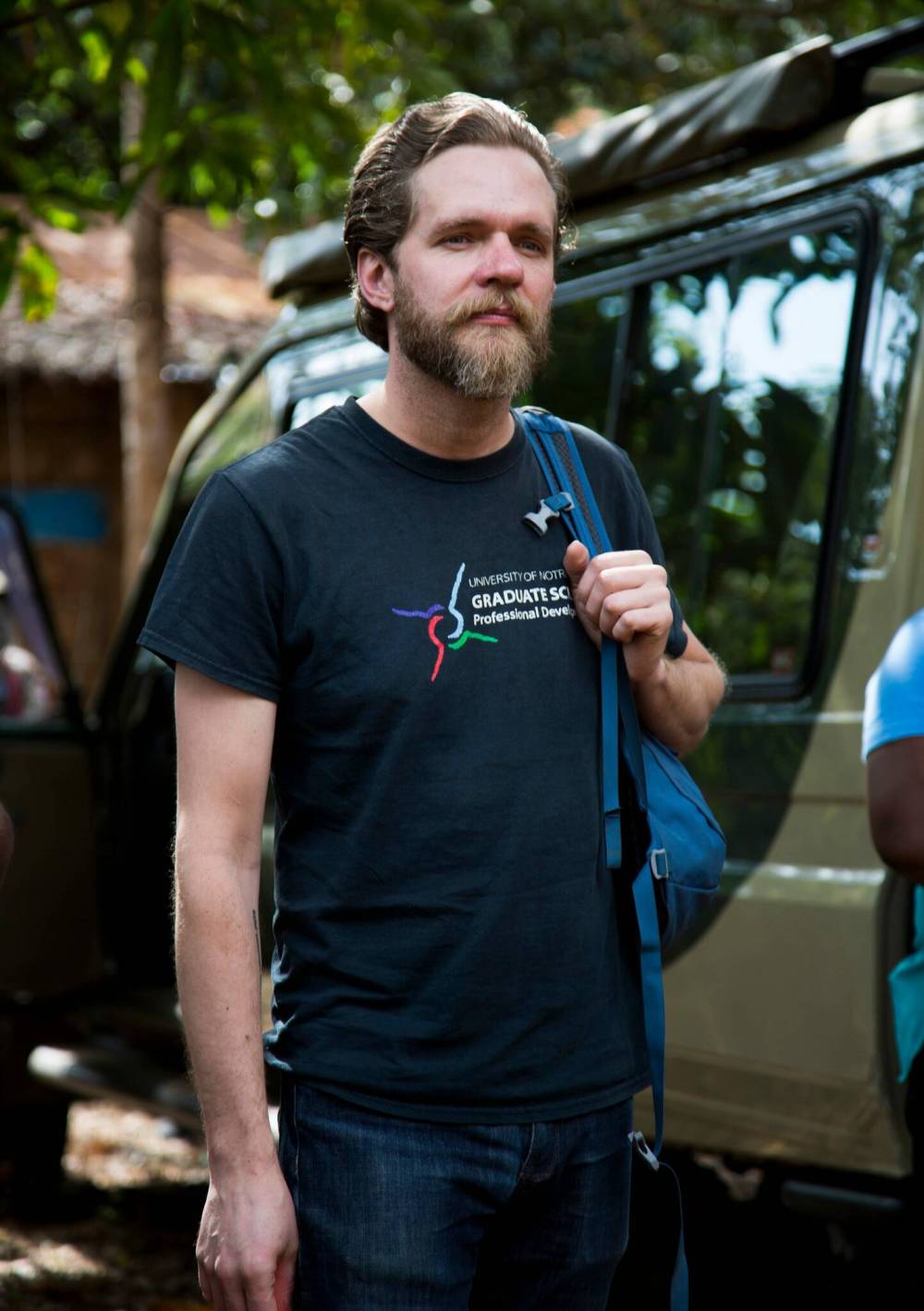
SUPPLIED
Carl Friesen, during a visit to Kenya. While there with colleagues from the Canadian Foodgrains Bank, Friesen witnessed the struggles of farmers on the African continent, which are echoed in many other parts of the world.
Humans have perhaps always been uncomfortable with our dependence on and vulnerability to the rest of nature. In the last few centuries, we have increased our control over nature through technology, from medication against viruses to intercontinental flight, from smartphones to self-steering farm equipment. However, despite these technological marvels, we cannot escape our connection to the Earth; our own health is necessarily connected to the health of land, water, and community.
This week marks Earth Day on April 22, a good time to reflect on the quality of our ties to the land, to other creatures, and to each other. In my recently completed Ph.D. research project, I described some specific ways that inter-dependence with nature perennially remains our lot. No matter how masterful we believe ourselves to be, we nonetheless continue to be part of nature ourselves, to rely on weather patterns, the land, and our communities to sustain our lives.
Farmers often feel their connection to nature very deeply. Their livelihoods very tangibly depend on predictable weather patterns, a clean water supply, and sustained soil fertility. In my own experience, both as farmer and researcher, many farmers have a deep-seated affection for the land as a result. It is at the core of folk sayings such as, “you can take the child out of the farm, but you can’t take the farmer out of the child.”
As successful as our technological mastery over nature has been, it has also carried costs such as climate change, biodiversity loss, and depleting water sources. While these challenges affect people all around the world, they impact different people in different ways. Franklin, Winfred, and their neighbors in East Africa confront more frequent and longer droughts. Farmers in Bangladesh and Pakistan experience more severe annual flooding. Farmers in California face a rapidly shrinking water supply.
But these new challenges are not the whole story. Franklin and Winfred have a noticeable sense of hope about the future. Their lives have dramatically improved by adopting new agricultural practices that better conserve moisture and maintain soil fertility. They explained to us how they carefully consider the continual regeneration of the land. While they still face significant obstacles, I could see their joyful resilience and affection for place.

They also have something to teach us on this Earth Day. It is up to all of us — whether we are farmers, simply eaters, or both — to create sustainable and resilient communities, to learn to live well as members of the land.
Carl Friesen is a public policy adviser at Canadian Foodgrains Bank.