

Liberal convention not without surprises
Advertisement
Read this article for free:
or
Already have an account? Log in here »
To continue reading, please subscribe:

Digital Subscription
One year of digital access for only $205*
- Enjoy unlimited reading on winnipegfreepress.com
- Read the E-Edition, our digital replica newspaper
- Access News Break, our award-winning app
- Play interactive puzzles
*First annual payment billed as $205.00 + GST for one year. This annual subscription will automatically renew at $233.00 + GST every 52 weeks (10% off the regular annual price of $259.35). Offer available to new and qualified returning subscribers only. Cancel any time.
To continue reading, please subscribe:
Add Free Press access to your Brandon Sun subscription for only an additional
$1 for the first 4 weeks*
- Enjoy unlimited reading on winnipegfreepress.com
- Read the E-Edition, our digital replica newspaper
- Access News Break, our award-winning app
- Play interactive puzzles
*Your next Brandon Sun subscription payment will increase by $1.00 and you will be charged $17.95 plus GST for four weeks. After four weeks, your payment will increase to $24.95 plus GST every four weeks.
Read unlimited articles for free today:
or
Already have an account? Log in here »
Hey there, time traveller!
This article was published 12/05/2023 (1225 days ago), so information in it may no longer be current.
PRIME Minister Justin Trudeau’s Liberal government has been hobbled in recent weeks by continuing revelations about the extent of China’s foreign interference network and what the government knew. The headlines for the last two weeks have been enormously damaging for Trudeau’s government.
But, smack dab in the middle of all this, Liberals gathered in Ottawa for the 2023 Liberal National Convention. The party needed some good news and their pre-planned convention provided them with opportunities to generate some.
Conventions are an opportunity for party activists and members to meet up with old friends and network, and organizers often try to pump up the troops with motivational speeches and other events. The party’s first post-pandemic convention allowed Liberals to catch some wind in their sails with a federal election looming.
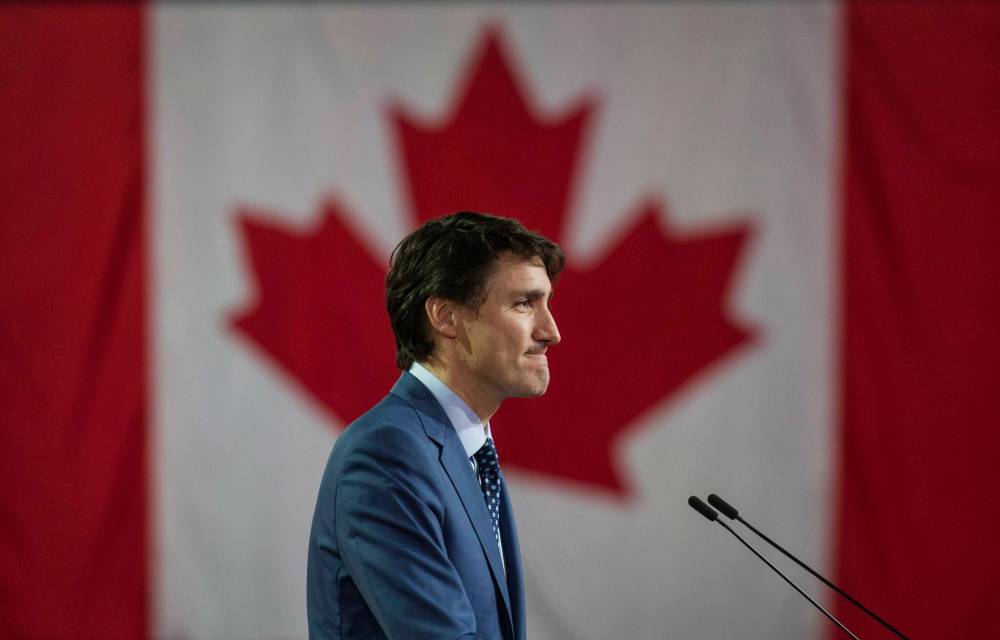
Prime Minister Justin Trudeau delivers a speech at the Liberal National Convention in 2018. (The Canadian Press files / Darren Calabrese)
But, even while playing on home ice, the party managed to lose the puck.
A fiery speech by former prime minister Jean Chretien was widely and rightly panned when he mocked concern about Chinese foreign interference. And a high-profile conversation between Deputy Prime Minister Chrystia Freeland and former U.S. presidential candidate Hillary Clinton raised questions about why the party would feature Clinton, who famously blew a big lead in the 2016 presidential election and eventually lost to Donald Trump.
But all that aside, the convention was also a place for party members to debate and, in some cases, adopt interesting and even controversial policy resolutions. The convention’s “Policy Prioritization Vote” allowed members to identify which from a grab bag of policy resolutions to debate and vote on.
Party members voted to approve policy resolutions related to affordable housing, high-speed rail, boosting defence spending, access to health care, and paid vacations for workers.
In contrast, members gave a thumbs down to a resolution that would have committed the party to balanced budgets, which opened the party up to criticism from the Conservative opposition. Liberals also voted down a proposal that would have introduced a system of mandatory voting in Canadian elections.
Members approved a resolution in favour of electoral reform. This surprising outcome was an embarrassing one for Trudeau, given his notorious broken promise that the 2015 federal election would be the last one conducted under Canada’s antiquated single-member plurality electoral system.
Of greater concern is a hare-brained resolution calling on the party to more actively use the power of the state to combat online disinformation. The resolution favoured finding ways to “hold online information services accountable for the veracity of material published on their platforms, and to limit publication only to material whose sources can be tracked.”
The resolution calls to mind the possibility of Liberal truth police scouring the internet in search of unsourced materials to ban. “It’s a dangerous proposal,” argued academic Michael Geist. “It isn’t appropriate in a country like Canada that has a commitment to freedom of expression, freedom of the press and a robust democracy.”
But this raises the question: will any of these ideas actually be pursued by the Liberal government? The answer is a decisive “maybe.”
In Canadian parties, unlike parties in many other countries, the leader is not bound by the policy decisions of party members. Instead, Canadian parties have long been recognized as characterized by a kind of internal bargain.
On one hand, party members have the ancient right to choose candidates. Prior to each election, members gather in each of the constituencies to vote on who will carry their party’s standard in the local race.

But in return for this, party leaders are given the right to shape party policy. The policy planks that parties run on in election campaigns are determined by leaders and their advisers, not party members.
There are exceptions to that bargain. Sometimes, leaders get involved in local nomination races. And members pass policy resolutions and pressure the leader to abide by them. But, for the most part, the bargain holds. For example: after this recent Liberal convention, both Trudeau and several of his ministers simply announced that they wouldn’t be pursuing some of the successful resolutions from the convention.
But that doesn’t mean that every resolution passed at party conventions is simply thrown into the trash. In 2006, the Liberal convention famously passed a resolution calling on the party to legalize recreational use of marijuana. Everyone laughed at the outlandish proposal. But, fast forward several years, and the Liberal government did precisely that.
Policy resolutions like the ones just passed are, in my opinion, probably best viewed as one of many sources of policy ideas for leaders. Sometimes they make the cut, sometimes not. But party members must compete for policy influence with other powerful actors, including corporate lobbyists who often bend politicians’ ears to get their way.
Royce Koop is a professor of political studies at the University of Manitoba and academic director of the Centre for Social Science Research and Policy.